DETROIT/SEOUL: General Motors said it will close one of its four plants in South Korea and incur an $850 million (SR3.18 billion) impairment charge as part of a restructuring of its money-losing business in Asia’s fourth-biggest economy.
The US automaker said it would decide the future of its remaining South Korean operations within weeks, amid ongoing talks with the government and labor unions on how to cut costs and make the business profitable.
“Time is short and everyone must move with urgency,” GM President Dan Ammann said.
The move is the latest in a series of steps the US automaker has taken to put profitability and innovation ahead of sales and volume. Since 2015 GM has exited unprofitable markets including Europe, Australia, South Africa and Russia.
GM would take charges against profits of $850 million to reflect the South Korean restructuring costs, including $375 million in cash related to employee expenses, the company said in a statement. Most of the financial writedowns would be recorded by the end of the second quarter.
South Korea had for years been a low-cost export hub for GM, producing close to a fifth of its global output at its peak. But sharp rises in labor costs, weakening demand for sedans, which GM Korea mainly produces, and big investments in neighboring China hurt the South Korean business’s competitiveness.
The plant shutdown is part of its broader Asia business restructuring. Excluding profits from China, GM said its Asian operations lost money in 2016. GM Korea posted a total of 1.9 trillion won in net losses between 2014 and 2016.
In recent years, GM ceased manufacturing in Australia and Indonesia, and significantly restructured its Thai operations. It is also winding down efforts to sell cars in India and is turning its manufacturing facilities there into an export hub.
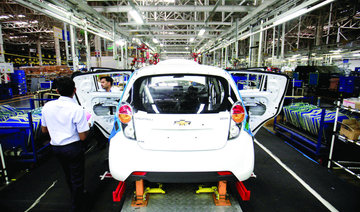
The automaker’s decisions to exit other unprofitable markets have exacerbated problems for GM Korea, which used to build many of the Chevrolet models GM once offered in Europe. Declining sales of small cars in the United States have also hurt demand for Korean-made Chevrolets.
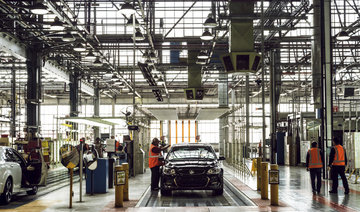
The first step in the South Korean restructuring plan is the closure of GM’s plant in Gunsan, southwest of Seoul, which employs 2,000 out of GM’s 16,000-strong South Korean workforce.
The factory was running at about 20 percent of its full production capacity last year, GM said. The automaker’s three other assembly plants in South Korea built 485,403 vehicles in 2017.
GM sells Chevrolet and Cadillac brand vehicles in Korea, and more than half the vehicles built by GM’s Korean plants are exported.
A GM Korea official said the company planned to start a voluntary retirement program for all its workers, not just those at Gunsan, from Tuesday. The official declined to be named as the decision had not been made public.
Ammann said a decision on investments in new models for the remaining South Korean plants to build depended on the government’s willingness to offer funding or other incentives, and on whether unions would agree to cut labor costs.
“If we are successful in working with our stakeholders to restructure and get to a viable cost structure, we would see an opportunity to invest” in new vehicles, Ammann said.
South Korea’s state-run development bank owns a 17 percent stake in GM Korea. The Detroit automaker owns 77 percent of the operations while GM’s main Chinese partner, SAIC Motor, controls 6.0 percent.
An official at the Korea Development Bank said GM had declined a request for an audit.
“There are some issues to be resolved to find out ways to help the company, such as a shareholder audit, but GM has not listened to us,” the official said, requesting anonymity.


![]()

General Motors to shut South Korean plant in move towards profitability
General Motors to shut South Korean plant in move towards profitability

Latest updates


Recommended


© 2026 SAUDI RESEARCH & PUBLISHING COMPANY, All Rights Reserved And subject to Terms of Use Agreement.