NEW YORK: An Oregon woman who had worms coming out of her eye is being called the first known human case of a parasitic infection spread by flies.
Fourteen tiny worms were removed from the left eye of the 26-year-old woman in August 2016. Scientists reported the case Monday.
The woman, Abby Beckley, was diagnosed in August 2016 with Thelazia gulosa. That’s a type of eye worm seen in cattle in the northern United States and southern Canada, but never before in humans.
They are spread by a type of fly known as “face flies.” The flies feed on the tears that lubricate the eyeball, scientists said.
She had been horseback riding and fishing in Gold Beach, Oregon, a coastal, cattle-farming area.
After a week of eye irritation, Beckley pulled a worm from her eye. She visited doctors, but removed most of the additional worms herself during the following few weeks.
The worms were translucent and each less than half an inch long.
After they were removed, no more worms were found and she had no additional symptoms.
Eye worms are seen in several kinds of animals, including cats and dogs. They can be spread by different kinds of flies.
Two other types of Thelazia eye worm infections had been seen in people before, but never this kind, according to Richard Bradbury of the Centers for Disease Control and Prevention. He was the study’s lead author.
The report was published in the American Journal of Tropical Medicine and Hygiene.


14 worms pulled from woman’s eye after rare infection
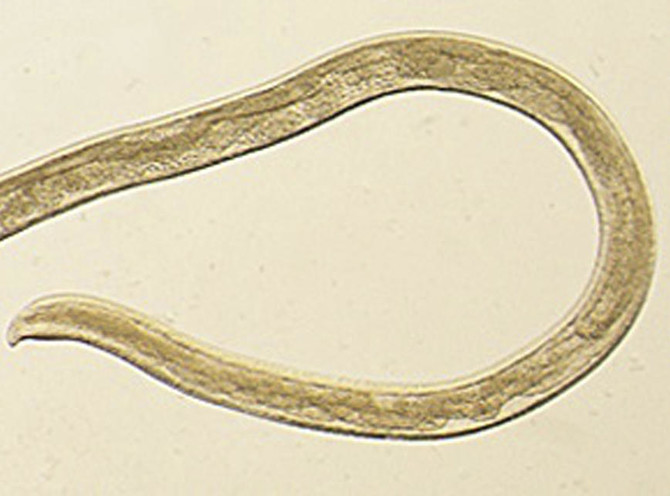
14 worms pulled from woman’s eye after rare infection

Japan’s beloved last pandas leave for China as ties fray
TOKYO: Two popular pandas are set to leave Tokyo for China Tuesday, leaving Japan without any of the beloved bears for the first time in 50 years as ties between the Asian neighbors fray.
Panda twins Lei Lei and Xiao Xiao are due to be transported by truck out of Ueno Zoological Gardens, their birthplace, disappointing many Japanese fans who have grown attached to the furry four-year-olds.
“Although I can’t see them, I came to share the same air with them and to say, ‘Hope you’ll be OK,’” one woman visiting the zoo told public broadcaster NHK.
The pandas’ abrupt return was announced last month during a diplomatic spat that began when Japanese Prime Minister Sanae Takaichi hinted that Tokyo could intervene militarily in the event of an attack on Taiwan.
Her comment provoked the ire of Beijing, which regards the island as its own territory.
The distinctive black-and-white animals, loaned out as part of China’s “panda diplomacy,” have symbolized friendship between Beijing and Tokyo since they normalized diplomatic ties in 1972.
Their repatriation comes a month before their loan period expires in February, according to the Tokyo Metropolitan Government, which operates Ueno Zoo.
Japan has reportedly been seeking the loan of a new pair of pandas.
However, a weekend poll by the liberal Asahi Shimbun newspaper showed that 70 percent of those surveyed do not think the government should negotiate with China on the lease of new pandas, while 26 percent would like them to.
On Sunday, Ueno Zoo invited some 4,400 lucky winners of an online lottery to see the pandas for the last time.
Passionate fans without tickets still turned out at the park, sporting panda-themed shirts, bags and dolls to demonstrate their love of the animals.
China has discouraged its nationals from traveling to Japan, citing deteriorating public security and criminal acts against Chinese nationals in the country.
Beijing is reportedly also choking off exports to Japan of rare-earth products crucial for making everything from electric cars to missiles.
However, China routinely removes pandas from foreign countries and the latest move may not be politically motivated, said Masaki Ienaga, a professor at Tokyo Woman’s Christian University and an expert in East Asian international relations.
“If you talk about (Chinese) politics, the timing of sending pandas is what counts,” and pandas could return to Japan if bilateral ties warm, he said.
Other countries use animals as tools of diplomacy, including Thailand with its elephants and Australia with its koalas, he added.
“But pandas are special,” he said. “They have strong customer-drawing power, and... they can earn money.”
kh/aph/mjw


