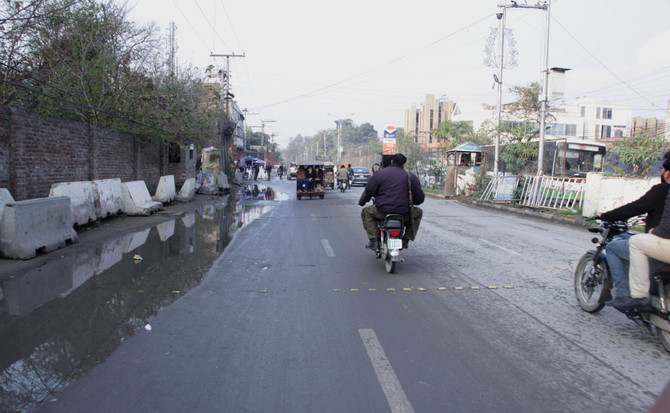
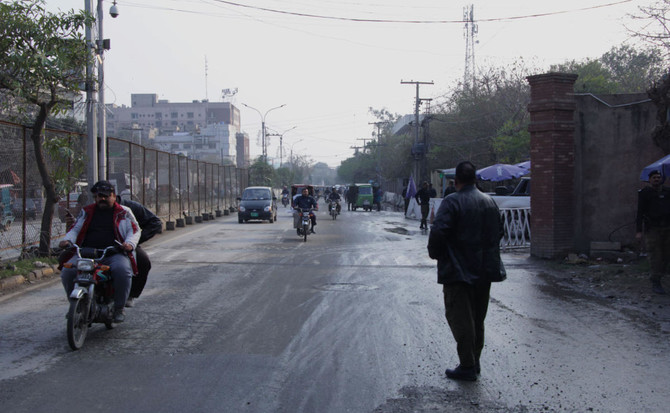
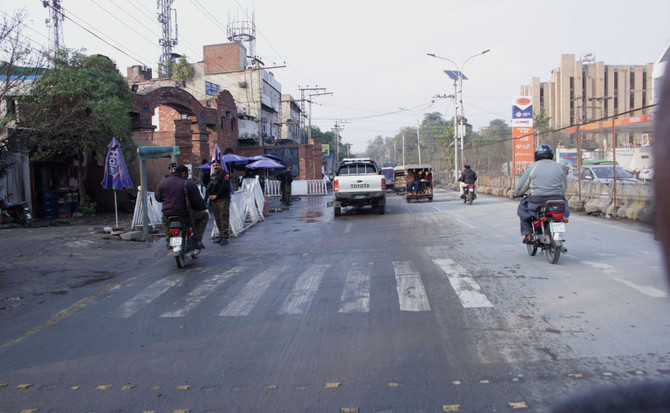
LAHORE: Pakistan’s Supreme Court on Sunday ordered authorities in Punjab to remove all “encroachments” in the provincial capital Lahore by midnight.
Security agencies had erected barricades in front of public offices and residences of high-profile individuals living in the city, including politicians, bureaucrats and police officers.
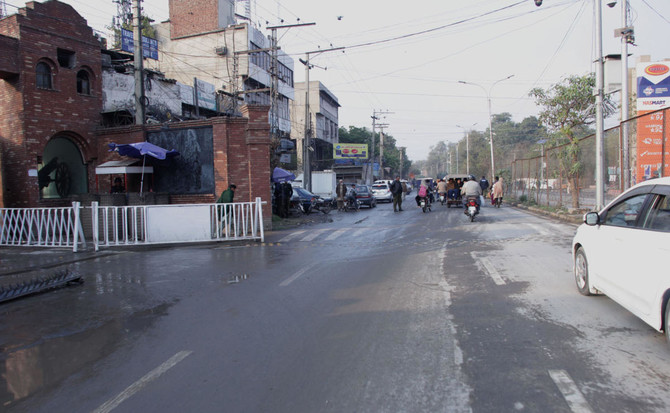
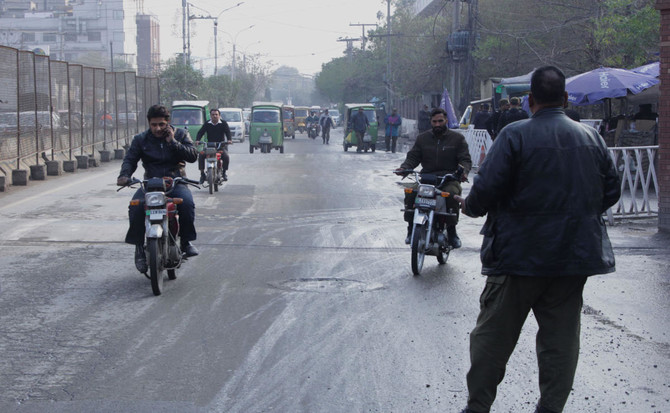
Chief Justice Saqib Nisar rejected the provincial government’s argument that the barricades were needed to protect notable individuals, saying other security measures should be adopted that do not violate the rights of Lahore’s residents. Following the court order, police removed all barricades throughout the city.
“Life has become easier for all motorists” since the removal of the barricades, Shafiq Chaudhry, a resident of the town of Qila Gujjar Singh, told Arab News.
“It used to take me 10 minutes to cover the area where the police had installed the barricades. Today, I traveled the same distance in 30 seconds.”
Students hailed the removal of barricades outside the office of the Inspector General Police, which is situated near some of the best educational institutes in Lahore.
“I want to dance on the road in front of the police office,” Saadia Khan, a student of the National College of Arts, told Arab News. “I never thought I’d be able to experience a hassle-free ride on this road.”
Deputy Inspector General Dr. Haider Ashraf said barricades had been removed from 16 locations in Lahore, in compliance with the court order. “The traffic is running smoothly in most of the areas now,” he added.
Minivan driver Talib Hussain told Arab News: “Sometimes we’d wait more than 30 minutes to pass through one crossing in the city, (but) traffic is flowing quite smoothly across the city since its roads have been cleared of unnecessary hurdles.”

Pakistan Supreme Court orders removal of all barricades in Lahore
Fitch affirms Pakistan’s ‘B-’ rating, flags debt risks
- Rating agency assigns ‘RR4’ recovery score under new criteria
- Future rating moves tied to debt reduction and reserve recovery
ISLAMABAD: Fitch Ratings on Wednesday affirmed Pakistan’s long-term sovereign debt rating at “B-,” keeping the country in high-risk territory but signaling no immediate default threat, and assigned a “RR4” recovery rating, a measure of how much investors might recover if the country were to default, following a review under its updated sovereign rating criteria.
Fitch is one of the world’s three major credit rating agencies and its sovereign ratings are closely watched by investors because they affect a country’s access to international capital markets and the cost of borrowing.
Pakistan’s rating was last upgraded in April 2025 to “B-” from “CCC+,” reflecting improved macroeconomic stability after a period of severe financial stress.
“Fitch Ratings has affirmed Pakistan’s long-term debt ratings at ‘B-’ and assigned a Recovery Rating of ‘RR4,’” the agency said in a statement.
It said the action reflects the application of its new Sovereign Rating Criteria, effective September 2025, and the inclusion of recovery assumptions in sovereign debt ratings for the first time.
A “B-” rating means the country remains vulnerable to economic shocks but is currently meeting its debt obligations. The “RR4” recovery rating suggests “average recovery prospects” for holders of Pakistan’s bonds and sukuk if the country were to default.
The agency warned Pakistan’s rating could be downgraded if public debt and debt-servicing costs fail to remain on “a firm downward path,” or if external liquidity weakens.
On the positive side, it said an upgrade could be supported by “significant declines in government debt and debt-servicing burdens,” structural improvements in tax revenue collection, and a “sustained recovery in foreign-currency reserves” beyond current forecasts.
Pakistan is implementing structural economic reforms under a $7 billion International Monetary Fund (IMF) loan program agreed after prolonged political and economic turmoil.
While the country has faced high inflation, currency pressure and weak growth in recent years, authorities say tighter fiscal policy and external support have helped improve key macroeconomic indicators.