TEHRAN: Questions surrounded the death of a prominent Iranian-Canadian environmentalist on Sunday after authorities claimed he committed suicide in prison a fortnight after his arrest.
Iran’s academic community was in shock over the death of Kavous Seyed Emami, 63, one of the country’s most revered professors and head of the Persian Wildlife Heritage Foundation.
He was arrested along with seven colleagues from the wildlife NGO on Jan. 24, and his death was announced by the family on social media late on Saturday.
“The news of my father’s passing is impossible to fathom,” wrote his son Ramin Seyed Emami, a well-known singer, on his Instagram page.
He said police had informed his mother on Friday.
“They say he committed suicide. I still can’t believe this.”
The Iran Sociology Association, of which Emami was an active member, released a statement on Sunday questioning the claim that Emami took his own life.
“The information published about him is not believable and we expect officials to respond and to provide the public with information concerning his death,” the statement said.
A source close to the Persian Wildlife Heritage Foundation told AFP that the other seven were still in jail.
Among them is Hooman Jokar, who headed a program to save the endangered Asiatic cheetah.
Morad Tahbaz, an Iranian-American businessman who was a member of the Persian Wildlife Heritage Foundation board, is also in detention.
In November, the conservative-linked Tasnim news agency accused Tahbaz of being a big-game hunter who was trying to seize control of national park land in northern Iran.
Tahbaz comes from a wealthy family who made their fortune before the 1979 revolution and once owned the renowned Kayhan newspaper, which is now controlled by the government authorities.
Emami’s death follows reports of at least two other “suicides” in detention that were linked to the weeklong protests in late December and early January.
Mahmoud Sadeghi, an outspoken lawmaker, had claimed a 23-year-old protester named Sina Ghanbari died in Tehran’s notorious Evin Prison.
The judiciary denied the claim, saying Ghanbari was involved in drug trafficking and had committed suicide.
Another man died after being arrested in the city of Arak in central Iran. Local officials said he had stabbed himself to death.
Tehran’s chief prosecutor Abbas Jafari Dolatabadi had said on Saturday that several people linked to environmental causes had been arrested on espionage charges, without giving names.
“These people collected classified information in strategic sectors of the country in the name of scientific and environmental projects,” he said, according to the judiciary-linked Mizan Online news agency.
It was not clear if he was referring to Emami and his colleagues.
“Everyone is in shock,” an academic who knew Emami well told AFP on condition of anonymity.
“He was one of the best professors. He was very profound, very composed, not at all political. He loved Iran and the environment.
“He came back recently from Canada where he was doing research. On his return, he was called in several times” by the authorities.
Emami had taught at the Imam Sadegh University, where many of the regime’s leading figures were educated including nuclear negotiator Said Jalili.
Ali Shakourirad, head of the reformist Islamic Union Party, tweeted that the death “has caused a wave of questions and concerns among the public.”
“The Tehran prosecutor’s incomplete and vague information has added to these concerns. What is going on in this country? Why doesn’t the judiciary give out information in time and transparently?” he wrote.
Emami is the second Iranian-Canadian citizen to die in Iran’s prisons following the murder of 54-year-old Zahra Kazemi in 2003, who had been arrested for taking photos outside Evin Prison.
The vice president at the time, Mohammad Ali Abtahi, stated she died from “a brain hemorrhage caused by a beating.”
The case overshadowed relations with Canada for years.
Canada severed diplomatic relations with Iran in 2012, after its government criticized the Islamic republic’s support for the Syrian regime, its “incitement to genocide” against Israel and its leaders’ failure to account for their nuclear program.
Iran does not recognize dual nationality and treats those arrested as Iranian citizens only.
After a landmark nuclear deal between Iran and world powers in 2015, Canada announced the lifting of economic sanctions on the country and said it was reviewing its wider relations.


![]()
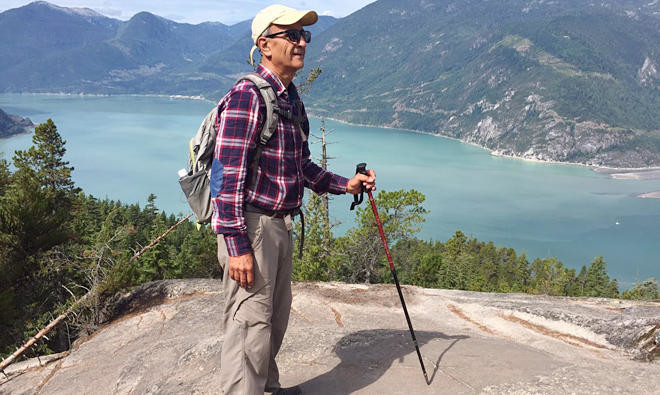
Questions surround prison death of Iranian-Canadian environmentalist
Questions surround prison death of Iranian-Canadian environmentalist
Latest updates


Recommended



© 2026 SAUDI RESEARCH & PUBLISHING COMPANY, All Rights Reserved And subject to Terms of Use Agreement.