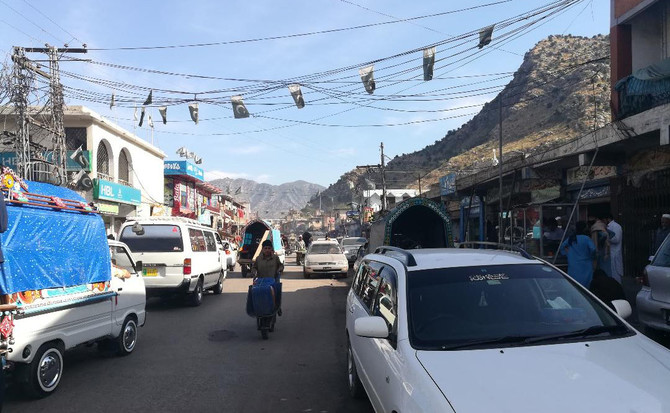
DARRA ADAM KHEL: The craftsmen of Darra Adam Khel can famously clone any gun, pistol or automatic assault rifle, but locals fear the town’s 160-year-old firearms industry is under threat.
It is believed 10,000 people were employed in the manufacture of weapons in the boom times at Darra, 40km south of Peshawar.
However, many gunsmiths say their business suffered greatly since the Taliban captured the town and fought against the army in 2007.
“My entire family was in the weapons manufacturing business,” 50-year-old Sar Muhammad told Arab News. “But I abandoned the trade when the Taliban took control of our area and started selling coal. The security situation also forced many of us to leave this place and move to Peshawar or other cities.”
According to local elders, the gun trade here can be traced back to a British soldier who deserted at around the time of the Indian Rebellion of 1857 and settled in Darra. Legend has it that the soldier trained others in weapons manufacturing, laying the foundations for the industry in the area.
The town became the region’s weapons factory in the 1980s following the Soviet Union’s invasion of Afghanistan, with Afghan “mujahideen” relying on its products.
Now, however, traders say their business is in decline as Darra’s entry and exit points are closely monitored by army soldiers and most visitors are reluctant to buy from them.
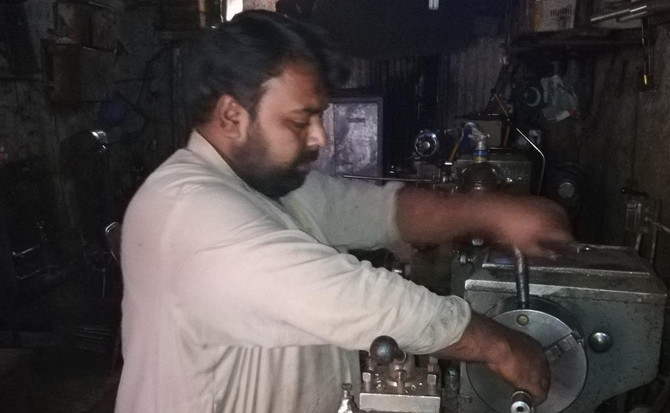
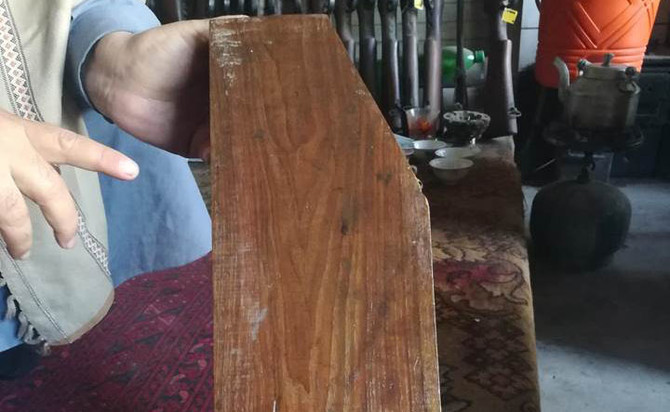
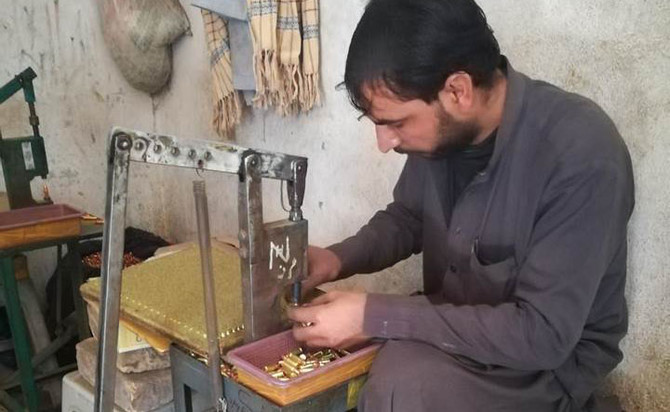
Muhammad Hanif, from Fateh Jang, a small town near Islamabad, makes gun barrels in his cramped workshop. He has been in the business for 20 years.
“There was a time when we manufactured gun barrels manually,” he said. “It used to take hours. Now, we do the same thing on machines, and that has greatly reduced our time and effort.”
He is quick to add, though, that the machines have also destroyed many jobs.
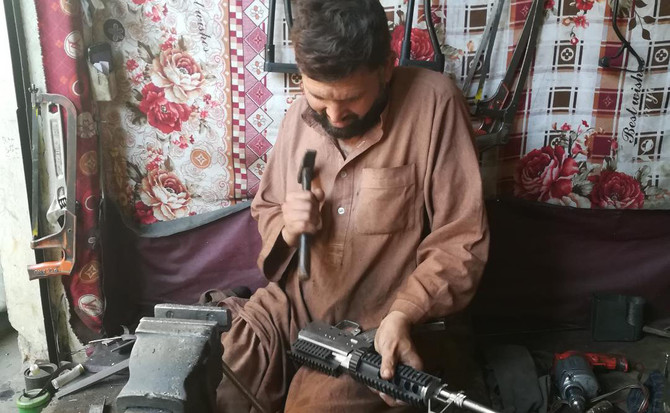
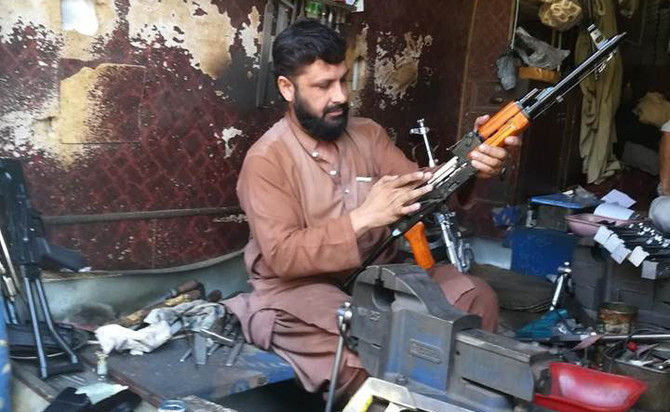
Janas Khan, a 40-year-old gunsmith, specializes in reproducing M16 rifles. It takes him three days to assemble an amazingly detailed replica, which sells for between Rs10,000 and Rs15,000 ($91 to $137).
“The original M16 can cost you around Rs300,000,” he said.
Khan employed eight gunsmiths when his business was booming, but now he makes the weapons himself and sells them directly to dealers and customers.
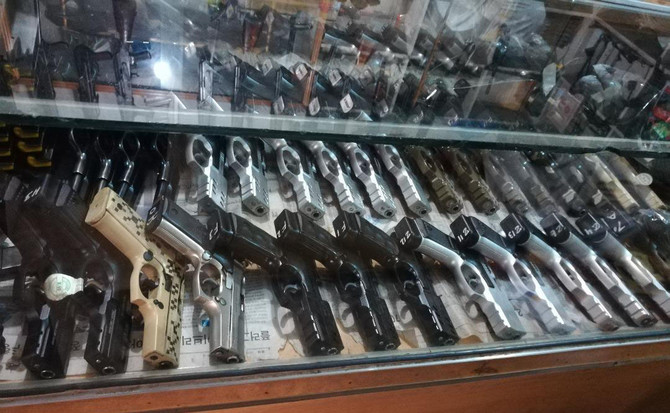
Another trader, Nazar Khel, displays many brands of locally manufactured pistols, repeaters and rifles. He recalls how his family left the area and moved to Peshawar when the army launched its operation against the Taliban.
“We returned after the security forces had secured the area,” he said. “However, my shop was badly damaged and many of my weapons had gone missing.”
Many traders also say the government’s stringent licensing policy has adversely affected their business.
“People are even harassed for carrying licensed weapons,” said 70-year-old Sanam Khan. “Imagine how difficult it must be to carry a firearm without a licence.”
His grievance against state authorities may sound surprising, but Darra Adam Khel has traditionally been one of the largest black markets for locally produced firearms in the region.
According to Munawwar Khan, a tribal chieftain, the government conducted a survey in 1989 as they sought to regularize the area’s weapons trade.
“The survey results indicated that 2,600 shops manufactured or sold weapons, and they employed about 10,000 workers,” he said. “The number of shops remains almost the same, though they have reduced their labor force since much of the production work is now done on machines.”
The government has agreed to turn Darra Adam Khel into an industrial estate and set up a technical college to introduce advanced weapons manufacturing techniques — but those decisions have not yet been implemented.
According to the deputy commissioner of Kohat, Khalid Ilyas, it would not be wise to bring an end to the informal weapons industry in the area.
“The business is not completely unregulated,” he told Arab News. “Still, we want to monitor it more closely. Under the circumstances, it is important to know who is buying weapons here.”


![]()
![]()
![]()
![]()
![]()
![]()
![]()
Gunsmiths fear town’s historic industry is dying
Gunsmiths fear town’s historic industry is dying
Latest updates


© 2026 SAUDI RESEARCH & PUBLISHING COMPANY, All Rights Reserved And subject to Terms of Use Agreement.