ISLAMABAD: With a mission statement of “Bringing the Arab perspective to Pakistan… and vice versa,” Arab News — the Middle East’s leading English-language daily — launched its localized digital edition on Thursday at a gala dinner in the capital.
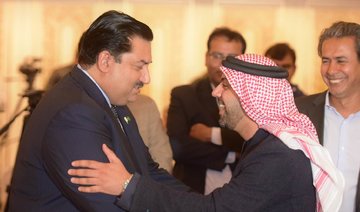
Attended by dignitaries including diplomats, academics and senior journalists, the guest of honor at the ceremony was Pakistani Defense Minister Khurram Dastgir Khan, who gave the keynote speech.
“I see the launch of the Pakistan edition of Arab News as a sign of a more connected, peaceful, normal Pakistan,” he said.
“My congratulations to the Pakistan team that is launching this new edition. I commend the editors… of Arab News and its owners for taking this far-sighted decision to become part of the success story of Pakistan.”
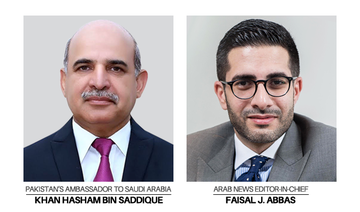
Other speakers included Arab News Editor-in-Chief Faisal J. Abbas, who flew in from Saudi Arabia — where the newspaper is headquartered — to attend the inauguration.
“There is a special bond that brings Saudi Arabia and Pakistan together. And just like Pakistanis were — and will always be — welcome in the Kingdom, we hope that you welcome Arab News to your country and consider it one of your own,” he said.
Abbas thanked Baker Atyani, the newspaper’s South Asia bureau chief, and his team for their enormous efforts in the past few months to ensure that arabnews.pk becomes a reality.
Atyani said it was an honor and responsibility to head this project, which aims to “bring Pakistan’s perspective to the Middle East and to English readers all over the world.”
Attendees hailed it as an addition to Pakistan’s booming media industry, and expressed hope that this will help further strengthen relations between Islamabad and Riyadh.
“It is a delightful moment not only for Pakistan but for the whole region, as Arab News’ Pakistan edition is going to be an authentic source of information for all,” said former Pakistani Foreign Secretary Salman Bashir.
He told Arab News that he has been a regular reader of the newspaper since 1988, when he was first appointed to the Pakistani Embassy in Saudi Arabia.
The Pakistan edition will provide new opportunities for aspiring journalists, and for the country’s skilled labor to explore job openings in the Kingdom, he said.
Noted political analyst Mosharraf Zaidi said: “Arab News is a credible source of information in the Middle East, and I hope this will generate sufficient traffic for its Pakistan edition through exclusive news stories.”
Pakistan has a longstanding relationship with Saudi Arabia in all fields, and the launch of the Pakistan edition is yet another manifestation of that, he added.
Dr. Zafar Nawaz Jaspal, renowned academic and researcher, lauded the launch ceremony.
The Pakistan edition “will provide us an opportunity to articulate Pakistan’s perspective to the Arab world and get first-hand information about the region, especially the Middle East,” he said.


![]()

Arabnews.pk to bring Pakistan and Middle East perspectives closer
Arabnews.pk to bring Pakistan and Middle East perspectives closer
Latest updates


Recommended


© 2026 SAUDI RESEARCH & PUBLISHING COMPANY, All Rights Reserved And subject to Terms of Use Agreement.