GAZA: Nearly 20 medical centers in Gaza will fully reopen in the coming days after the United Arab Emirates provided financing to end a fuel shortage, the World Health Organization said Thursday.
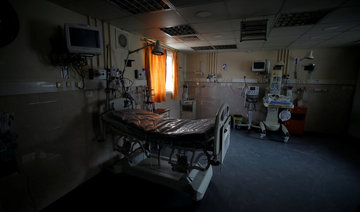
Three hospitals and 16 medical centers had stopped offering key services in recent weeks as crippling fuel shortages meant they were unable to keep generators going, the Hamas-run health ministry in Gaza said.
Gaza receives only a few hours of mains electricity a day, so hospitals and other vital services rely on private generators run with fuel provided by the United Nations.
After an emergency UN appeal, the UAE has pledged $2 million for fuel for the coming year, said Mahmoud Dahar, head of the WHO in Gaza.
“We have received an announcement from the UAE that they are going to fund two million, which will make the situation a bit easier for another few months,” he told AFP.
He added that he expected the hospitals and centers to fully reopen “in the coming days.”
The ministry said it was awaiting official confirmation of the UAE funds and did not say when the centers would return to normal operations.
Israel has maintained a crippling blockade of Gaza for a decade which it says is necessary to isolate the territory’s Islamist leaders Hamas. Critics say it represents collective punishment of two million people.
More than two-thirds of Gazans rely on international aid.
Separately on Thursday Egypt, which has also largely sealed its border with Gaza, opened the Rafah crossing for the first time in 2018. It is to remain open for three days.
US President Donald Trump has also withheld tens of millions in aid for Palestinians in recent weeks.
On Thursday, AIDA, a coalition of 70 international charities working in the Palestinian territories, said that decision would particularly affect Gaza.
It said the funding cuts “will lead to increased food insecurity, aid dependency, poverty, isolation, unemployment and hopelessness.”


Gaza hospitals, clinics to reopen after Emirati grant

Gaza hospitals, clinics to reopen after Emirati grant


Assad forces injured 35 in 2016 chlorine attack: watchdog
- “There are reasonable grounds to believe that one Mi8/17 helicopter of the Syrian Arab Air Force dropped at least one yellow pressurised cylinder,” OPCW said
- The team interviewed dozens of witnesses, analyzed samples and reviewed satellite images
THE HAGUE: Former Syrian president Bashar Assad’s forces deployed chlorine gas in a 2016 attack that injured at least 35 people, the world’s chemical weapons watchdog concluded Thursday.
The October 2016 attack near a field hospital outside the town of Kafr Zeita, in western Syria, was already well-documented but the Organization for the Prohibition of Chemical Weapons (OPCW) for the first time accused Assad’s forces.
“There are reasonable grounds to believe that one Mi8/17 helicopter of the Syrian Arab Air Force dropped at least one yellow pressurised cylinder,” the OPCW said in a report.
“Upon impact, the cylinder ruptured and released chlorine gas, which dispersed through the Wadi Al-Aanz valley, injuring 35 named individuals and affecting dozens more,” OPCW investigators concluded.
The team interviewed dozens of witnesses, analyzed samples and reviewed satellite images.
Assad was repeatedly accused of using chemical weapons during Syria’s 13-year civil war, and there has been widespread concern about the fate of Syria’s stocks since his 2024 ouster.
In a landmark speech last year, the foreign minister of the new Syrian government pledged to dismantle any remnants of Assad’s chemical weapons program.
The OPCW welcomed the “full and unfettered access” the new Syrian authorities granted their investigators.
It was the “first instance of cooperation by the Syrian Arab Republic with an... investigation,” the OPCW said.
The OPCW wants to establish a permanent presence in Syria to draw up an inventory of chemical weapons sites and start the destruction of the stockpiles.


