LONDON: The detail might have been scant, but there was no hiding the ambition with which the new King Abdulaziz Horse Championship was announced late on Tuesday night.
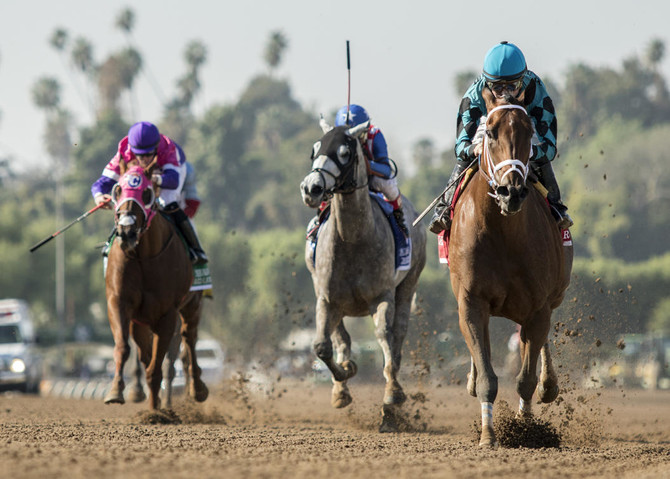
What we do know is that the new international horse race will carry a purse of $17 million, which, if for a single race, will eclipse the $16 million Pegasus World Cup as the world’s most valuable race.
Last March Sheikh Mohammed bin Rashid promised to stage the world’s most valuable contest again, and with Dubai’s Expo 2020 on the horizon, it is not out of the question that we will soon have the world’s first $20 million horse race.
The Pegasus World Cup looks set for a third renewal next January and The Everest is the world’s most lucrative turf sprint at $AU10 million ($7.86 million).
But, for now, the $17 million purse for the King Abdulaziz Horse Championship makes it the most lucrative on the circuit.
The aim of the King Abdulaziz Horse Championship, which, so far, does not have a distance, surface, home or date, is to attract the best talent from the racing powerbases of the United States, the UK and Japan.
The Saudi Arabian Government’s General Sports Authority outlined that the fixture would help share the Kingdom’s “historic and cultural legacy,” which has been the modus operandi of neighboring Middle Eastern countries during the past 30 years.
Dubai was the first Gulf state to understand the international marketing potential of sport, and thoroughbred horseracing in particular, when Sheikh Mohammed bin Rashid, Vice President of the UAE and ruler of Dubai, set up his Godolphin racing stable in 1992. Others have followed, with varying success, and it remains to be seen whether Saudi Arabia can catch up. And quickly enough.
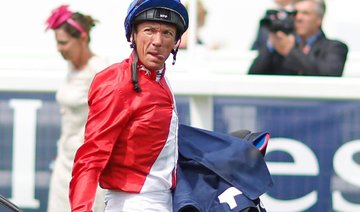
Saudi Arabia has a considerable international racing presence already, however. Prince Khalid Abdullah is Saudi Arabia’s most successful international racing figure, having owned such equine luminaries as Frankel, Enable, Arrogate and Dancing Brave. But the leading owner and highly successful breeder is in his 80s and, although son Prince Ahmed bin Khalid was at Ascot in July to witness Enable’s triumph in the King George VI and Queen Elizabeth Stakes, the succession plans for the Juddmonte operation are not yet clear.
There is also the issue of competition. The King Abdulaziz Horse Championship is likely to be staged in Riyadh and on dirt. It will therefore be a direct rival not only to the Dubai World Cup at the end of March, but Qatar’s Emir’s Sword Festival at the end of the month.
The Dubai World Cup Carnival, which is currently in full swing at Meydan racecourse until the $30 million World Cup meeting itself on Mar. 31, attracts horses from around the world and is an established stopover of the international season. It was first run in 1996.
This new initiative will, in all likelihood, have to break that up or in some way complement it. Alternatively organizers may look to squeeze the event into the busy international season at the end of the year when the Breeders’ Cup and the Hong Kong International meeting in December takes center stage.
Saudi Arabia’s interest in international sport is growing, and at pace. The country is riding a wave of reform as it works toward Saudi Vision 2030, which intends to transform the country into a global investment powerhouse and strategic global hub.
Perhaps in 12 years time the King Abdulaziz Horse Championship vision may well have been realized, but there is a lot of work to be done in the meantime.
HORSE RACING'S RICHEST RACES
King Abdulaziz Horse Championship $17million
Pegasus World Cup $16 million
Dubai World Cup $10 million
The Everest $7.86 million
Breeders' Cup Classic $6 million