NEW YORK: Saudi Arabia will host a pavilion at the Venice Biennale of Architecture for the first time this year — one of several projects announced on Monday by Ahmed Mater, director of the recently-created Misk Art Institute.
Mater, also a prominent Saudi artist, said judges have yet to decide which architectural project from 66 entries will be selected for showcasing at the event, which runs in the Italian city from May to November.
Also this year, Misk will train 10 young Saudi artists in California and launch an Arab art festival at several New York locations in October, while working on plans for the institute’s headquarters building in Riyadh.
“We are proposing and dreaming of a collaborative platform led by artists from the ground up,” Mater, 38, said at the launch, at The Museum of Modern Art (MoMA) in Manhattan on Monday.
“This approach, instructed by the crown prince, comes from a place of passion and dedication — a unique opportunity to combine the energy and participation of voices from the bottom up with the vision and resources from the top.”
The Misk Art Institute is a new cultural body with bases in Riyadh and Abha, in the Kingdom’s southwest, which was established by the Misk Foundation, led by Crown Prince Mohammed bin Salman, last year.
It is the latest addition to a burgeoning Gulf art scene, with several boutique galleries in Dubai and some brand-name museums in Abu Dhabi, the UAE capital, including local versions of the Louvre and Guggenheim.
Glenn Lowry, director of MoMA, told Arab News that he was working with Misk on a book about Arab art, but had no plans to emulate the Guggenheim by building a MoMA in Saudi Arabia or the Gulf.
“I’m thrilled that Misk is creating a platform that I hope will engage a really serious conversation among artists, curators, collectors, scholars around the world, not just within the Muslim world,” Lowry said.
“I think what Misk offers is an artist-centric approach which grows from a grassroots base but ultimately will produce all sorts of interesting results.”
Cultural life figures in the Saudi crown prince’s Vision 2030 plan. In recent months, the Kingdom has broken from convention by hosting concerts, comic festivals and book fairs while also lifting a 35-year-old ban on cinemas.
Last year, the art world was abuzz over which Gulf buyer had paid $450.3 million for Leonardo da Vinci’s portrait of Christ, “Salvator Mundi.” New-York based Christie’s auction house said it was acquired by Abu Dhabi’s Department of Culture and Tourism.
The Misk Art Institute is tasked with turning Saudi Arabia into a home for grassroots cultural creativity, diplomacy and global exchanges via art festivals, workshops and competitions for fledgling Saudi artists.
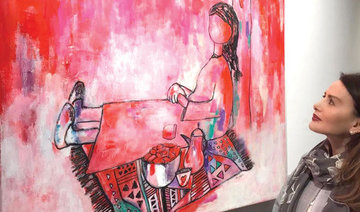
Mater is a Saudi doctor-turned-artist from Tabuk who works in film, performance and sculpture. His photo-exhibition, Makkah Journeys, charting the redevelopment and commercialization of the Holy City, runs at the Brooklyn Museum until April 8.
“The institute will comprise both spaces in Saudi Arabia and a series of projects regionally and internationally,” Mater said.
“These are foundations from which channels can be forged collaboratively with a new generation of artists, designers and thinkers — following processes and directions as novel as their creative output.”


Saudi Arabia to take part in Venice Biennale for first time

Saudi Arabia to take part in Venice Biennale for first time


Lolo Zouai takes to Berlin’s Colors platform
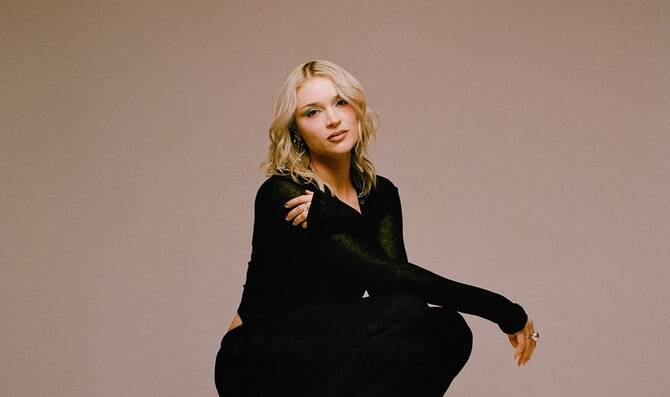
DUBAI: French Algerian singer Lolo Zouai took to the Berlin-based music platform Colors this week, delivering a live performance of her latest single “Desert Rose PT.II.”
The appearance comes as the track climbed to No. 1 on Algeria’s R&B chart within 24 hours of its release. A sequel to “Desert Rose” from her 2019 debut album “High Highs to Low Lows,” the new single features lyrics in Arabic, French and English, reflecting the cross-cultural influences that shape her sound.
Zouai marked the achievement on Instagram, sharing a series of posts including a photo of herself wearing an Algeria football jersey, alongside the single’s cover art and a screenshot showing its chart ranking.
“Grateful for the love on this one. Can’t wait for you to hear the studio version and the rest of ‘Reverie’,” she wrote.
She also reposted a collage of fan reactions, including a TikTok video that read: “It’s 2026 and we still haven’t had another song like ‘Desert Rose’ out.” Others said: “Can’t wait for Desert Rose pt. 2” and “wdym desert rose pt. 2?!?!?!”
The single forms part of her upcoming third studio album, “Reveries,” due for release on April 24. She announced the date last month alongside the music video for “Holding On,” another track from the project.
Blending R&B with dance-pop elements, “Holding On” delves into themes of grief and memory. The video is dedicated to Zouai’s close friend, Hanna Rosa Hotchkiss, who died in 2021.
In a statement on Instagram, Zouai described the album as the product of a transformative period in her life: “This record was made through three years of grief, growth, and reflection. I had to lose myself to find myself again. I couldn’t have done it without my angel, Hanna. Thank you to my collaborators, my friends, and my Lo-riders who held me down through it all. I hope it heals you the way it healed me.”
Known for her blend of R&B, club-pop and hip-hop, Zouai has gained an international fan base for her dynamic stage presence and genre-blending music.
Zouai’s last release was in November, when she dropped a new single titled “3AM in San Francisco.”