DAVOS: The week in Davos is a meeting of the “masters of the universe” — the businessmen, financiers and policymakers who determine the lives of ordinary mortals.
But it is also a gathering of the world’s media: The print, online and broadcast journalists whose job it is to tell those mortals what is happening 1,500 meters above sea level at the World Economic Forum (WEF) annual meeting. Although I doubt I will get much sympathy, I have to tell you that it is a tough journalist gig.
If you exploit the opportunities Davos presents to the full, you can easily start your day with a breakfast briefing at 7 a.m. and finish it at 1 a.m. the following morning, after one of the legendary Davos “nightcap” events.
After a few rushed hours of sleep, it is the same all over again the next day. It is grueling.
But I have noticed that members of the media at the WEF fall into two distinct categories.
There are the honest, down-to-earth working hacks, like yours truly, whose job it is to actually report on the event.
With so much on offer, doing the actual writing has to be squeezed into gaps in the formal WEF agenda, or rushed out before the early-morning breakfast. (Filing copy after the nightcap events is not advised.)
In contrast to these Stakhanovite tradesmen, there is the “thinking media” — the armies of editors, columnists, opinion writers and other experts. They have a much easier time.
These rarified souls come to Davos to “get a feel” for global opinion, or to “feel the pulse” of the decision-making classes. If they are doing the job properly, their day is no shorter than that of the reporting press, but much easier because they are not filling every spare moment writing.
A week on the slopes, with the aim of filing 1,000 words of opinion at the end of it, does not sound too strenuous, does it?
The bane for all these journalists — tradesmen or thinkers — is the news desk back at HQ, whether it is in London, New York or Jeddah. News editors see Davos as a gigantic opinion-polling exercise of the world’s elite. “Just ask a few people there,” you hear.
Easier said than done. I bumped into an old colleague from the British press the other day, just after the Financial Times broke the story about the “Presidents Club” that raised charitable money using distantly dubious methods.
My friend had been tasked with “getting the Davos view” on the FT story, but was having a hard time. “Nobody here has read it,” he said.


![]()
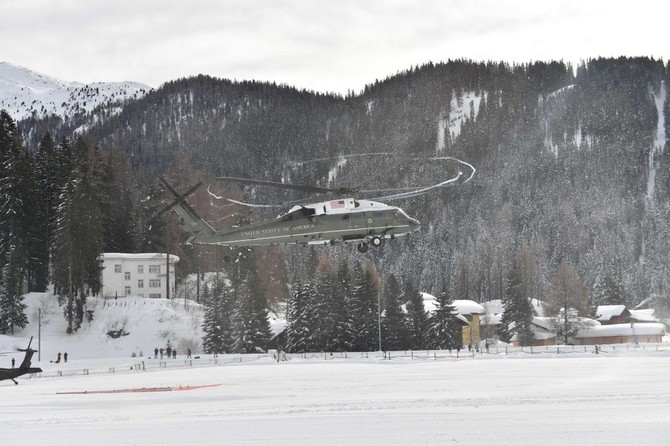
DAVOS DIARY: Spare a thought for the poor, overworked media
DAVOS DIARY: Spare a thought for the poor, overworked media

Latest updates



Recommended


© 2026 SAUDI RESEARCH & PUBLISHING COMPANY, All Rights Reserved And subject to Terms of Use Agreement.