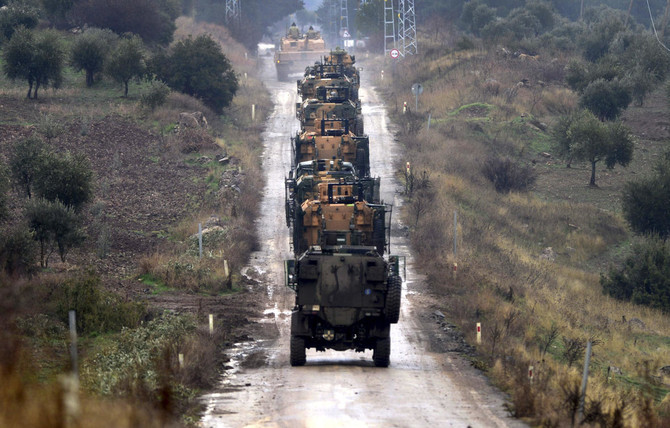
HASSA,Turkey: The Turkish army on Tuesday clashed with Kurdish militia in Syria in an operation that has already left two of its soldiers dead, as the United States voiced alarm the offensive could endanger attempts to end the Syrian civil war.
Speaking at the funeral of the first of two Turkish soldiers to be killed so far in the four day cross-border campaign, President Recep Tayyip Erdogan vowed that Ankara would emerge victorious.
Turkey on Saturday launched operation "Olive Branch" aimed at rooting out the Kurdish People's Protection Units (YPG) militia, which Ankara sees as a terror group, from its Afrin enclave in northern Syria.
The campaign has caused ripples of concern among Turkey's NATO allies, especially the United States which is still working closely with the YPG to defeat Daesh militants in Syria.
In his strongest comments yet on the offensive, US Defense Secretary Jim Mattis called for Turkey to show "restraint" and warned it could harm the fight against the rebel group.
He warned the offensive "disrupts what was a relatively stable area in Syria and distracts from the international effort to defeat" Daesh, on a visit to Indonesia.
Turkish artillery on Tuesday pounded targets of the YPG inside Syria, the state-run Anadolu news agency said.
Meanwhile, Turkish drones were also carrying out attacks, state television said.
The Britain-based Syrian Observatory for Human Rights monitor said fighting was "very violent" northeast, northwest and southwest of Afrin.
The Observatory said the offensive took control of two villages so far.
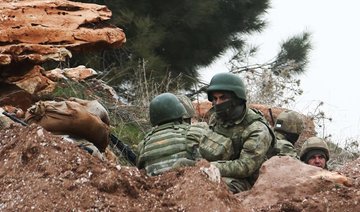
As well as the artillery and air strikes, Turkish ground troops and Ankara-backed Syrian rebels have punched over the border several kilometres (miles) into Syrian territory, taking several villages, according to state media.
After intense exchanges, Turkey's forces took control of the hill of Barsaya, a key strategic point in the Afrin region.
The Observatory said 43 Ankara-backed rebels and 38 Kurdish fighters had been killed in the fighting so far. It has also said 28 civilians have been killed on the Syrian side but this is vehemently rejected by Turkey which says it is only targeting militants.
Sergeant Musa Ozalkan, 30, the first Turkish military fatality of the operation, was laid to rest with full honours in a ceremony in Ankara attended by the Turkish leadership.
"We will win and reach victory in this operation together with our people, together with Free Syrian Army," Erdogan assured mourners, referring to the Ankara-backed rebels.
"We have full confidence," he added.
A second Turkish soldier was killed in Syria Tuesday in clashes with the YPG, the military said in a statement. He was named as First Lieutenant Oguz Kaan Usta.
The campaign -- which Erdogan has made clear has no fixed timetable -- is fraught with risks for Turkey.
Two civilians have been killed inside Turkey in border towns in the last two days by rocket fire from Syria blamed on the YPG.
"This operation will continue until the last terrorist is eliminated," Turkish Prime Minister Binali Yildirim said.
The leaders of the YPG-controlled enclave meanwhile announced a "general mobilisation", calling up civilians to defend Afrin against Turkish attack.
The offensive against the YPG is also fraught with diplomatic sensitivities with Western capitals particularly concerned that it will take the focus away from eliminating Daesh.
France and the European Union have made similar comments to those made by Mattis.
But Ankara has expressed impatience with such sentiments, arguing that the YPG is the Syrian offshoot of the Kurdistan Workers' Party (PKK) which has waged a bloody three-decade insurgency against the Turkish state.
Critical is the opinion of Russia, which has a military presence in the area and a cordial relationship with the YPG but is also working with Turkey to bring an end to the seven-year Syrian civil war.
Erdogan said Monday that the offensive had been agreed with Russia but this has not been confirmed by Moscow.
However many analysts argue that Turkey would never have gone ahead with the offensive without the Kremlin's blessing.
Turkey's previous incursion into Syria was the Euphrates Shield campaign in August 2016-March 2017, targeting both the YPG and Daesh in an area east of Afrin.
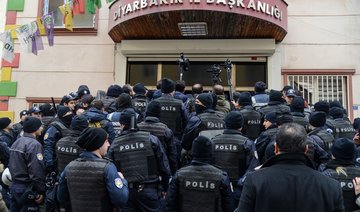
The Turkish security forces have meanwhile imposed a clampdown against anyone suspected of disseminating "terror propaganda" against the operation on social media.
Ninety-one people were detained in 13 provinces in Turkey, state media reported on Tuesday, after 24 people had been detained in other cities on Monday.


![]()
Turkey in deadly Kurdish militia clashes as US sounds alarm
Turkey in deadly Kurdish militia clashes as US sounds alarm

Latest updates


© 2026 SAUDI RESEARCH & PUBLISHING COMPANY, All Rights Reserved And subject to Terms of Use Agreement.