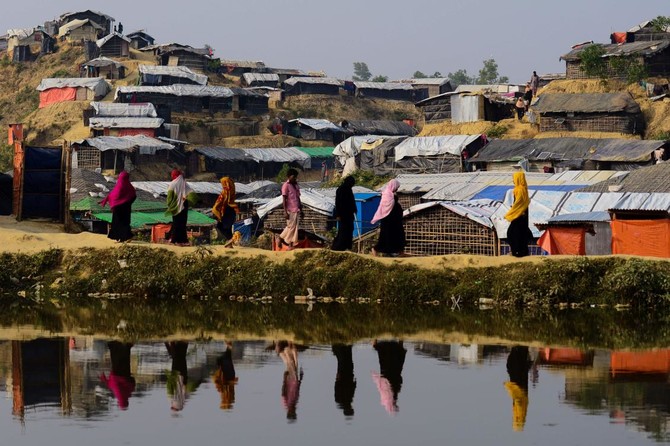
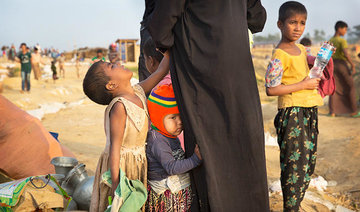
PALONG KHALI, Bangladesh: The UN refugee agency and other groups have urged a rethink of a plan to send Muslim Rohingya refugees back to Myanmar amid fears of forced repatriations without safeguards such as guaranteed citizenship after they fled to Bangladesh to escape bloodshed at home.
The calls come as Bangladesh delayed the repatriation of the largely stateless Rohingya to Myanmar that was set to begin on Tuesday, as the process of compiling and verifying the list of people to be sent back was incomplete.
“In order for the repatriation to be (done) right, to be sustainable, actually viable...you need to really address a number of issues that for the time being we have heard nothing about,” UNHCR head Filippo Grandi said in Geneva, noting that issues like citizenship had not been addressed.
More than 655,500 Muslim Rohingya fled to Bangladesh last year after the Myanmar military cracked down in the northern part of Rakhine state, amid witness reports of killings, looting and rape, in response to militant attacks on security forces on Aug. 25 last year.
Many people in Buddhist-majority Myanmar regard the Rohingya as illegal immigrants from Bangladesh. The United Nations described Myanmar’s crackdown as ethnic cleansing of the Rohingya, which Myanmar denies.
Grandi said it was important to set up a monitoring mechanism in Myanmar’s Rakhine state for those returning and noted that UNHCR currently did not have the ability to move freely and perform this role there.
Myanmar and Bangladesh agreed earlier this month to complete a voluntary repatriation of the refugees in two years. Myanmar says it has set up two reception centers and a temporary camp near the border in Rakhine state to receive the first arrivals.
Human Rights Watch, a non-government organization, said on Tuesday that Bangladesh should suspend the plan entirely as it “threatens the refugees’ security and well-being.”
The plan has sparked fears in refugee camps in Bangladesh that people may be forced to return despite a lack of guarantees around their security.
One Rohingya man detained on Monday by the Bangladeshi military at the Palong Khali refugee camp following a protest against repatriations remained in police custody on Tuesday and was still being interrogated, officials said.
“He was detained for instigating violence. He is in custody for interrogation,” local police chief Abul Khayer told Reuters by telephone.
A UNHCR official said the agency plans to bring up the detention with Bangladesh during their next meeting, as the refugees were only staging a peaceful protest.

Aid groups urge rethink of Rohingya repatriations without safeguards
UN warns 200,000 more Afghan children face acute malnutrition in 2026
“Acute malnutrition among children is soaring,” WFP’S Country Director John Aylieff said
Some 200,000 additional children face acute malnutrition this year
GENEVA: Hundreds of thousands more children face acute malnutrition in Afghanistan this year amid a hunger crisis exacerbated by foreign aid cuts and violence on the border with Pakistan, a UN official said on Tuesday.
International aid to Afghanistan has fallen sharply since 2021, when US-led forces exited the country and the Taliban regained power. The crisis has been compounded by natural calamities including earthquakes.
“Acute malnutrition among children is soaring. Last year we saw the highest surge ever recorded in Afghanistan, and this year, a staggering 3.7 million children will need malnutrition treatment,” the World Food Programme’s Country Director John Aylieff told a Geneva press briefing.
Some 200,000 additional children face acute malnutrition this year, he added.
Funding cuts mean the UN agency only has the resources to treat one in every four children needing treatment for acute malnutrition, Aylieff said.
Others do not even have the means to reach clinics, he said, voicing concerns that some are trapped by snowfall in remote highland areas.
Most children who die in Afghanistan do so “during the winter... at home silently,” he said.
“What I fear is when the snow is melted at the end of March or in April, we will find there has been a very high toll of child deaths in the villages.”
Expulsion policies in neighboring Pakistan and Iran have resulted in over 5 million returnees since late 2023, further straining limited resources, Aylieff said.
Many of those returning to Afghanistan are close to areas where Pakistani and Afghan troops have clashed in recent days, forcing WFP to suspend some services there.
“We foresee that acute malnutrition will be driven up further by the conflict as people are prevented from accessing health services,” imperilling tens of thousands of children, said Aylieff.
Some 200,000 additional children face acute malnutrition this year
GENEVA: Hundreds of thousands more children face acute malnutrition in Afghanistan this year amid a hunger crisis exacerbated by foreign aid cuts and violence on the border with Pakistan, a UN official said on Tuesday.
International aid to Afghanistan has fallen sharply since 2021, when US-led forces exited the country and the Taliban regained power. The crisis has been compounded by natural calamities including earthquakes.
“Acute malnutrition among children is soaring. Last year we saw the highest surge ever recorded in Afghanistan, and this year, a staggering 3.7 million children will need malnutrition treatment,” the World Food Programme’s Country Director John Aylieff told a Geneva press briefing.
Some 200,000 additional children face acute malnutrition this year, he added.
Funding cuts mean the UN agency only has the resources to treat one in every four children needing treatment for acute malnutrition, Aylieff said.
Others do not even have the means to reach clinics, he said, voicing concerns that some are trapped by snowfall in remote highland areas.
Most children who die in Afghanistan do so “during the winter... at home silently,” he said.
“What I fear is when the snow is melted at the end of March or in April, we will find there has been a very high toll of child deaths in the villages.”
Expulsion policies in neighboring Pakistan and Iran have resulted in over 5 million returnees since late 2023, further straining limited resources, Aylieff said.
Many of those returning to Afghanistan are close to areas where Pakistani and Afghan troops have clashed in recent days, forcing WFP to suspend some services there.
“We foresee that acute malnutrition will be driven up further by the conflict as people are prevented from accessing health services,” imperilling tens of thousands of children, said Aylieff.
© 2026 SAUDI RESEARCH & PUBLISHING COMPANY, All Rights Reserved And subject to Terms of Use Agreement.