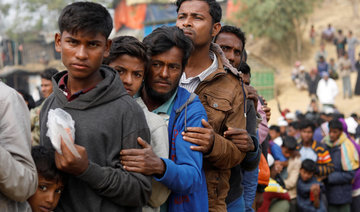
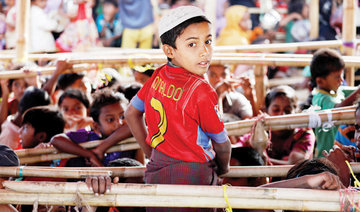
GUNGDUM: Tensions mounted on Sunday at refugee camps in Bangladesh holding hundreds of thousands of Rohingya Muslims over an operation to send them back to Myanmar, from where they have fled following a military crackdown.
Dozens of refugees stood holding cloth banners opposing their transfer as UN Special Rapporteur Yanghee Lee visited camps along the Bangladesh-Myanmar border over the weekend. Some refugee leaders said Bangladesh military officials had threatened to seize their food ration cards if they did not return.
Under an agreement signed last week, Myanmar is set to receive Rohingya refugees from Bangladesh at two reception centers and a temporary camp near their common border starting on Tuesday and continuing over the next two years.
The refugees refuse to go back unless their safety can be guaranteed and Myanmars grant their demands to be given citizenship and inclusion in a list of recognized ethnic minorities. They are also asking that their homes, mosques and schools that were burned down or damaged in the military operation be rebuilt.
Over 655,500 Muslim Rohingya fled to Bangladesh after the Myanmar military cracked down in the northern part of Rakhine state in response to militant attacks on security forces on Aug. 25. The UN described the operation as ethnic cleansing of the Rohingya, which Myanmar denies.
Rohingya elders told Reuters that Bangladeshi army officials have called or met them over the last two days, asking them to prepare lists of families from their camps for repatriation. Four of them said they were among more than 70 camp leaders – representing thousands of refugees – who met army officers at the Gungdum camp on Saturday.
“When we said we cannot provide the lists because people are not ready to return, they asked us to bring their WP cards,” said Musa, a leader at the Gungdum camp, referring to relief cards provided by the UN’s World Food Programme.
Rashedul Hasan, a spokesman for the Bangladesh army, said he was not aware of army men threatening to take away food cards.
Hundreds of refugees queue up at relief centers across the camps each morning to collect food using the cards. These centers are managed by the Bangladesh army.
The United Nations High Commissioner for Refugees (UNHCR) has repeatedly said Rohingya returns need to be voluntary.
“UNHCR has not been part of discussions (on repatriation) to date, but has offered support to engage in the process to ensure that the voices of refugees are heard,” Caroline Gluck, a senior protection officer for the agency, said by email on Saturday.
“The pace of returns should be determined by the refugees themselves.”


![]()

Tensions mount in Rohingya camps ahead of planned relocation to Myanmar
Tensions mount in Rohingya camps ahead of planned relocation to Myanmar
Latest updates





© 2026 SAUDI RESEARCH & PUBLISHING COMPANY, All Rights Reserved And subject to Terms of Use Agreement.