MOSCOW: Russia on Saturday voiced concern and urged restraint over a new Turkish operation to oust Kurdish militia from a northern Syrian enclave, with Moscow responding by withdrawing its troops from the zone in question.
“Moscow is concerned at this news. We call on the opposing parties to show restraint,” the foreign ministry said after the launch of an operation which has also drawn US warnings.
The Turkish incursion prompted Russian Foreign Minister Sergei Lavrov to discuss the issue with US Secretary of State Rex Tillerson, Lavrov’s ministry said.
They discussed “measures to take aimed at securing stability in the north of the country,” it said on Facebook and agreed .
Moscow said the conversation was a US initiative.
The Russian defense ministry said its troops were withdrawing from around Afrin “to prevent potential provocation and exclude the threat to the life and wellbeing of Russian military” after Ankara launched a new air and ground operation to oust People’s Protection Units (YPG) militia.
Turkey deems the group a terror organization.
Reacting to the offensive, the Russian military criticized Washington for having “provoked an extremely negative reaction from Ankara” with “uncontrollable arms deliveries” to the US-backed rebel group.
Ankara had over recent days expressed fury over a US plan to train a 30,000-strong body of local fighters, including the YPG, as a “border security force.”
Pentagon officials backtracked midweek, insisting the force will operate within Syria to protect areas liberated from Islamic State after Turkish foreign Minister Mevlut Cavusoglu warned of “irreversible damage” to Turkish-US relations.
A Russian army statement blasted what it termed “irresponsible acts on the part of the Americans in Syria (which) threaten to undermine the process of a peaceful resolution” of the conflict.
A defense ministry statement said Russia seeks a resolution “based on territorial integrity and respect for the country’s sovereignty.”
Following a partial December withdrawal of its troops from Syria, where Russia intervened on behalf of the regime in September 2015, “the main objective of Russian forces remaining in the country is to ensure respect of the truce in de-escalation zones,” the ministry said.
Moreover, a member of the upper house of the Russian parliament’s security committee said Saturday Moscow will support Syria diplomatically and will demand in the United Nations that Turkey halt its military operation in Syria’s Afrin.
“It is not only Syria that will demand this operation to stop. Russia will support this demand as well and will provide Syria with diplomatic assistance,” RIA quoted Franz Klintsevich as saying.


![]()
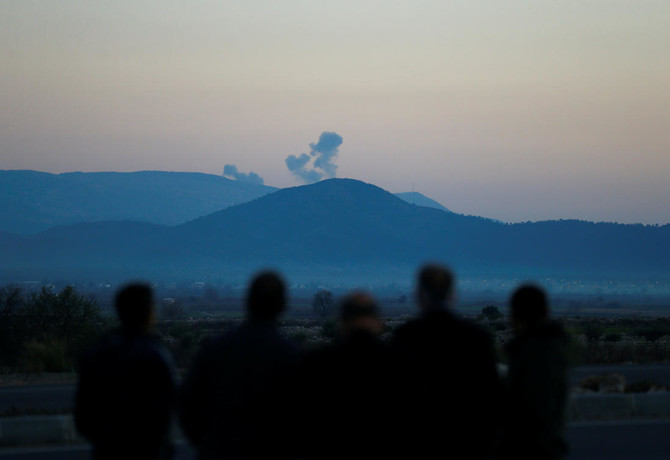
Russia voices concern over Turkey operation in Syria
Russia voices concern over Turkey operation in Syria
Latest updates


© 2026 SAUDI RESEARCH & PUBLISHING COMPANY, All Rights Reserved And subject to Terms of Use Agreement.