JOLO: Two Indonesian fishermen have been released by extremists after more than a year in captivity in the southern Philippines, police said Saturday.
There were no official comments on the physical condition of the two who were snatched from their fishing vessel in the waters between the southern Philippines and Malaysia in November 2016, a police statement said.
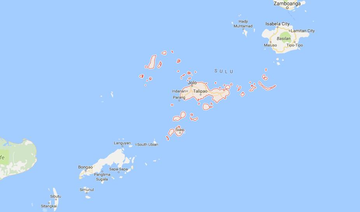
The two were reportedly turned over by a "concerned citizen" late Thursday to a former governor on the southern island of Jolo, a longtime haunt of the Abu Sayyaf extremist group, some of whose members have pledged allegiance to Daesh, the statement added.
The ex-governor called the police who picked up the two. Officials would not say if ransom, a frequent motive for such abductions, was paid in this case.
The Abu Sayyaf is a loose network of militants formed in the 1990s with seed money from Osama bin Laden's Al-Qaeda network, and has earned millions of dollars from banditry and kidnappings-for-ransom, often targetting foreigners.
The group is based in the strife-torn southern islands like Jolo but its members have sometimes crossed the southern maritime borders to carry out attacks in Malaysia.
This has prompted Malaysia and Indonesia to join forces with the Philippines in boosting its sea patrols in the area.
Indonesian embassy officials could not be contacted for comment.
Abu Sayyaf members were among the Muslim armed groups who rampaged through the southern city of Marawi in May, resulting in a five-month long battle that left more than a thousand dead.
In another incident in the southern Philippines, about 10 extremists clashed with soldiers before dawn Saturday, the military said.
There was no confirmation of casualties on either side but troops later recovered grenades, rockets and a black Daesh flag.

Two Indonesian hostages freed in Philippines
Peru Congress impeaches interim president after four months in office
- Jose Jeri, 39, was accused in the irregular hiring of several women in his government, and of suspected graft
- Peru has now burned through seven presidents since 2016, several of them impeached, investigated or convicted of wrongdoing
LIMA: Peru’s Congress on Tuesday impeached interim president Jose Jeri, the Latin American country’s seventh head of state in 10 years and only the latest toppled over graft claims.
Jeri, 39, was accused in the irregular hiring of several women in his government, and of suspected graft involving a Chinese businessman.
In office since last October, Jeri took over from unpopular leader Dina Boluarte, who was also impeached amid protests against corruption and a wave of violence linked to organized crime.
Prosecutors last week opened an investigation into “whether the head of state exercised undue influence” in government appointments.
Jeri has protested his innocence.
Jeri — at the time the head of Peru’s unicameral parliament — was appointed last year to serve out the remainder of Boluarte’s term, which runs until July, when a new president will take over following elections on April 12.
He is constitutionally barred from seeking election.
Jeri has found himself in the spotlight over claims revealed by investigative TV program Cuarto Poder that five women were improperly given jobs in the president’s office and the environment ministry after meeting with Jeri.
Prosecutors said there were in fact nine women.
Jeri is also under investigation for alleged “illegal sponsorship of interests” following a secret meeting with a Chinese businessman with commercial ties with the government.
- Institutional crisis -
Some observers have pointed to possible politicking in the censure of Jeri just weeks before elections for which over 30 candidates — a record — have tossed their hat into the ring.
The candidate from the right-wing Popular Renewal party, Rafael Lopez Aliaga, who leads in opinion polls, has been among the most vocal in calling for Jeri’s ouster.
Congress is now set to elect its own new leader on Wednesday to replace a caretaker in the post. The new parliament president will automatically take over as Peru’s interim president until July.
“It will be difficult to find a replacement with political legitimacy in the current Congress, with evidence of mediocrity and strong suspicion of widespread corruption,” political analyst Augusto Alvarez told AFP ahead of Tuesday’s vote.
Peru has now burned through seven presidents since 2016, several of them impeached, investigated or convicted of wrongdoing.
The South American country is also gripped by a wave of extortion that has claimed dozens of lives, particularly of bus drivers — some shot at the wheel if their companies refuse to pay protection money.
In two years, the number of extortion cases reported in Peru jumped more than tenfold — from 2,396 to over 25,000 in 2025.


