SUGEDIGI: Turkish artillery fired into Syria’s Afrin region on Friday in what Ankara said was the start of a military campaign against the Kurdish-controlled area.
The cross-border bombardment took place after days of threats from Turkish President Tayyip Erdogan to crush the Syrian Kurdish YPG militia in Afrin in response to what Turkey sees as growing Kurdish strength across a wide stretch of north Syria.
“The operation has actually de facto started with cross-border shelling,” Turkish Defense Minister Nurettin Canikli said, adding that no troops had crossed into Afrin.
Direct military action against territory held by Kurdish militia would open a new front in Syria’s civil war and would see Ankara confronting Kurds allied to the United States at a time when Turkey’s relations with Washington are reaching the breaking point.
The US State Department has called on Turkey to focus on the fight against Daesh militants and not take military action in Afrin.
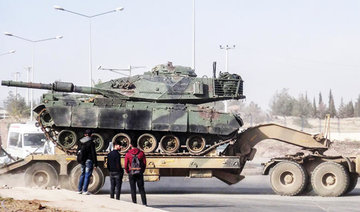
Reuters TV filmed Turkish artillery at the border village of Sugedigi firing on Friday morning into Afrin region, and the YPG militia said Turkish forces had fired 70 shells at Kurdish villages in Afrin starting at midnight.
Rojhat Roj, a YPG spokesman in Afrin, said it was the heaviest Turkish bombardment since Ankara stepped up threats to take military action against the Kurdish region. The YPG would respond with utmost force to any attack on Afrin, he said.
“Currently there are no casualties, all the damages are material so far,” he said.
But Canikli said Ankara was determined to destroy the Kurdish group. “All terror networks and elements in northern Syria will be eliminated. There is no other way,” he said.
“The operation in central Afrin may last a long time, but the terrorist organization will swiftly come undone there.”
Although Canikli said no Turkish troops have gone into Afrin, Turkish newspapers said 20 buses carrying Free Syrian Army rebels crossed on Friday from Turkey into a Turkish-controlled part of northern Syria, on Afrin’s eastern flank.
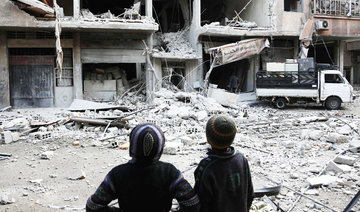
They said the FSA rebels would deploy near the town of Azaz, where Kurdish shelling overnight struck a psychiatric hospital. The Turkish armed forces said several civilians wounded in the attack were taken to Turkey for treatment, and Turkish television footage showed rubble and damaged walls.
TENSION WITH US
Turkey has been angered by US military support for the Kurdish YPG-dominated Syrian Democratic Forces which spearheaded the fight against Islamic State in Syria, and by an announcement that the United States would stay in Syria to train about 30,000 personnel in the swathe of eastern Syria under SDF control.
Turkey says the YPG is a terrorist group and a branch of the outlawed Kurdistan Workers Party which has waged an insurgency in southeast Turkey for decades, and Canikli criticized Washington for its continued emphasis on countering Islamic State.
“The threat of Daesh has been removed in both Syria and Iraq. With this reality out in the open, a ‘focus on Daesh’ statement is truly a meaningless remark,” he said.

Turkey shells Syria’s Afrin region, minister says operation has begun
Jailed Turkish Kurd leader calls on government to broker deal for Syrian Kurds
- Clashes between Syrian forces and the SDF have cast doubt over a deal to integrate the group’s fighters into the army
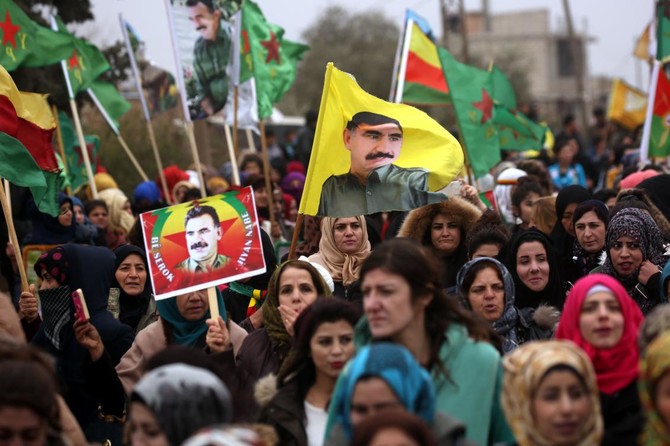
ANKARA: Jailed Turkish Kurd leader Abdullah Ocalan said Tuesday that it was “crucial” for Turkiye’s government to broker a peace deal between the Kurdish-led Syrian Democratic Forces (SDF) and the Damascus government.
Clashes between Syrian forces and the SDF have cast doubt over a deal to integrate the group’s fighters into the army, which was due to take effect by the end of the year.
Ocalan, founder of the Kurdistan Workers’ Party (PKK) militant group, called on Turkiye to help ensure implementation of the deal announced in March between the SDF and the Syrian government, led by former jihadist Ahmed Al-Sharaa, whose forces ousted longtime ruler Bashar Assad last year.
“It is essential for Turkiye to play a role of facilitator, constructively and aimed at dialogue,” he said in a message released by Turkiye’s pro-Kurdish DEM party.
“This is crucial for both regional peace and to strengthen its own internal peace,” Ocalan, who has been jailed for 26 years, added.
“The fundamental demand made in the agreement signed on March 10 between the SDF and the government in Damascus is for a democratic political model permitting (Syria’s) peoples to govern together,” he added.
“This approach also includes the principle of democratic integration, negotiable with the central authorities. The implementation of the March 10 agreement will facilitate and accelerate that process.”
The backbone of the US-backed SDF is the YPG, a Kurdish militant group seen by Turkiye as an extension of the PKK.
Turkiye and Syria both face long-running unrest in their Kurdish-majority regions, which span their shared border.
In Turkiye, the PKK agreed this year at Ocalan’s urging to end its four-decade armed struggle.
In Syria, Sharaa has agreed to merge the Kurds’ semi-autonomous administration into the central government, but deadly clashes and a series of differences have held up implementation of the deal.
The SDF is calling for a decentralized government, which Sharaa rejects.
Turkish Foreign Minister Hakan Fidan, whose country sees Kurdish fighters across the border as a threat, urged the SDF last week not to be an “obstacle” to stability.
Syrian Kurdish leader Mazloum Abdi said Thursday that “all efforts” were being made to prevent the collapse of talks.
Clashes between Syrian forces and the SDF have cast doubt over a deal to integrate the group’s fighters into the army, which was due to take effect by the end of the year.
Ocalan, founder of the Kurdistan Workers’ Party (PKK) militant group, called on Turkiye to help ensure implementation of the deal announced in March between the SDF and the Syrian government, led by former jihadist Ahmed Al-Sharaa, whose forces ousted longtime ruler Bashar Assad last year.
“It is essential for Turkiye to play a role of facilitator, constructively and aimed at dialogue,” he said in a message released by Turkiye’s pro-Kurdish DEM party.
“This is crucial for both regional peace and to strengthen its own internal peace,” Ocalan, who has been jailed for 26 years, added.
“The fundamental demand made in the agreement signed on March 10 between the SDF and the government in Damascus is for a democratic political model permitting (Syria’s) peoples to govern together,” he added.
“This approach also includes the principle of democratic integration, negotiable with the central authorities. The implementation of the March 10 agreement will facilitate and accelerate that process.”
The backbone of the US-backed SDF is the YPG, a Kurdish militant group seen by Turkiye as an extension of the PKK.
Turkiye and Syria both face long-running unrest in their Kurdish-majority regions, which span their shared border.
In Turkiye, the PKK agreed this year at Ocalan’s urging to end its four-decade armed struggle.
In Syria, Sharaa has agreed to merge the Kurds’ semi-autonomous administration into the central government, but deadly clashes and a series of differences have held up implementation of the deal.
The SDF is calling for a decentralized government, which Sharaa rejects.
Turkish Foreign Minister Hakan Fidan, whose country sees Kurdish fighters across the border as a threat, urged the SDF last week not to be an “obstacle” to stability.
Syrian Kurdish leader Mazloum Abdi said Thursday that “all efforts” were being made to prevent the collapse of talks.
© 2025 SAUDI RESEARCH & PUBLISHING COMPANY, All Rights Reserved And subject to Terms of Use Agreement.