DUBAI: Oman’s economy is set to receive a ‘much-needed’ boost from additional revenue due to the rise in prices of oil barrels, according to the country’s investment fund chief economist, Fabio Scacciavillani.
“The most difficult phase for the economy is coming to an end,” Scacciavillani told the Times of Oman.
OPEC agreed to a production cut late last year which allowed the prices to rise, prompting Oman’s crude oil cost to rise above $67 — a three-year high for the gulf nation.
“The prices of oil show that the most difficult phase for the economy is coming to an end. If prices remain at $65- $70 levels, the flow of resources in the public coffers will be strong and help the overall economy,” according to the chief economist.
This spike is expected to lessen the deficit as oil prices account for 71 percent of the country’s income. Oman’s recent budget set 2018 oil prices at an estimated $50, 25 percent below the current cost.
“I don’t see any reason why oil prices would decline now. The fundamentals are strong, and as global supply dips and demand increases, there is a synchronized rebound in the oil market. This is expected to stay,” Scacciavillani said.
Confident traders as well as strong global economic growth have driven up demand for oil, sustaining prices at above $60.
“The worst is over. The economy is in an upbeat mode. Brent has broken the psychological barrier of $70 and it doesn’t look like prices will go lower any time soon. I expect prices of oil to remain around $70-$75 at least for the next couple of months,” Mubeen Khan, a Muscat based CA and financial analyst, told the English-language daily.


Oman’s economy is ‘over the worst’, says leading economist
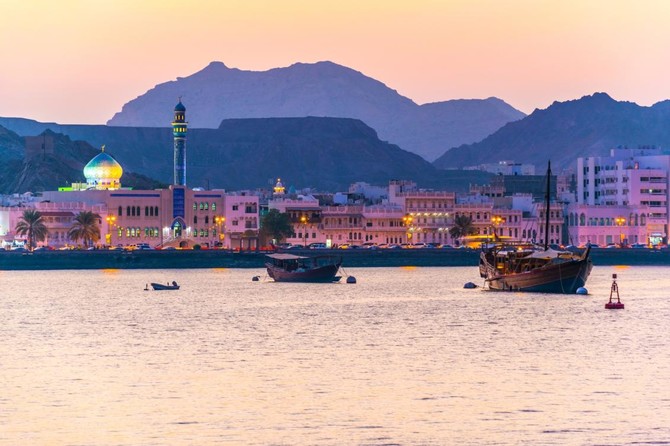
Oman’s economy is ‘over the worst’, says leading economist
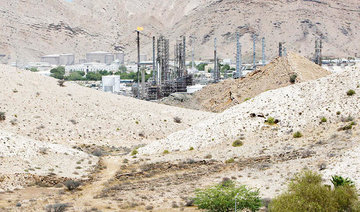


Saudi economy grows 4.5% in 2025 as oil, non-oil sectors accelerate
RIYADH: Saudi Arabia’s real gross domestic product expanded by 4.5 percent year on year in 2025, driven by strong growth in both oil and non-energy activities, official data showed.
According to flash estimates released by Saudi Arabia’s General Authority for Statistics, oil activities in the Kingdom expanded by 5.6 percent in 2025 compared to the previous year, while non-oil operations and government activities rose by 4.9 percent and 0.9 percent, respectively, during the same period.
The latest report aligns with an October outlook from the International Monetary Fund, which projected Saudi Arabia’s GDP would grow by 4 percent in both 2025 and 2026.
Earlier this month, the World Bank forecast that the Kingdom’s GDP is projected to expand by 4.3 percent in 2026 and 4.4 percent in 2027, up from an expected 3.8 percent in 2025.
“The main driver of real GDP growth in 2025 was non-oil activities, which contributed 2.7 percentage points, while oil activities with 1.4 pp, government activities at 0.1 pp and net taxes on products at 0.2 pp, also contributed positively,” said GASTAT.
Momentum accelerated toward year-end. Real GDP expanded 4.9 percent in the fourth quarter from a year earlier, led by a 10.4 percent surge in oil activities, while non-oil sectors grew 4.1 percent. Government activities contracted 1.2 percent on an annual basis in the quarter.
“The main driver of growth in real GDP of the fourth quarter of 2025 was oil activities, which contributed 2.5 pp, non-oil activities contributed 2.3 pp and net taxes on products contributed 0.2 pp, while government activities had a negative contribution of 0.2 pp,” added the authority.
Saudi Arabia’s seasonally adjusted real GDP recorded growth of 1.1 percent in the fourth quarter of 2025 compared to the previous three months.
In the fourth quarter, oil activities witnessed a quarter-on-quarter growth of 1.4 percent, while non-oil activities expanded by 1.3 percent during the same period.
Government activities, however, recorded a decline of 0.2 percent in the fourth quarter compared to the previous three months.
Earlier this month, a separate analysis by Standard Chartered said the Kingdom’s GDP is expected to expand by 4.5 percent in 2026, outperforming the global growth average of 3.4 percent, driven by sustained momentum in both hydrocarbon and non-oil sectors.


