ATHENS: Greek police fired teargas at protesters outside parliament in Athens on Monday, as lawmakers voted on a new set of bailout measures prescribed by the country’s international lenders in exchange for fresh bailout loans.
More than 10,000 people had rallied outside parliament when a group of protesters hurled petrol bombs and stones at police who had formed a cordon outside parliament. Police responded with teargas.
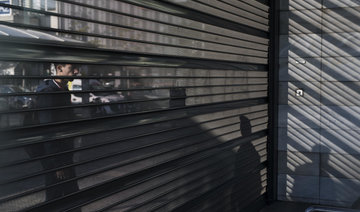
Strikes on Monday crippled public transport in Athens and hit air traffic ahead of a parliamentary vote on controversial reforms demanded by Greece’s creditors, including curbs on industrial action.
Apart from introducing much larger quorums on unions to call a strike, the 100-odd reforms also provide for the foreclosure and online auction of properties belonging to bad debt holders.
Both measures are fiercely opposed by leftists and trade unions.
The government insists that the changes only affect the local chapters of unions, and Prime Minister Alexis Tsipras angrily rejected criticism that his leftist administration was out to limit strikes.
“It’s a shameless lie (to claim) that this government is enforcing demands by creditors and industrialists to deregulate the labor market,” Tsipras told parliament.
“Strikes are neither abolished nor threatened by this government,” he said.
Debt-laden Greece has received three multi-billion-euro bailouts since 2010.
The third rescue program, currently financially supported by EU states but not the International Monetary Fund, runs to August 2018 and Athens then hopes to fully return to market financing.
“Today’s vote will be crucial to speed up the country’s exit from the bailout in seven months,” Tsipras said.
Monday’s strike, called by a slew of unions, caused havoc in Athens, with the shutdown of public transport leading to huge traffic jams.
State employees were also asked to strike by their union Adedy while air traffic controllers staged a work stoppage, disrupting flights.
Greece has seen around 50 strikes since 2010 following austerity measures imposed by creditors in return for multi-billion-euro bailouts run by the European Union, International Monetary Fund and European Central Bank.
Unions say that the creditors’ demand to change the 36-year-old industrial action law is only the first step in ongoing EU-IMF efforts to limit strikes.
“You are starting to tear apart the right to strike,” Communist party leader Dimitris Koutsoubas told the government in the parliament debate.
After Monday’s vote in parliament, Athens will wait for European finance ministers to approve the latest tranche of a third bailout program totalling 4.5 billion euros ($5.5 billion).


![]()

Greek police fire teargas at protesters as strikes hit Greece over move to curb industrial action
Greek police fire teargas at protesters as strikes hit Greece over move to curb industrial action
Latest updates


© 2026 SAUDI RESEARCH & PUBLISHING COMPANY, All Rights Reserved And subject to Terms of Use Agreement.