SIEM REAP, Cambodia: If you close your eyes and listen carefully at sunset in Siem Reap’s old town, between the rhythmic chants and tinkling bells emanating from the local Buddhist temples, you will hear the faint, melodious sound of the Muslim call to prayer.
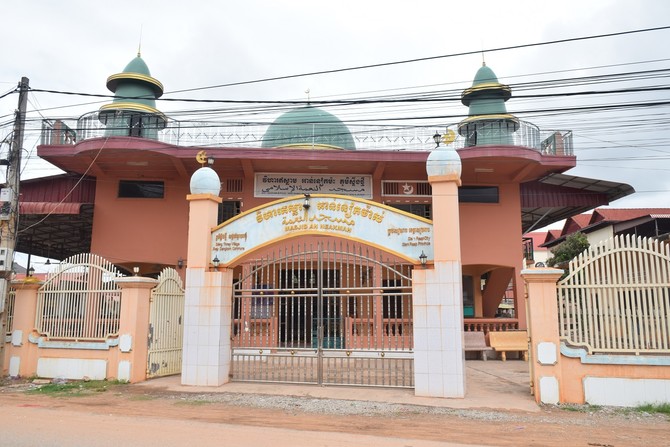
The muezzin issues his call from the Masjid Al-Neakma in the heart of Siem Reap’s “Muslim Village.”
The gateway to Cambodia’s UNESCO World Heritage temple city, Angkor Wat, Siem Reap is also home to a sizeable Muslim community.
It is exactly a year since Cambodia first turned to neighboring Thailand and Malaysia for help in developing its own halal industries, not to satisfy the nation’s Muslims, but to take its first steps into the lucrative halal food and travel industry.
Tourism numbers for Cambodia show that between 2015 and 2016, travelers from Muslim majority countries increased by 4.4 percent, a figure that is expected to continue rising.
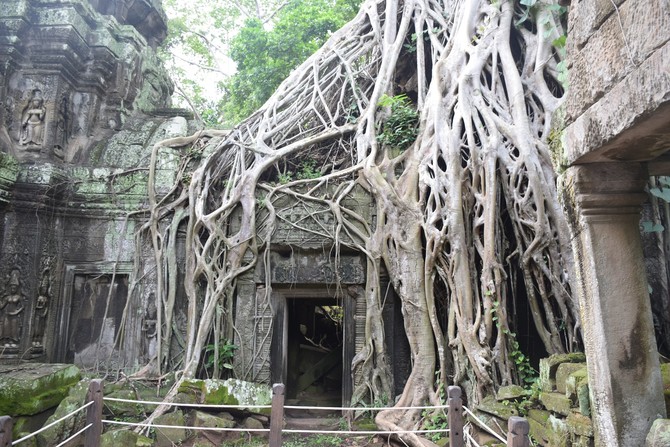
Like everyone else that comes to Cambodia, all Muslim travelers will visit Angkor Wat, the country’s premier tourist attraction, with its famous “Tomb Raider” set of mammoth trees wrapped around 12th century temples.
Yet very few of them are aware of the local Muslim community in Siem Reap.
“Before I came to Cambodia, I had no idea there were even Cambodian Muslims and I was expecting a tough time trying to find food outlets and prayer facilities suitable for me and my family,” said Harun Rashid, a Muslim tourist from the UK who visited Siem Reap’s famous temple city with his family in September this year.
“But then I spoke to a Muslim friend who had recently visited and he told me about the ‘Muslim Village.’ I was like, ‘really? There’s a Muslim village near Angkor Wat?
“As soon as I heard this, I began looking for accommodation near the place he had described.”
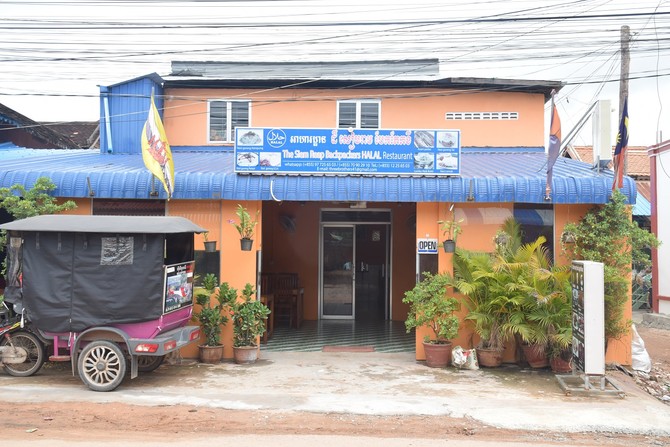
“We have a halal slaughterhouse run by Muslims in the village. This is where we all get our meat for our homes and to use in the restaurants. I don’t serve alcohol in my one because I am a Muslim. This makes life easier for Muslim travelers to Siem Reap, who can also pray at our mosque which is always open for them,” says Nasir Mahmud, owner of the Siem Reap Backpackers Halal Restaurant.
Finding the Muslims of Angkor Wat meant Rashid and his family now had access to halal food and the local mosque, where they could pray with the local Muslims.
“I suddenly didn’t have to ask if the broth in my chicken soup was made with pork stock, or look around to find a place where I could pray. It doesn’t sound like much, but having people who understand your needs makes a huge difference when you are travelling, especially with family,” he said.
The Muslim village of Siem Reap is in Phum Steung May, west of the Siem Reap River and the town’s main tourist market, Psar Chas.
The community is centered around the newly built mosque, next to which is a religious school and the village cemetery.
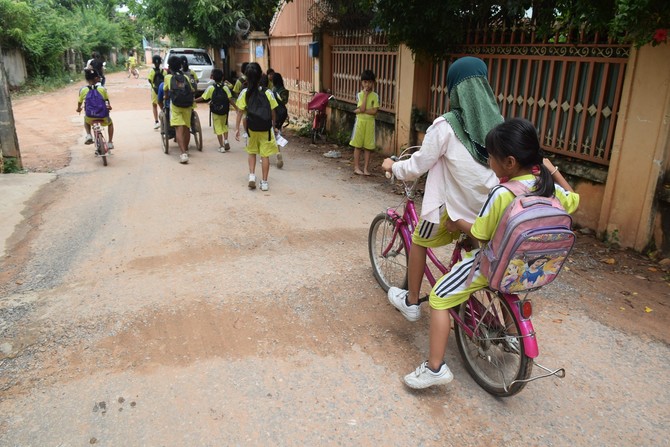
The Muslim homes here are indistinguishable from their Buddhist neighbors, both communities live side by side.
“Here, Muslims and Buddhists all live together as friends and neighbors. We all get along,” says Mahmud.
The 48-year-old father-of-five, who also drives a local tuk tuk taxi, opened his restaurant two years ago, after seeing a hike in independent Muslim travelers.
“Travellers come from lots of Muslim countries, especially Malaysia, Indonesia and Singapore, and many of them are backpackers.
“Siem Reap is not cheap for travelers. At my restaurant people get a free drink on arrival and the best-value halal food in town.”
In time, Mahmud hopes to develop his restaurant into a hub for Muslim travelers.
He already offers a personalized tourism service, arranging local accommodation, transport and tour packages to visit all the country’s major sites.
Mahmud’s restaurant sits a few doors from the mosque along the main strip of businesses owned by local Muslims in Phum Steung May.
His community are all ethnic Cham people, whose ancestors once lived in the ancient Champa region along the central and southern coast of modern day Vietnam.
Originally a Hindu people, many Chams began converting to Islam around the 15th century.
When their settlements were extinguished by the Vietnamese polities in the early 19th century, Muslim Chams migrated to different parts of Indochina, including Cambodia.
The Cham Muslims are a tiny minority in a country with a strong Buddhist image and this can often make Muslim travelers worried about access to halal services on the road.
“I remember, before the trip to Cambodia, thinking I’m going to have to survive on fish and vegetarian dishes and, even then, find a way to make sure no animal products are used in the traditional foods here. The thought of doing this with a family in tow felt quite challenging,” Rashid said.
Experts feel more should be done by tourism boards to tap into communities like the one at Phum Steung May and their potential to make Muslim travelers like Rashid feel more comfortable.
“Muslims are everywhere and all that is needed is to create a platform where they stand out. If the tourism boards of non-Muslim countries were to start promoting Muslim restaurants or mosques, they would be making their destination more attractive to the Muslim traveler,” says Irfan Ahmed, CEO of Irhal, one of the world’s leading Muslim travel apps.
So, perhaps Cambodia does not need to turn to its neighbors to realize its halal travel ambitions after all.
With resourceful locals like Mahmud in Phum Steung May, Cambodia might already possess the keys to unlock the Muslim travel market.


![]()
![]()
![]()
![]()
![]()
![]()
![]()

Angkor Wat’s Muslims: The key to Cambodia’s halal tourism?


Angkor Wat’s Muslims: The key to Cambodia’s halal tourism?
Latest updates


© 2026 SAUDI RESEARCH & PUBLISHING COMPANY, All Rights Reserved And subject to Terms of Use Agreement.