BENGHAZI/ROME: Authorities in eastern Libya said they had arrested and would deport 81 migrants from Eritrea, Ethiopia and Somalia who had escaped from smugglers after failing to reach Europe.
The migrants were reported to authorities by an imam at a mosque on the coast to the south of the Libyan city of Benghazi, officials said on Thursday.
“They were arrested in the Zueitina area at a camp of illegal migrants,” said Ahmed Al-Arifi, an official from the department for countering illegal migration in the eastern city of Benghazi. “They were arrested for deportation back to their countries.”
Libya is the main departure point for migrants trying to reach Europe by sea, with nearly 120,000 crossing the central Mediterranean last year.
Almost all leave from western Libya, though departures dropped sharply in July last year when some armed factions began blocking crossings. Most of the migrants are from West African countries, though some East Africans enter Libya through Sudan.
Arifi said a total of 5,686 migrants had been deported from eastern Libya last year, up from 2,912 in 2016.
One of the Eritrean migrants, speaking at a detention center in Benghazi, said he had arrived in Libya in March last year from Sudan, after paying $4,000 for the journey.
He was taken across the Sahara desert to the western Libyan smuggling hub of Sabratha, and waited there with other migrants for about four months before being told the sea route had been closed.
Armed groups began preventing boat departures in Sabratha in July, and a major smuggling group was pushed out of the city in September.
The Eritrean said he had then crossed back through the town of Bani Walid to Ajdabiya in the east, close to Zueitina. Smugglers had demanded another $2,000 for the trip to Europe, but he was unable to pay and fled mistreatment at their hands.
“I wanted to go to Italy to work but unfortunately it wasn’t possible,” he said. “We suffer from severe poverty in our country and there’s a dictatorial system.
“Now because we were treated badly by smugglers we are suffering from illnesses and skin diseases. We don’t want to return to our country, we want to go to Europe.”
Italian coast guard service meanwhile said that 264 migrants had been rescued from a boat off the coast of Calabria, where traffickers have increasingly been using smaller boats recently.
The vessel was sighted by a plane belonging to the EU border agency Frontex and the migrants were rescued off the southern city of Crotone, a spokesman said.
The spokesman said the boat probably came from Turkey. Several coast guard boats and a British ship working for Frontex took part in the rescue effort.
In December 2014 and January 2015, traffickers abandoned about six large vessels carrying hundreds of migrants off the Italian coast after putting the vessels on auto pilot.
The boats had started their journey in Turkey.
“It is rare to see large vessels in this zone, in general it is sailboats here,” the spokesman said.
For Italy, 2017 was a turning point: The country went from large-scale arrivals in the first six months to a sharp drop off, thanks to controversial agreements with Libya, from where many such boats set sail.


![]()
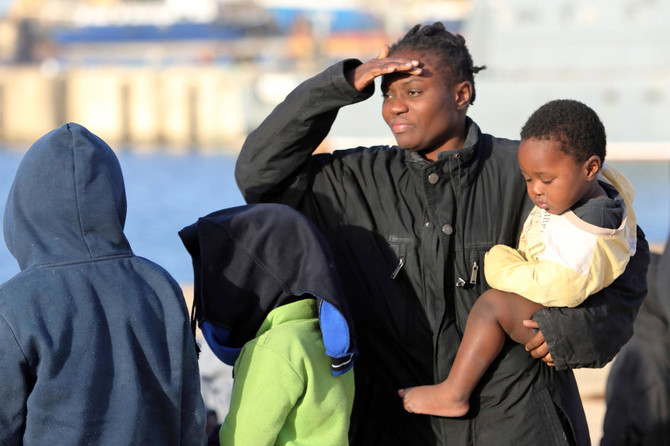
81 migrants held in Libya face deportation
81 migrants held in Libya face deportation
Latest updates


© 2026 SAUDI RESEARCH & PUBLISHING COMPANY, All Rights Reserved And subject to Terms of Use Agreement.