UNITED NATION: The United Nations’ political affairs chief traveled to Libya on Tuesday seeking progress in a new UN push to unite the country and end years of chaos.
Jeffrey Feltman, the UN under-secretary of state for political affairs, will also travel to neighboring Tunisia during his visit until Friday, said a UN statement.
The United Nations has launched a plan to bring stability to Libya through elections and changes to a 2015 political deal that set up a government of national accord led by Prime Minister Fayez Al-Sarraj.
After two meetings were held in Tunis last year, there appears to have been little progress.
“The United Nations urges all Libyan actors to engage in earnest in an inclusive political process leading to credible and fair elections,” said Feltman.
There is a “window of opportunity” to focus efforts on building unified state institutions, he added.
There was no immediate information on Feltman’s meetings.
Despite the 2015 accord, Libya remains divided between the UN-backed government in Tripoli and a rival administration in the east that enjoys support from Egypt, Russia and the United Arab Emirates.
One of the main stumbling blocks is the inclusion in the new government of Khalifa Haftar, the powerful leader whose Libyan National Army dominates the country’s east.


![]()
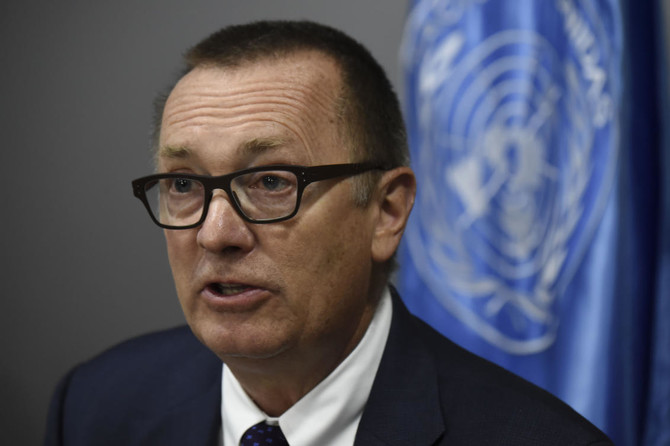

UN political chief in Libya to push for talks
UN political chief in Libya to push for talks
Lebanon close to completing disarmament of Hezbollah south of Litani River, says PM
BEIRUT: Lebanon is close to completing the disarmament of Hezbollah south of the Litani River, Prime Minister Nawaf Salam said on Saturday, as the country races to fulfil a key demand of its ceasefire with Israel before a year-end deadline.
The US-backed ceasefire, agreed in November 2024, ended more than a year of fighting between Israel and Hezbollah and required the disarmament of the Iran-aligned militant group, starting in areas south of the river adjacent to Israel.
Lebanese authorities, led by President Joseph Aoun and Salam,
tasked
the US-backed Lebanese army on August 5 with devising a plan to establish a state monopoly on arms by the end of the year.
“Prime Minister Salam affirmed that the first phase of the weapons consolidation plan related to the area south of the Litani River is only days away from completion,” a statement from his office said.
“The state is ready to move on to the second phase — namely (confiscating weapons) north of the Litani River — based on the plan prepared by the Lebanese army pursuant to a mandate from the government,” Salam added.
The statement came after Salam held talks with Simon Karam, Lebanon’s top civilian negotiator on a committee overseeing the Hezbollah-Israel truce.
Since the ceasefire, the sides have regularly accused each other of violations, with Israel questioning the Lebanese army’s efforts to disarm Hezbollah. Israeli warplanes have increasingly targeted Hezbollah in southern Lebanon and even in the capital.
Hezbollah, a Shiite Muslim group, has tried to resist the pressure — from its mainly Christian and Sunni Muslim opponents in Lebanon as well as from the US and Saudi Arabia — to disarm, saying it would be a mistake while Israel continues its air strikes on the country.
Israel has publicly urged Lebanese authorities to fulfil the conditions of the truce, saying it will act “as necessary” if Lebanon fails to take steps against Hezbollah.
The US-backed ceasefire, agreed in November 2024, ended more than a year of fighting between Israel and Hezbollah and required the disarmament of the Iran-aligned militant group, starting in areas south of the river adjacent to Israel.
Lebanese authorities, led by President Joseph Aoun and Salam,
tasked
the US-backed Lebanese army on August 5 with devising a plan to establish a state monopoly on arms by the end of the year.
“Prime Minister Salam affirmed that the first phase of the weapons consolidation plan related to the area south of the Litani River is only days away from completion,” a statement from his office said.
“The state is ready to move on to the second phase — namely (confiscating weapons) north of the Litani River — based on the plan prepared by the Lebanese army pursuant to a mandate from the government,” Salam added.
The statement came after Salam held talks with Simon Karam, Lebanon’s top civilian negotiator on a committee overseeing the Hezbollah-Israel truce.
Since the ceasefire, the sides have regularly accused each other of violations, with Israel questioning the Lebanese army’s efforts to disarm Hezbollah. Israeli warplanes have increasingly targeted Hezbollah in southern Lebanon and even in the capital.
Hezbollah, a Shiite Muslim group, has tried to resist the pressure — from its mainly Christian and Sunni Muslim opponents in Lebanon as well as from the US and Saudi Arabia — to disarm, saying it would be a mistake while Israel continues its air strikes on the country.
Israel has publicly urged Lebanese authorities to fulfil the conditions of the truce, saying it will act “as necessary” if Lebanon fails to take steps against Hezbollah.
Latest updates


© 2025 SAUDI RESEARCH & PUBLISHING COMPANY, All Rights Reserved And subject to Terms of Use Agreement.