LAGOS: Eighty people have been killed in Nigeria’s central state of Benue since Dec. 31 following clashes between cattle herders and farmers that have displaced tens of thousands, an emergency official said on Tuesday.
The violence between mostly Muslim herders and Christian farmers intensified over the New Year, fueled by a new law banning the nomadic cattle herders from moving through the state.
There have been similar tit-for-tat attacks elsewhere in central states, polarizing Nigerians along religious and ethnic lines and putting the spotlight on the federal government for failing to curb the violence.
“Eighty is the number we can say for now, the attacks have not stopped,” Benue State Emergency Management Agency (SEMA) executive secretary Emmanuel Shior told AFP by telephone.
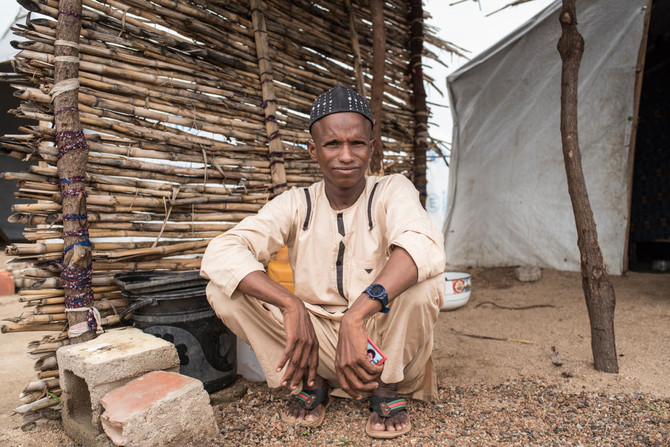
Shior said the killings had displaced thousands of people in the districts of Guma and Logo who are now seeking shelter in four camps.
“The number (of internally displaced people) is 80,000 now because the killings have continued, some of the people in other states are running to Benue,” Shior said from the Benue state capital, Makurdi.
“We suspect these people are reacting against the open grazing prohibition put in place by the governor of Benue state.”
The prohibition was meant to encourage the herdsmen, who belong to the Fulani ethnic group, to shift from nomadic grazing to ranching cattle, which would theoretically prevent bloody disputes over land with farmers.
But when the new law was introduced last year, it was instantly condemned by the Miyetti Allah Cattle Breeders Association of Nigeria (MACBAN), the umbrella body of Fulani herders in Nigeria, who said it threatened their way of life.
“It is very wrong for a governor to ban Fulani from feeding their cows. These cows are their living,” said Haruna Usman, Kaduna state chairman of MACBAN.
“That is where the government made a big mistake,” Usman said, calling for negotiations.
President Muhammadu Buhari’s government held a closed-door meeting on Monday to discuss the crisis, which represents another security concern along with Boko Haram Islamists in the north and Niger Delta militants in the south.
Following the meeting, Benue State governor Samuel Ortom said he would not back down on the new law.
“All cattle breeders or rearers are allowed to be in Benue state, but they must ranch their livestock,” Ortom said, according to the Premium Times news site.
Buhari has ramped up security in the region and ordered police reinforcements in Benue.
“The killings must stop and the security agencies have the President’s support to do this as quickly as possible,” Buhari’s spokesman Garba Shehu said.
But human rights group Amnesty International said more was needed to stop the bloodshed.
“The pattern of attacks and reprisals is reaching a boiling point because of the failure of authorities to carry out investigations and end the rampant impunity for previous crimes,” said Isa Sanusi, media manager for Amnesty International Nigeria.
“It is not enough for government to make pronouncements or issue condemnations, it is vital that those responsible are punished.”
The International Crisis Group security think-tank warned last September the conflict was becoming “as potentially dangerous as the Boko Haram insurgency in the northeast.”
It also threatens Buhari’s popularity in the run-up to Nigeria’s 2019 presidential election. The 75-year-old former military ruler is himself a Hausa-speaking Fulani.
Buhari came into power in 2015 pledging bring security and stability to Nigeria.
But both have been elusive with Boko Haram insurgents launching deadly attacks and an economic recession dampening growth.


![]()
Death toll from Nigeria rural violence reaches 80
Death toll from Nigeria rural violence reaches 80

Latest updates


© 2026 SAUDI RESEARCH & PUBLISHING COMPANY, All Rights Reserved And subject to Terms of Use Agreement.