LONDON: The Iranian government may be rethinking its battle against online dissent after a global backlash against moves to curb the use of social media tools such as Telegram.
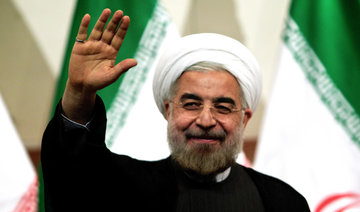
It follows fresh comments made by President Hassan Rouhani on Monday stating that he did not want to “permanently” restrict access to social media.
His remarks contradict earlier decisions made in December to block the picture-sharing app Instagram and the encrypted messaging app Telegram due to the belief they were fueling the protests that broke out on the streets of the country last month.
It follows widespread criticism of the move to curb access to social media tools used by the protesters.
Speaking to ministers on Monday, Rouhani said: “People’s access to cyberspace should not be cut permanently; one cannot be indifferent to people’s lives and businesses.
“Every technology can be abused by some; we cannot block the technology and the benefits that people are taking from it,” he added in comments published on the president’s official website.
Iran has had a strong grip over social media for many years, with Facebook and Twitter technically banned since 2009. However, many people have still managed to find a way to access the sites and even Rouhani opened his own Facebook page in 2013.
Holly Dagres, a former US State Department analyst who now runs The Iranist website, said: “The Iranian government tends to slow the Internet in times of big protests like 2009 and this past week’s protests. They also have censored Twitter, Facebook, and YouTube. But that hasn’t stopped Iranians from using circumvention tools like VPNs to override the censorship. Iranians are professionals when it comes to circumvention, and though the government attempted to curb social media coverage of the protests, it hasn’t stopped Iranians from sharing information with the world.”
The messaging service Telegram has become one of the most popular social media tools in Iran in recent years, with an estimated 40 million Iranians using the product. Users can message each other via private and public channels.
The decision to block the app was due to Telegram’s refusal to shut down certain channels being used by protesters, according to a statement by the company’s CEO Pavel Durov on Dec. 31. He said at the time that it wasn’t clear whether the block was a permanent or temporary move.
The Iranian minister tweeted Durov late last month, accusing the channel of “encouraging hateful conduct.”
In his official statement, Durov countered such accusations, stating: “We are proud that Telegram is used by thousands of massive opposition channels all over the world. We consider freedom of speech an undeniable human right, and would rather get blocked in a country by its authorities than limit peaceful expression of alternative opinions.”
The messaging app did, however, suspend a public channel called @amadnews which it said had broken rules set out by Telegram which bans people using the app from making calls for violence.
The account had called for subscribers to use “molotov cocktails and firearms against police.”
According to Durov, the administrators for the channel apologized for breaking the rules and a “new peaceful channel” has been reinstated.
It may be too early to say if Rouhani’s comments signal a significant shift in Iran’s stance on social media, with no official confirmation that Telegram has been unblocked. Instagram has reportedly now been unblocked.
Instagram and Telegram did not reply to requests by Arab News for comment.
However some analysts see his remarks as an attempt to distance himself from more hard-line elements in the regime.
“The comments show that President Rouhani wants to create a clear distance between himself and his conservative critics, using the protests as a unique opportunity to pivot himself away from being the demonstrators’ target to becoming their champion for reform,” Ali Valez, the Washington-based director of the Iran Project, told Arab News.
There are also signs that pro-government supporters are starting to harness the power of social media in order to promote their own agenda.
One strategy being employed is the creation of Twitter bots which generate automatic content and followers. A BBC report published on Jan. 7 found that these accounts were being used to undermine tweets made by protesters, such as denying that a demonstration had taken place.
There are also continued reports of Iran’s clampdown on anti-government protests. More than 40 Iranian students have been arrested between Dec. 30 and Jan. 4, 2018, according to the Center for Human Rights in Iran.
According to a BBC report on Monday, a 22-year-old man arrested during the protests has died in a prison in Tehran.


![]()
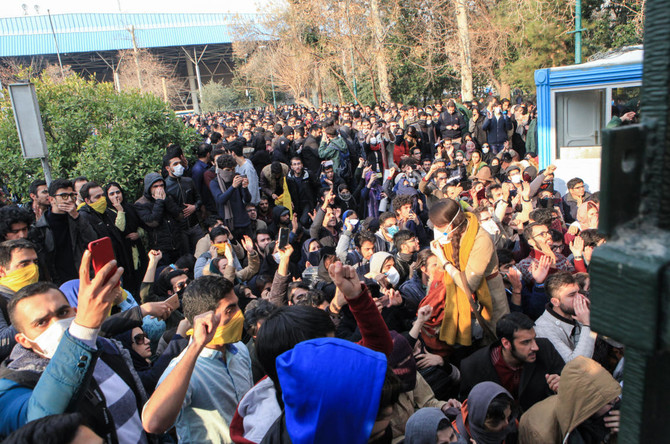
Global backlash over Iran’s cyber battle against protesters
Global backlash over Iran’s cyber battle against protesters
Latest updates


Recommended


© 2026 SAUDI RESEARCH & PUBLISHING COMPANY, All Rights Reserved And subject to Terms of Use Agreement.