LOS ANGELES: With the American Film Institute’s annual luncheon Friday recognizing the best in film and television, Hollywood’s awards season is officially underway.
The schmooze-y celebration at the Four Seasons Hotel brought together the casts and creators of 2017’s most celebrated movies and TV shows, many of which are also in contention for the Golden Globe Awards on Sunday.
“Wonder Woman” director Patty Jenkins led the honorees in a toast, during which she quoted former Washington Post publisher Katharine Graham (who is played by Meryl Streep in Steven Spielberg’s “The Post,” an AFI honoree and best picture nominee at the Globes).
“To love what you do and feel that it matters, how could anything be more fun?” Jenkins said. “We love what we do. It doesn’t always matter — and often it doesn’t — but sometimes it does, so it’s always worth it to try.”
With winners announced in advance and no trophies to accept onstage, the AFI Awards are an opportunity for collegial confabulation.
“This is a place to be together as a community,” said AFI president Bob Gazzale, “to consider the compendium and feel proud.”
Actors, writers, directors and executives embraced the chance to chat, with superstar mashups spontaneously erupting throughout the room.
“Insecure” creator and star Issa Rae greeted Universal Pictures chief Donna Langley. Jenkins was part of a woman-power trio, chatting with Reese Witherspoon and “Lady Bird” writer-director Greta Gerwig. Witherspoon and “Wonder Woman” star Gal Gadot shared a mutual admiration moment, with Gadot telling Witherspoon, “I’m such a big fan.”
Guillermo del Toro made Spielberg laugh. Actress Saoirse Ronan met “Master of None” writer and actress Lena Waithe. Tom Hanks posed for a photo with “The Big Sick” screenwriters Kumail Nanjiani and Emily V. Gordon, who playfully gave him posing tips.
Sterling K. Brown rearranged place cards at the “This Is Us” table so he could sit next to costar Chrissy Metz. Sam Rockwell did the same thing at the table for “Three Billboards Outside Ebbing, Missouri,” moving himself closer to actress Sandy Martin, who plays his mother in the film.
“Call Me By Your Name” stars Armie Hammer and Timothee Chalamet, both awards-season newcomers, stood together as they took in the celebrity-filled room.
Besides “Wonder Woman,” “The Post,” “Lady Bird,” “Three Billboards Outside Ebbing, Missouri,” “The Big Sick” and “Call Me By Your Name,” AFI named “The Florida Project,” “Get Out,” “Dunkirk” and “The Shape of Water” as its top films of 2017. Most are also up for best picture at the Globes.
AFI’s TV picks also overlap with Globes nominees. Besides “Insecure,” “’This Is Us” and “Master of None,” AFI chose “Big Little Lies,” “The Crown,” “Feud: Bette and Joan,” “Game of Thrones,” “The Handmaid’s Tale,” “The Good Place,” and “Stranger Things 2.” A special award was given to “The Vietnam War” TV documentary series.
Many luncheon guests will see each other throughout the weekend at the various events leading up to the Globes. Some went straight from the AFI lunch to the HBO Luxury Lounge, also at the Four Seasons, where celebs could load up on freebies.
Among the takers were Ever Carradine of “The Handmaid’s Tale,” who snagged an $880 UPPAbaby luxury stroller, “Modern Family” star Julie Bowen, who investigated her family tree with an onsite Ancestry.com historian, and “Veep” star Matt Walsh, who picked up a timepiece from WatchGang to wear to Sunday’s ceremony.
Saturday’s pre-Globes events include a tea party held by the British Academy of Film and Television Arts and a fundraising gala to support Sean Penn’s J/P Haitian Relief Organization.


![]()
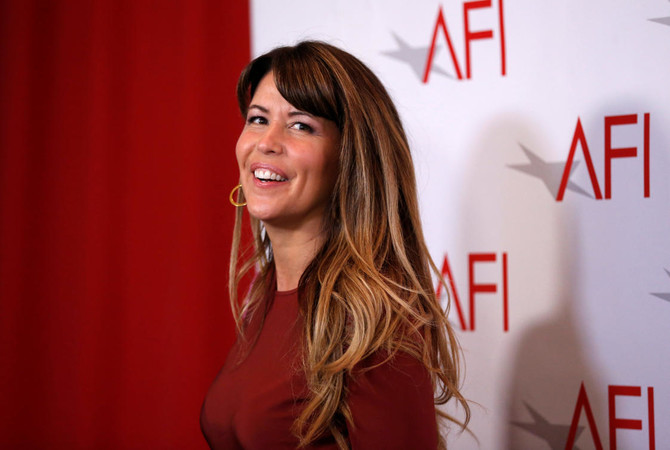
‘Wonder Woman’ director Patty Jenkins leads AFI Awards toast
‘Wonder Woman’ director Patty Jenkins leads AFI Awards toast

Latest updates


© 2026 SAUDI RESEARCH & PUBLISHING COMPANY, All Rights Reserved And subject to Terms of Use Agreement.