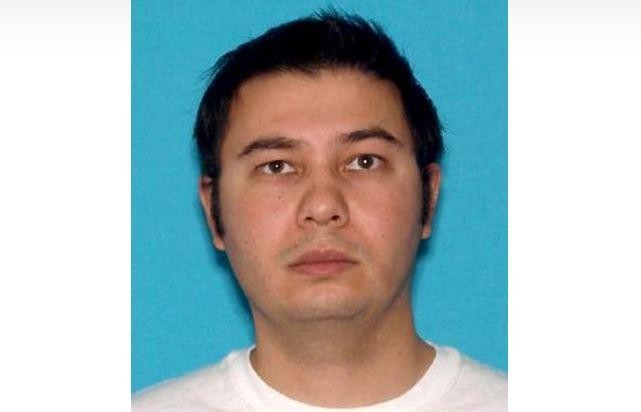
DENVER: Videos made by the man who shot and killed a Colorado sheriff’s deputy after concerns were raised about his mental health show the gunman calling 911 and then opening his apartment door and talking to responding officers before the shooting.
The footage , livestreamed on Periscope, was obtained by Denver’s KUSA-TV. The station broadcast clips from two videos in which Matthew Riehl says he would not hurt anyone except to defend himself before calling authorities.
“Maybe I bought over 1,000 rounds of ammunition from Walmart. It’s not illegal,” he says.
Later, he tells a police dispatcher that a man had invited him to his house and was acting strangely.
When authorities arrive at Riehl’s suburban Denver apartment, the footage shows him talking to at least two officers, telling them he wants to file an emergency restraining order against his domestic partner. He is upset when one officer offers to give him a phone number to call, and leaves the doorway to go back into a room.
“Did you not get the message? Wow. They didn’t get the message. They lied,” he is heard saying on the video.
At another point, Riehl is seen holding a glass in his hand and says he’s had two scotches. He is heard saying that drinking would help him defend himself if someone bothers him.
The TV station said Douglas County Sheriff Tony Spurlock verified the authenticity of the videos and said the 911 call made by Riehl was the second one from his apartment in Highlands Ranch, 16 miles (about 25 kilometers) south of Denver, on Sunday.
The first 911 call was made by Riehl’s roommate, who told authorities Riehl was acting strangely and might be having a mental breakdown. Responding deputies to that call found no evidence of a crime and left.
The footage shows the shooting but the station did not air that footage. A clip purporting to show it has been posted elsewhere online.
Riehl, an attorney and an Iraq war veteran, previously posted videos criticizing Colorado law enforcement officers in profane, highly personal terms.
Wyoming College of Law students had been warned about Riehl, a former student, because of his social media posts critical of professors at the school in Laramie.
A Nov. 6 email from Assistant College of Law Dean Lindsay Hoyt told students to notify campus police if they spotted Riehl or his car near campus, KTWO-AM in Casper, Wyoming, reported. In addition, security on campus was increased for several days.
Campus officers called police in Lone Tree, Colorado, in mid-November to warn them about Riehl, suggesting his rants were indicative of mental illness, UW Police Chief Mike Samp told The Denver Post.
Samp said it’s possible that Colorado authorities faced the same issue as Wyoming officials when an apparently mentally ill, dangerous person makes indirect threats.
The deputy’s slaying was the most recent in a string of fatal shootings involving suspects who may have had mental health problems, and the state has expanded services in hopes of finding a solution.
Colorado opened 12 walk-in mental health crisis centers across the state and set up a 24-hour hotline after a gunman killed 12 people in a suburban Denver movie theater in 2012. Doctors testified the gunman, James Holmes, was mentally ill.
The Colorado Office of Behavioral Health has said more than 580,000 people have taken advantage of the expanded services, going to a crisis center or calling or texting the hotline or a separate help line for less urgent cases.
Riehl was licensed as a lawyer for five years in Wyoming and voluntarily gave up his license in 2016, said Wyoming Bar Association executive director Sharon Wilkinson.
He practiced at a law firm in the small city of Rawlins and later opened his own practice but withdrew from the bar in October 2016, making him ineligible to practice law in the state, Wilkinson said. That’s the same year records indicate he moved back to Colorado.
Wilkinson says the bar received no complaints about Riehl.
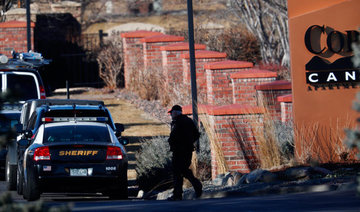
Authorities have said he fired more than 100 rounds before he was killed by a SWAT team.
Riehl, armed with a rifle, wounded four deputies, including Zackari Parrish in the initial gunfire. The other three deputies managed to get away but had to leave Parrish behind because of their injuries and the ongoing gunfire. Parrish later was declared dead.
About 1.5 hours later, the SWAT team arrived and exchanged fire with Riehl. He was killed and a fifth officer was wounded.
Two people in nearby apartment units were also wounded sometime during the prolonged standoff.


![]()
Man who killed Colorado deputy livestreamed himself
Man who killed Colorado deputy livestreamed himself

Latest updates


Recommended


© 2026 SAUDI RESEARCH & PUBLISHING COMPANY, All Rights Reserved And subject to Terms of Use Agreement.