Drug use, sales soar in Iraq’s Basra amid nationwide spike

1 / 4
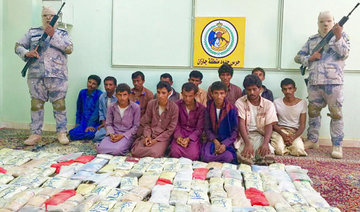
In this Tuesday, Dec. 5, 2017 photo, blindfolded suspected drug dealers are displayed with their goods and weapons in a detention facility in Basra, 340 miles (550 kilometers) southeast of Baghdad, Iraq. In Iraq’s southern Basra province, illegal drug use and trade are hitting unseen levels, mainly among youth, taking the lead in a nationwide spike that has transformed Iraq from merely a corridor for drug trafficking to neighboring countries. Officials blame the country’s porous borders, a widespread ban on alcohol and poverty for the increase. (AP/Nabil Al-Jurani)
2 / 4
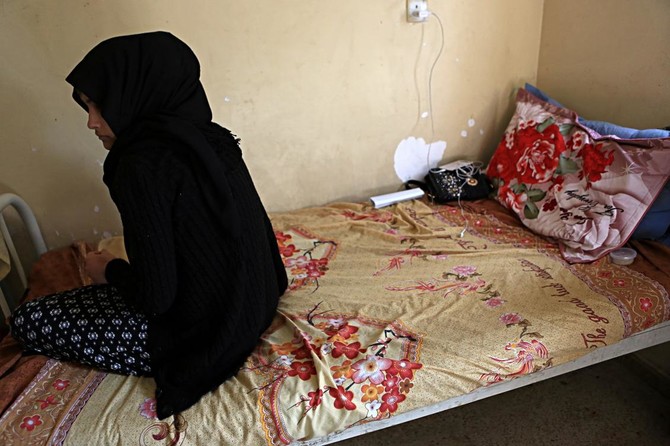
In this Wednesday, Dec. 6, 2017 photo, a recovering drug addict, who asked to remain anonymous, sits in a hospital in Basra, 340 miles (550 kilometers) southeast of Baghdad, Iraq. In Iraq’s southern Basra province, illegal drug use and trade are hitting unseen levels, mainly among youth, taking the lead in a nationwide spike that has transformed Iraq from merely a corridor for drug trafficking to neighboring countries. Officials blame the country’s porous borders, a widespread ban on alcohol and poverty for the increase. (AP/Nabil Al-Jurani)
3 / 4
In this Tuesday, Dec. 5, 2017, drugs, manufacturing tools and weapons belonging to detained drug dealers are displayed in a detention facility in Basra, 340 miles (550 kilometers) southeast of Baghdad, Iraq. In Iraq’s southern Basra province, illegal drug use and trade are hitting unseen levels, mainly among youth, taking the lead in a nationwide spike that has transformed Iraq from merely a corridor for drug trafficking to neighboring countries. Officials blame the country’s porous borders, a widespread ban on alcohol and poverty for the increase. (AP/Nabil Al-Jurani)
4 / 4
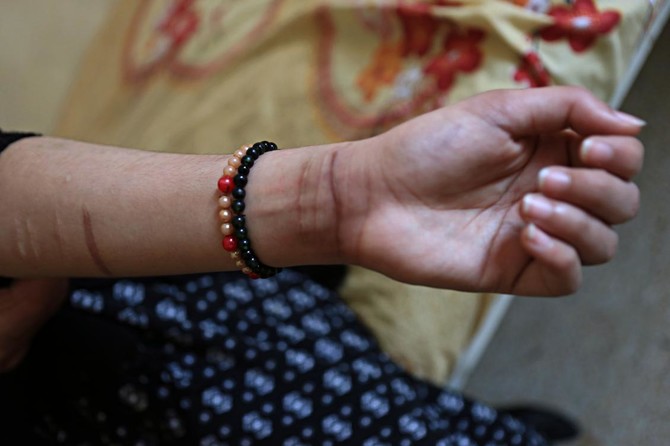
In this Wednesday, Dec. 6, 2017 photo, a recovering drug addict, who asked to remain anonymous, shows the scars on her arm from suicide attempts, in Basra, 340 miles (550 kilometers) southeast of Baghdad, Iraq. In Iraq’s southern Basra province, illegal drug use and trade are hitting unseen levels, mainly among youth, taking the lead in a nationwide spike that has transformed Iraq from merely a corridor for drug trafficking to neighboring countries. Officials blame the country’s porous borders, a widespread ban on alcohol and poverty for the increase. (AP/Nabil Al-Jurani)
Updated 02 January 2018
Follow

Drug use, sales soar in Iraq’s Basra amid nationwide spike

BASRA, Iraq: The rows of self-harm scars that course upward on the teenager’s forearms from her wrists nearly to her elbows are reminders of dark times.
At age seven, the now 19-year-old was diagnosed with sickle-cell anemia, a hereditary disease that comes with painful symptoms, including inflammation of the hands and feet and frequent infections. She became a regular visitor to a hospital where she was given Tramadol, an opioid medication that brought some relief.
Eventually, though, she began obtaining the medication even when there was no pain.
She is part of a phenomenon in Iraq’s southern Basra province, where illegal drug use and sales have reached previously unseen levels, mainly among youths, over the last three years.


Syria ministry says gunman who killed Americans was to be fired from security forces for ‘extremism’

Updated 14 December 2025
Follow

Syria ministry says gunman who killed Americans was to be fired from security forces for ‘extremism’

  • Syrian authorities “had decided to fire him” from the security forces before the attack for holding “extremist Islamist ideas” and had planned to do so on Sunday

DAMASCUS: Syria’s interior ministry said on Sunday that the gunman who killed three Americans in the central Palmyra region the previous day was a member of the security forces who was to have been fired for extremism.
Two US troops and a civilian interpreter died in the attack on Saturday, which the US Central Command said had been carried out by an alleged Daesh group (IS) militant who was then killed.
The Syrian authorities “had decided to fire him” from the security forces before the attack for holding “extremist Islamist ideas” and had planned to do so on Sunday, interior ministry spokesman Noureddine Al-Baba told state television.
A Syrian security official told AFP on Sunday that “11 members of the general security forces were arrested and brought in for questioning after the attack.”
The official who spoke on condition of anonymity said the gunman had belonged to the security forces “for more than 10 months and was posted to several cities before being transferred to Palmyra.”
Palmyra, home to UNESCO-listed ancient ruins, was once controlled by Daesh during the height of its territorial expansion in Syria.
The incident is the first of its kind reported since Islamist-led forces overthrew longtime Syrian ruler Bashar Assad in December last year, and rekindled the country’s ties with the United States.
Pentagon spokesman Sean Parnell said the soldiers “were conducting a key leader engagement” in support of counter-terrorism operations when the attack occurred, while US envoy to Syria Tom Barrack said the ambush targeted “a joint US-Syrian government patrol.”
US President Donald Trump called the incident “a Daesh attack against the US, and Syria, in a very dangerous part of Syria, that is not fully controlled by them,” using another term for the group.
He said the three other US troops injured in the attack were “doing well.”