AMMAN: The Popular Movement for One Democratic State in Historic Palestine (ODS) is stepping up efforts to increase the awareness and the popularity of its cause.
ODS spokesman Radi Jarai told Arab News that his movement wants to make the concept “much more accessible and understandable to people.”
Jarai, an active member of Palestine’s nationalist Fatah party who has spent years in Israeli prisons, said the movement is currently made up of academics and thinkers, so, “We need to make the idea understandable to the common person so that it begins to gain traction.”
The board of the movement met in Istanbul in early December and agreed on a plan to popularize its credo. “This week, we will tape a number of episodes to be broadcast on Palestine TV with the hope of triggering discussions about a democratic state,” Jarai told Arab News.
Lectures are scheduled at Bethlehem and Al-Quds universities, along with a major conference in Ramallah on March 16.
ODS was founded in March 2013 and welcomes both Jews and Palestinians as members.
“There are Israeli Jewish groups that support our goal but have chosen not to join us at the moment,” Jarai said.
Yoav Haifawi, an Israeli activist and publisher of the Free Haifa blog, told Arab News that he is a longtime supporter of the one-state concept.
“The biggest obstacle we face is that Israel is a privileged country for Jews. Therefore, as a colonial state that gives privileges through discrimination, the decolonization of Palestine cannot happen as long as Israel is strong and Palestinians are weak.”
Uri Davis, a Jewish member of Fatah, told Arab News that the Palestine Liberation Organization (PLO) is the representative of the Palestinian people.
He continued that, in his opinion, the replacement of the two-state solution with the ODS paradigm is best seen as a process, one which he suggested should begin with some type of negotiation between the PLO and Israel, supported by the global Boycott, Divestment and Sanctions Movement (BDS) and mediated by the UN.
The one-state solution, Davis said, would mean a change “from the current state of affairs into a single Palestinian sovereignty (stretching) from the Mediterranean Sea to the Jordan River under a liberal-democratic Palestinian Constitution; single Palestinian citizenship; and a single Palestinian currency, hopefully leading to a socialist democratic Federal Republic of Palestine.”
Few PLO factions have been supportive of ODS so far, but lately more have warmed to the idea, according to Jarai. But he added that the idea is still seen by many as a tactic, rather than an actual change of direction.
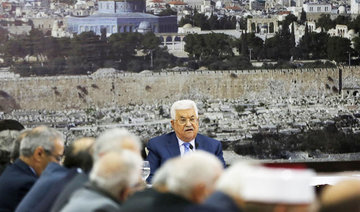
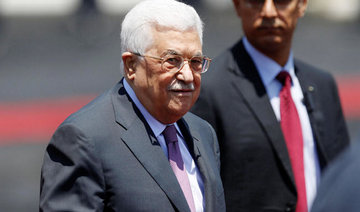
“Their minds are still set on the two-state solution and they use the one-state idea as a threat,” Jarai said. “That includes President (Mahmoud) Abbas who wants to change the international sponsors of the peace process, not understanding that Israel doesn’t want peace, regardless of who the sponsors are.”
In his speech at the opening session of the UN General Assembly in September, Abbas mentioned the two-state solution 13 times but warned of what would happen if this vision were to “be destroyed due to the creation of a one-state reality with two systems — apartheid — from the unchecked imposition of this occupation that is rejected by our people and the world.”
Abbas concluded by saying that if the two-state solution were to fail, “We will have no choice but to continue the struggle and demand full, equal rights for all inhabitants of historic Palestine.”


![]()

ODS Movement looks to popularize one-state solution for Palestine
ODS Movement looks to popularize one-state solution for Palestine

Latest updates


Recommended


© 2026 SAUDI RESEARCH & PUBLISHING COMPANY, All Rights Reserved And subject to Terms of Use Agreement.