US-led coalition: No evidence of Daesh influx to Afghanistan

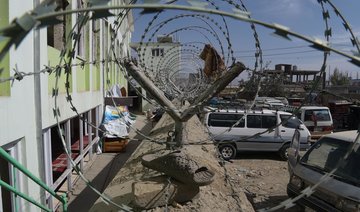
Security personnel arrive outside the site of a suicide attack in kabul, Afghanistan, in this Dec. 28, 2017 photo. (AP)
Updated 31 December 2017
Follow

US-led coalition: No evidence of Daesh influx to Afghanistan

KABUL: The US-led coalition in Afghanistan on Saturday said it has no evidence about a claim by a top Russian diplomat in Kabul who recently revealed that Daesh fighters from the Middle East were heading to Afghanistan.
Last week, Russia’s special envoy for Afghanistan, Zamir Kabulov, told Russia’s Sputnik news agency that militants fleeing from Iraq and Syria are entering Afghanistan and that unidentified helicopters supplied Western arms to Daesh fighters in the country's northern border regions.
Arab News emailed a set of questions to the US-led Resolute Support coalition in Afghanistan about Kabulov’s allegations.
Capt. Tom Gresbak, public affairs director for the coalition, in reply to all the queries and allegations, told Arab News on Saturday that there is no evidence of any influx.
“Resolute Support has no evidence of migration of foreign fighters into Afghanistan from Syria, Iraq. We are aware of the ISIS threat, opportunistic nature and barbaric resilience. ISIS will be eliminated, and Resolute Support will support ANDSF (Afghan National Defense and Security Forces) in achieving this goal.” Gresbak told Arab News
In the interview last week, Kaulov, the Russian ambassador in Kabul, said: “Russia was among the first to sound the alarm in connection with the emergence of Daesh in Afghanistan ... Daesh has significantly increased its power in the country recently. According to our estimates, the number of militants exceeds 10,000 and continues to grow, particularly due to new fighters arriving from Syria and Iraq.”
Afghan Chief of Army Staff Gen. Mohammed Sharif Yaftali dismissed Kabulov’s claims. “We confirm the presence of up to 2,000 Daesh fighters in Afghanistan,” he said. “Mr. Kabulov is sick and it is his habit to exaggerate things.”


UN warns 200,000 more Afghan children face acute malnutrition in 2026

Updated 8 sec ago
Follow

UN warns 200,000 more Afghan children face acute malnutrition in 2026

“Acute malnutrition ⁠among children is ⁠soaring,” WFP’S Country Director John Aylieff said
Some 200,000 additional children face acute malnutrition this year

GENEVA: Hundreds of thousands more children face acute malnutrition in Afghanistan this year amid a hunger crisis exacerbated by foreign aid cuts and violence on the border with Pakistan, a UN official said on Tuesday.
International aid to Afghanistan has fallen sharply since 2021, when US-led forces exited the country and the Taliban regained power. The crisis has been compounded by natural calamities including earthquakes.
“Acute malnutrition ⁠among children is ⁠soaring. Last year we saw the highest surge ever recorded in Afghanistan, and this year, a staggering 3.7 million children will need malnutrition treatment,” the World Food Programme’s Country Director John Aylieff told a Geneva press briefing.
Some 200,000 additional children face acute malnutrition this year, he added.
Funding ⁠cuts mean the UN agency only has the resources to treat one in every four children needing treatment for acute malnutrition, Aylieff said.
Others do not even have the means to reach clinics, he said, voicing concerns that some are trapped by snowfall in remote highland areas.
Most children who die in Afghanistan do so “during the winter... at home silently,” he said.
“What I fear is when the snow is melted at the end of March or in ⁠April, we ⁠will find there has been a very high toll of child deaths in the villages.”
Expulsion policies in neighboring Pakistan and Iran have resulted in over 5 million returnees since late 2023, further straining limited resources, Aylieff said.
Many of those returning to Afghanistan are close to areas where Pakistani and Afghan troops have clashed in recent days, forcing WFP to suspend some services there.
“We foresee that acute malnutrition will be driven up further by the conflict as people are prevented from accessing health services,” imperilling tens of thousands of children, said Aylieff.