Chinese court auctions skyscraper for $84 million

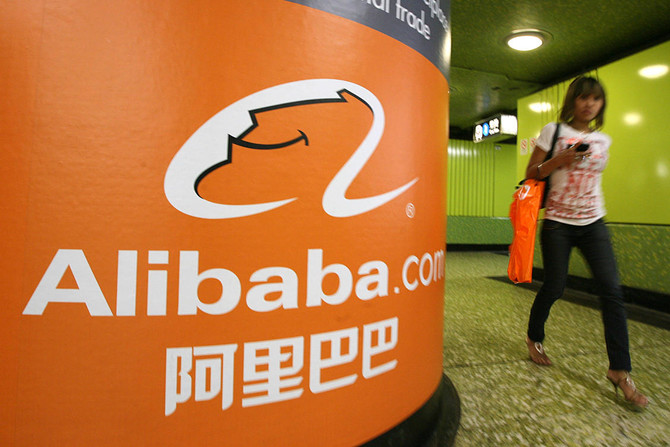
A Chinese court is auctioning a skyscraper on Taobao, Alibaba, the country’s largest e-commerce website (AFP)
Updated 26 December 2017
Follow

Chinese court auctions skyscraper for $84 million

BEIJING: A Chinese court is auctioning a skyscraper on the country’s largest e-commerce website — with a sky-high starting price of 553 million yuan ($84.2 million).
The 39-floor building in Taiyuan, northern Shanxi province, along with the land on which it sits, goes on the block January 2 on Taobao, Alibaba’s e-commerce platform.
Construction on the skyscraper began in 2006. Standing 156 meters high and with over 76,000 square meters of floor space, it was originally designed to be a hotel, state media Xinhua reported Monday.
But the project was suspended due to lack of funding after major construction work was completed in 2010, according to a statement by the Shanxi Provincial Higher People’s Court, Xinhua said.
Photos of a dimly-lit underground parking lot and unfinished building interior with dusty floors piled with construction materials were posted by the court on the auction page.
Almost all Chinese courts have set up accounts on Taobao’s judicial auction platform for more efficient and transparent handling of assets seized in lawsuits, according to Xinhua.
Apartment buildings, cars, confiscated jewelry and mobile phones are all being auctioned by authorities on the e-commerce platform.
In November, a 28-floor building was put up for auction at a starting price of 219 million yuan by a local court in northeastern Zhejiang province.
But the auction was not successful as no one bid for the item.


Saudi POS stays above $4bn as Ramadan spending lifts home goods

Updated 16 sec ago
Follow

Saudi POS stays above $4bn as Ramadan spending lifts home goods

RIYADH: Saudi point-of-sale transactions remained above $4 billion in the week ending Feb. 14, with spending on furniture and home supplies rising ahead of Ramadan, central bank data showed. 

Overall POS activity totaled SR15.34 billion ($4.09 billion), representing a 4.8 percent week-on-week decrease, while the number of transactions dipped 1.6 percent to 252 million, according to the Saudi Central Bank. 

Spending on furniture and home supplies rose 5.9 percent to SR697.35 million, marking the strongest weekly increase among major retail categories. 

Expenditure on electronics increased 2.9 percent, while spending on construction and building materials rose 1.1 percent.

Sectors that saw declines includes freight transport and courier services, which posted a drop of 5 percent to SR64.86 million.

Pharmacy and medical supplies spending fell 8.2 percent to SR223.81 million, but outlays on medical services rose 5.7 percent to SR539.68 million. 

Food and beverage expenditure decreased 4.3 percent, but the total spend of SR2.57 billion meant it retained the largest share of POS activity.

Restaurants and cafes followed with SR1.73 billion, despite a 4.7 percent decline. Apparel and clothing outlays represented the third-largest share of POS spending during the monitored week, up 0.5 percent to SR1.38 billion.

The Kingdom’s major urban centers mirrored the mixed national changes. Riyadh, which accounted for the largest share of total POS spending, saw a 3.4 percent drop to SR5.32 billion. The number of transactions in the capital reached 80.7 million, down 0.8 percent week on week. 

In Jeddah, transaction values decreased 4.4 percent to SR2.12 billion, while Dammam reported a 3.3 percent decrease to SR746.29 million. 

POS data, tracked weekly by SAMA, provides an indicator of consumer spending trends and the ongoing growth of digital payments in Saudi Arabia.  

The data also highlights the expanding reach of POS infrastructure, extending beyond major retail hubs to smaller cities and service sectors, supporting broader digital inclusion initiatives.  

The growth of digital payment technologies aligns with Saudi Arabia’s Vision 2030 objectives, promoting electronic transactions and contributing to the Kingdom’s broader digital economy.