JEDDAH: Syrian opposition groups on Tuesday rejected a Russian-sponsored reconciliation conference on Syria, as Arab News reported on Sunday.
“Most of the opposition groups reject Russia’s Sochi initiative because it is useless to hold talks in an environment in which we cannot freely express our opinions,” Hisham Marwah, a representative of Syria’s opposition High Negotiations Committee (HNC), told Arab News.
Marwah was referring to Moscow’s condition for their attendance. Russia has ruled out the participation of any group that wants the ousting of Syrian President Bashar Assad.
Attacking Russia for coming up with the idea, the HNC official refused to “say what they would like to hear.”
The Congress for National Dialogue, planned for the Black Sea resort of Sochi on Jan. 29-30, was supposed to involve all the parties in the Syrian conflict in charting a course for the country’s future.
In a series of statements, 40 rebel groups, including some of Syria’s most prominent, as well as political opposition groups, said the talks, expected next month, are an attempt to “circumvent” the UN-led process, the Agence France Presse (AFP) reported.
The rebel groups said Moscow has asked them to give up their demand for Assad to step down.
“We reject this, and we affirm that Russia is an aggressor that has committed war crimes against Syrians,” the statement, signed by 40 rebel groups, said. “Russia has not contributed with a single move to alleviate the suffering of the Syrian people and it has not pressured the regime it claims it guarantees to move an inch toward any real path toward a resolution.”
Marwah told Arab News that the Russia-sponsored event appeared to be an attempt to divert the UN-led Geneva process and come up with initiatives that suit Assad’s and their own interests.
The HNC official said: “We are committed to the Security Council Resolutions 2258 and 2254.” He ruled out the possibility of accepting any other legal framework for the resolution of the Syrian crisis.
Other opposition factions also said they were committed to the UN-led Geneva process and called on the international community to help end the bloodshed.
Assad told reporters recently that the Sochi talks have a clear agenda of discussing new elections and possibly amending the constitution.
The Sochi congress, if it takes place, would open up a fourth track of negotiations between parties to the conflict. The UN’s own Geneva program has been supplemented by the “technical” talks in the Kazakh capital, Astana, brokered by Russia, Iran and Turkey. Russia periodically opens a third track through Cairo. Egypt has provided a base for Syrian reformists seen as acceptable to the Damascus government.
Russia has started establishing a permanent military presence at naval and air bases in Syria, Reuters reported on Tuesday.
As per the deal signed between Moscow and the Syrian regime, the Tartus naval facility will be expanded and grant Russian warships access to Syrian water and ports.
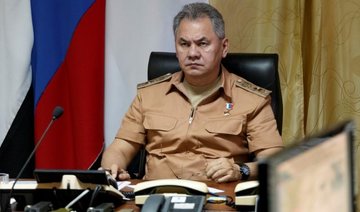
RIA news agency separately quoted Russian Defense Minister Sergei Shoigu as saying: “Last week the Commander-in-Chief (President Vladimir Putin) approved the structure and the bases in Tartus and in Hmeimim (air base). We have begun forming a permanent presence there.”
Commenting on this development, Marwah said: “Russia is here to stay in Syria.”
He said the presence in Syria was in the strategic interest of Russia. The Syrian opposition member lamented the Russian dealings with a dictator. “Such measures taken by a major global power only prop up the regime and make Assad think he is in a strong position.”
Marwah urged Moscow to instead focus on the Syrian people, as “dictators don’t last long.”


![]()

Syrian opposition rejects Russian-sponsored talks
Syrian opposition rejects Russian-sponsored talks


Latest updates


© 2026 SAUDI RESEARCH & PUBLISHING COMPANY, All Rights Reserved And subject to Terms of Use Agreement.