Thousands spend Christmas in shelters after Philippine storm

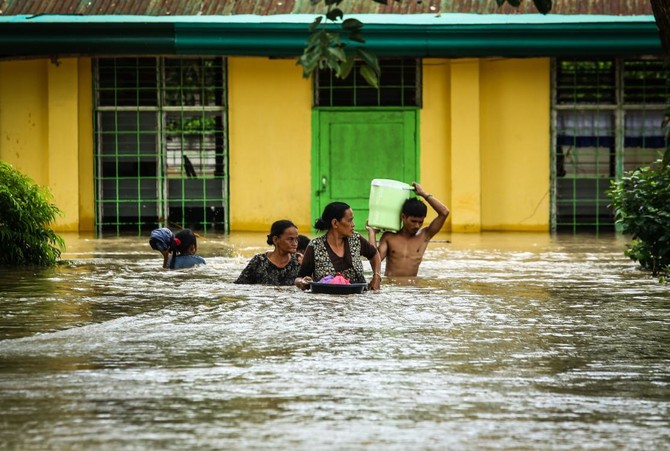
Residents evacuate to a safer place in Kabacan, North Cotabato, on the southern island of Mindanao on December 23, 2017, after Tropical Storm Tembin dumped torrential rains across the island. (AFP)
Updated 25 December 2017
Follow

Thousands spend Christmas in shelters after Philippine storm

ZAMBOANGA, Philippines: Thousands of villagers in the southern Philippines spent their Christmas morning in emergency shelters Monday as the region dealt with the aftermath of one of the deadliest storms to hit the country this year.
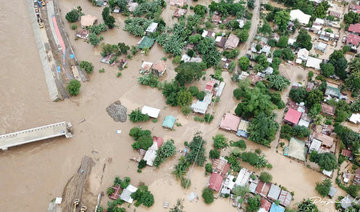
Tropical Storm Tembin unleashed landslides and flash floods that left more than 120 people dead and 160 missing, mostly in the hard-hit provinces of Lanao del Norte and Lanao del Sur and on the Zamboanga Peninsula. It strengthened into a typhoon before blowing out of the country Sunday and into the South China Sea.
“We’re really sad that we have this news especially because our countrymen were looking to celebrate Christmas,” Marina Marasigan of the government’s disaster-response agency told a televised news conference.
Intense rainfall in the mountains most likely caused landslides that blocked rainwater, Marasigan said. When the naturally formed dams broke from the pressure, torrents of rainwater smashed into the villages below.
Mayor Bong Edding of Sibuco town blamed logging operations in the mountains for a flash food that swept away houses with more than 30 residents. Five bodies have been recovered so far in the village and a search and rescue operation was continuing.
A large number of dead and missing was also reported in Lanao del Norte and Lanao del Sur provinces, where floodwaters from a mountain washed away several riverside houses.
Marasigan asked the public to heed storm warnings and evacuation orders to avoid casualties.
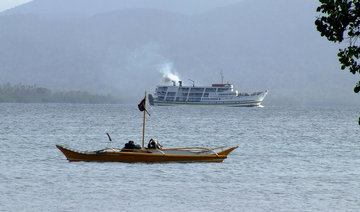
Thousands of villagers fled to emergency shelters and more than 500 passengers remained stranded in airports and seaports after the coast guard prohibited ferries from venturing out in the rough seas and several flights were canceled as the storm raged Saturday.
The typhoon was packing maximum sustained winds of 120 kilometers (75 miles) per hour and gusts of up to 145 kph (90 mph).
An inter-island ferry sank off northeastern Quezon province Thursday after being lashed by fierce winds and big waves, leaving at least five people dead. More than 250 passengers and crewmen were rescued.
Earlier in the week, another tropical storm left more than 50 people dead and 31 others missing, mostly due to landslides, and damaged more than 10,000 houses in the central Philippines.
Among the areas battered by the latest storm was Marawi, a lakeside city in Lanao del Sur that is still recovering from a five-month siege by pro-Daesh group extremists that left more than 1,000 people dead and displaced its entire population of about 200,000 people.
It was the latest disaster to hit the Philippines, which is battered by about 20 typhoons and storms each year, making the archipelago that lies on the Pacific typhoon belt one of the world’s most disaster-prone countries.


US hotels seek World Cup boost after tourism dip under Trump

Updated 58 min ago
Follow

US hotels seek World Cup boost after tourism dip under Trump

  • At the US hotels that Meade Atkeson manages, a drop in tourism weighs heavily on business — but hoteliers like him hope that World Cup enthusiasm will soon eclipse wariness over President

WASHINGTON: At the US hotels that Meade Atkeson manages, a drop in tourism weighs heavily on business — but hoteliers like him hope that World Cup enthusiasm will soon eclipse wariness over President Donald Trump’s policies.
The US hospitality sector has been reeling from a tourism slump in the world’s biggest economy, which became the only major destination to see a drop in foreign visitors last year.
“Just financially, it’s difficult when international travel is down,” Atkeson told AFP, noting that such visitors tend to stay longer and spend more.
Foreign travelers account for nearly a quarter of business at the three hotels under Sonesta group that he manages — two in Washington and a third in Miami Beach.
Yet, in the first eleven months of 2025, US official data showed that inbound travel dropped by 5.4 percent.
Canadians were noticeably absent, with travel plunging by 21.7 percent from 2024, translating to about four million fewer people. The decline was nearly seven percent for French visitors.
Industry professionals see this as a consequence of Trump’s policies, even if they may not openly say so.
Visitors have chafed at the Republican president’s sweeping tariffs on foreign goods, broadsides against other countries, tightening immigration rules and portrayal of certain Democrat-led cities as ridden with crime.
Canadians “were asked to be the 51st state, right?” Atkeson said.
“If you talk to Canadians, many of them have chosen not to travel out of conscience” or on principle, he added.
Brazilian tourists meanwhile “can go anywhere they want,” he said. “And so they may have gone to Europe, they may have gone to the islands.”
‘Fear’
Thousands of kilometers away, the major resort city of Las Vegas in Nevada — boasting 150,000 hotel rooms — has also had a bad year.
Elsa Rodan, a chambermaid at the Bellagio resort and casino, says her establishment is “blessed” compared with others.
But even so, it has had to lower prices to attract guests, added Rodan, a representative of the Unite Here union who spoke at a Washington press conference.
Unite Here President Gwen Mills urges for a renewed effort to lobby the Trump administration over policies and rhetoric that she believes are jeopardizing the sector employing more than two million people.
According to her, hoteliers are not pushing the government enough.
Employers express “fear, the fear of picking your head up,” she said.
Hopefully ‘better’
Fewer visitors and overnight stays, alongside a drop in revenue, have triggered a $6.7 billion shortfall for Nevada hotels in 2025, according to the American Hotel and Lodging Association (AHLA).
But the organization hopes that 2026 will be a turning point — it is counting on the World Cup, from June 11 to July 19, to attract visitors.
Eleven US cities will be hosting matches.
“It’s being equated to having nearly 80 Super Bowls in just over a month,” AHLA spokesman Ralph Posner told AFP.
“The economic lift won’t be limited to host cities,” he added. “Destinations across the country are hoping to benefit as international visitors extend their trips and travel between markets.”
Las Vegas, for example, hopes to draw fans who might stop there before or after a game in Los Angeles or Kansas City.
Organizers say that besides the seven million spectators in stadiums, the World Cup is set to attract 20-30 million tourists.
The whole event, they believe, can generate $30 billion for the US economy.
“I hope that things will look better,” Atkeson said.
His Miami hotel is under renovations and cannot host much World Cup-related activity.
But his Washington establishments are highlighting their proximity to Philadelphia, where several matches will be held.
Another complication is war in the Middle East following US-Israeli strikes on Iran, which could snarl travel.
“It’s a little too soon to tell how we’re going to do with that, but we’ll see,” he said.