LONDON: The rising stars of Saudi fashion may soon have more reasons to strut their stuff at home as much as abroad.
The Arab Fashion Council’s plans to open a regional office in Riyadh, which is set to stem the exodus of design talent and spur the growth of creative industries in the Kingdom.
With few platforms for fashion at home, aspiring Saudi designers have typically gone to Dubai, or further afield to Europe and the US to achieve their ambitions.
Now, more will be encouraged to pursue their ambitions locally, opening up opportunities previously confined to a select few who could afford to launch their careers abroad.
“It’s a very positive and a very bright step and I’m excited to see further developments in the region,” said Alia Khan, chairwoman of the Islamic Fashion and Design Council, which is also planning to open an office in the Kingdom.
“There’s a wonderful appetite for style and elegance in the Saudi market and we’d love to be a part of that,” Khan added.
Heading up the new Riyadh office as country director Layla Issa Abuzaid said the “council would open the doors to the foreign investment flow into the country.”
The move feeds into Vision 2030 ambitions to diversify its economy and nurture new industries while harnessing the energy and aspirations of a young population.
“Fashion has always been important to Arabs and our designers are definitely benefiting from the beginning of a proper fashion infrastructure,” said Marriam Mossalli, a well-known Saudi fashion editor and founder of luxury consulting firm Niche Arabia.
“We are seeing the creative sector in Saudi grow exponentially.”
“With a population that has 70 percent under the age of thirty, we are about to see an influx of of new careers, and most importantly new creative industries.”
Saudi Fashion designer Arwa Al-Banawi, who regularly exhibits at Paris Fashion Week, said the council’s presence will mean that young Saudi designers no longer have to put their dreams on hold.
“I’m seeing a lot of designers coming out of Saudi Arabia and it’s about time we had this platform to showcase our work.”
Until now, fashion shows in the Kingdom have been largely private, women-only events, with few opportunities for designers to mingle with buyers or display their work to international brands.
Last year marked a rare exception when high-profile members of the international fashion elite, including Naomi Campbell, Alberta Ferretti and Delfina Delettrez Fendi jetted into Jeddah for the first ever Vogue Fashion Experience, hosted by Vogue Italia.
Razan Alazzouni, a successful Saudi designer, who has dressed celebrities including Elizabeth Banks and Paris Hilton, told online fashion portal Fustany that being based in Saudi Arabia and breaking into the international market was one of the greatest hurdles she had to overcome in establishing her career.
“I felt I had to prove myself more than a European designer might have needed to.”
But Al-Banawi believes there is plenty of scope to establish a flourishing fashion industry in the Kingdom. “I’m really excited this is finally happening in my country.”
“There’s so much talent and so many buyers and beautiful boutiques in Saudi — we have the right people that can actually make this happen and make it a hub.”
The Arab Fashion Council office will encourage the development of a sustainable fashion infrastructure in Saudi Arabia by supporting local talent and partnering with international designers interested in entering the market.
“We are working on a strategy that will strengthen the creative ties between the four main fashion capitals and Riyadh, which will allow us to promote Arab designers at a global level,” said Jacob Abrian, founder and CEO of the Arab Fashion Council.
Recent reforms, including lifting the ban on female drivers, have broadened the country’s appeal on the global stage and with its strategic location at the crossroads of Asia, Europe and Africa, the council sees Saudi Arabia as uniquely placed to become a center for the fashion industry.
“The new office in Riyadh will act as a main pillar in supporting the growth of the creative economy in the entire region,” explained Princess Noura bint Faisal Al-Saud, the Arab Fashion Council’s honorary president.
“The Vision 2030 is based on three main pillars: A vibrant society promoting culture and entertainment, a thriving economy that boosts the small businesses and productive families as well as attracting the right talents and an ambitious nation that engages everyone.”


![]()
![]()

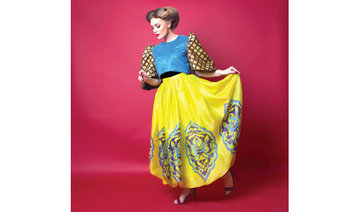
Saudi fashion goes global

Saudi fashion goes global


Latest updates


Recommended


© 2026 SAUDI RESEARCH & PUBLISHING COMPANY, All Rights Reserved And subject to Terms of Use Agreement.