JEDDAH/ASTANA: New Syrian peace talks planned for the end of next month are a trick intended to deceive the Syrian people and the international community, opposition leaders told Arab News on Friday.
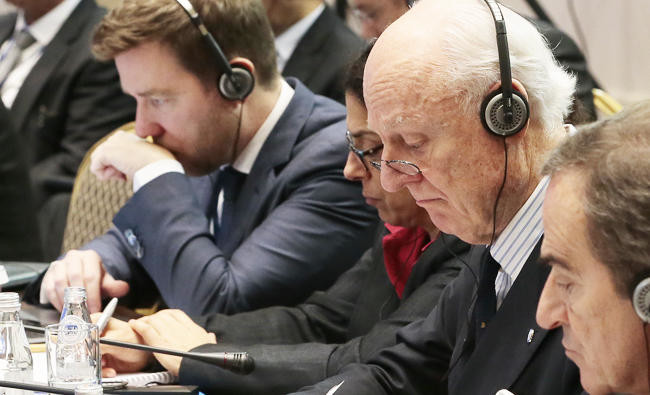
They spoke after Russia, Turkey and Iran agreed at their latest meeting in Astana, Kazakhstan, to hold the talks in Russia’s Black Sea resort of Sochi on Jan. 29 and 30.
The UN special envoy Staffan de Mistura said the Sochi plan should be judged on its ability to contribute to the UN-led negotiations in Geneva, which he urged the three countries to support.
Opposition leaders also backed the Geneva talks. “We told the Russians that Sochi will not be an alternative to Geneva, and we want to end the misery of the Syrian people and let humanitarian aid in,” said Ahmed Tohme, head of the opposition delegation in Astana.
And opposition spokesman Yahia Al-Aridi told Arab News: “There will be no Syrian peace talks in Sochi.” He described the plan as an attempt to “trick the world and Syrians that Russia brought a peace settlement to Syria.
“When Russia decides that bringing peace to Syria is a strategic option, they can easily pressure the regime to come to the talks, especially when they are its guarantors and protectors.”
The Russian Foreign Ministry said earlier that the opposition was sabotaging the Geneva peace talks in a attempt to ruin Russian preparations for national dialogue in Syria, but Al-Aridi told Arab News: “This is upside-down logic. If Geneva succeeds, Sochi could be a contributor to the success of Geneva. But now, as the regime sabotaged or tried to sabotage Geneva, it is the regime that sabotaged Sochi.
“We are looking for a peaceful solution. We want an end to the Syrian nightmare.”
The opposition delegation said its focus was on making progress on the issues of detainees and forcibly disappeared people, which the Astana trio has been discussing since April without reaching agreement.
On Friday, they set up a working group on detainees, which de Mistura said was “commendable as a first step toward reaching a comprehensive arrangement between the conflicting parties.”
Bahia Madini, another Syrian opposition figure, urged Mistura on Friday to strengthen his role as a mediator and demand stronger and firmer action by the UN and the Security Council.
“Securing the release and fair treatment of detainees is a very important objective and so we must all continue to monitor this and ensure that progress is made on this issue sooner rather than later,” Madini, a journalist and human rights activist in the UK who fled regime persecution, told Arab News.
In Syria, meanwhile, the Assad regime and Russian forces killed dozens of civilians in new airstrikes on Eastern Ghouta, a suburb about 15km from the center of Damascus, Human Rights Watch said.
“The world is silently looking on as Russia and Syria tighten the noose around the suffering population of Eastern Ghouta with unlawful strikes, widely banned weapons, and a devastating siege,” said Lama Fakih, the group’s deputy Middle East director.


![]()
New Syria peace talks in Sochi ‘a trick to deceive the world’
New Syria peace talks in Sochi ‘a trick to deceive the world’

Latest updates


Recommended


© 2026 SAUDI RESEARCH & PUBLISHING COMPANY, All Rights Reserved And subject to Terms of Use Agreement.