JOHANNESBURG: Thousands of delegates from African National Congress (ANC) gathered on Saturday for a five-day meeting to elect their new leader in a divisive race seen as a pivotal moment in South Africa’s post-apartheid history.
The winner will be well placed to be the next president, but the ANC has lost much popularity since Nelson Mandela led it to power in the euphoric 1994 election that marked the end of white-minority rule.
Soaring unemployment and government corruption have fueled frustration among millions of poor black South Africans who face dire housing, inadequate education and continuing racial inequality.
President Jacob Zuma, whose reign has been marred by graft scandals, will step down as ANC chief, but remain as head of state ahead of general elections in 2019.
The two front-runners for the party leadership are his ex-wife and former African Union Commission (AUC) head Nkosazana Dlamini-Zuma, and Deputy President Cyril Ramaphosa, a wealthy businessman.
The battle could split the ANC and the conference looks set to be acrimonious.
ANC Secretary-General Gwede Mantashe on Saturday said some delegates had been disqualified from voting after multiple legal disputes raged in courts for weeks before the meeting.
As rival delegates danced and sang songs in support of their chosen candidate, Mantashe said the start of the event had been delayed until 12:00 GMT when Zuma would make the opening address.
Dlamini-Zuma, 68, headed the AUC until earlier this year and is a former interior, foreign affairs and health minister.
But her critics say she would pursue Zuma’s failing economic and political policies, and would be his proxy to protect him from criminal prosecution over graft allegations.
The couple had four children together before divorcing in 1998.
Ramaphosa, 65, a former trade union leader, led the historic negotiations in the 1990s to end apartheid before launching a business career that made him one of the country’s wealthiest men.
He is often accused of failing to confront Zuma while serving as his deputy since 2014.
“There is so much at stake and the two candidates are very close in the race,” Amanda Gouws, a politics professor at Stellenbosch University, told AFP.
Gouws said that the thousands of party delegates could be offered bribes for their votes, and that Zuma was lobbying hard for Dlamini-Zuma to emerge victorious.
“Zuma is very afraid of being prosecuted after he leaves office if Dlamini-Zuma doesn’t win, so he is really trying to make sure she does,” she said.
Dlamini-Zuma has strongly denied her campaign had been involved with vote-buying, saying “no leader will be proud of being elected out of money.”
With tensions rising, Ramaphosa said the party “should rally behind whoever is elected.”
Tefu Velaphi, a 38-year-old delegate and building manager, told AFP: “Zuma’s legacy is disastrous. He only cares about himself and his friends. We want them to be arrested.
“That lady will protect Zuma,” he said, referring to Dlamini-Zuma.
But Matthew Tsepang, one of her supporters, said: “We can not judge a person by her previous life. She can be a former wife, but have her independence. She is a capable leader.”
The ANC is still South Africa’s biggest party by far, but the 54 percent it won in local elections last year was its worst poll result since 1994 — underlining its sharp recent decline in popularity.
Ramaphosa is widely seen as the stronger candidate to lead the party into the 2019 general election.
But if he loses the party leadership battle, some experts say the party could split.
Opposition parties the Democratic Alliance and Economic Freedom Fighters are both hoping to exploit the ANC’s woes in the election, with one possible outcome being a coalition government.
Other leadership hopefuls include Parliament Speaker Baleka Mbete, Presidency Minister Jeff Radebe and Zweli Mkhize, the party treasurer.


![]()
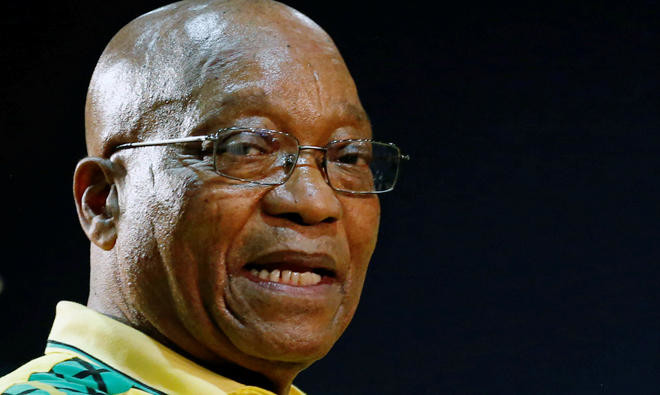
South Africa’s troubled ANC meets to elect new leader
South Africa’s troubled ANC meets to elect new leader


Latest updates


© 2026 SAUDI RESEARCH & PUBLISHING COMPANY, All Rights Reserved And subject to Terms of Use Agreement.