Saudi Commission for Tourism and National Heritage chief highlights tourism’s role in maintaining peace

1 / 2
Prince Sultan bin Salman
2 / 2
Updated 12 December 2017
Follow

Saudi Commission for Tourism and National Heritage chief highlights tourism’s role in maintaining peace

RIYADH: Saudi Commission for Tourism and National Heritage (SCTH) President Prince Sultan bin Salman on Monday iterated that Saudi Arabia’s care for tourism and heritage represents its care for the global human history and heritage in its capacity as the cradle of Islam and as the junction of civilizations throughout the history.
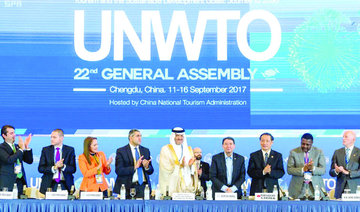
The SCTH chief said this during his keynote speech at the opening ceremony of the second UNWTO/UNESCO World Conference on Tourism and Culture in Muscat under the theme “Fostering sustainable tourism development.”
Prince Sultan asserted that led by King Salman, the Kingdom has been experiencing a huge transformation in the tourism sector.
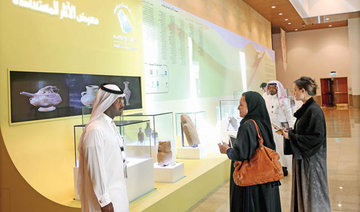
He said the Kingdom is taking several steps like the offering of tourist visas next year and launching different programs to promote tourism. He also highlighted initiatives like “Saudi Arabia: A destination for Muslims” in addition to other mega projects which come within the initiative of “Custodian of the Two Holy Mosques Program for Caring of the Cultural Heritage” and involve several projects including 32 key museums in different parts of the Kingdom as well as the expansion of some existing museums.
The SCTH chief further stressed that tourism, apart from its role as an economic industry sector, undertakes a leading role in enhancing a citizen’s relations with his nation and land, and boosting human knowledge which, he said, is a basis of peace between nations.
The two-day conference which began on Monday at the Oman Convention and Exhibition Center is a sequel to the first World Conference on Tourism and Culture in Siem Reap, Cambodia in February 2015. It aims to reflect upon the Siem Reap declaration that pledged to explore the synergies of the tourism and culture sectors to work in harmony for sustainable development.
The conference will address a wide range of topics including governance models, tourism development and protection of cultural heritage, culture and tourism in urban development and creativity, and exploring the cultural landscape in tourism.
Notably, the UN has declared 2017 as “the International Year of Sustainable Tourism for Development,” thereby offering a unique opportunity to explore and highlight tourism’s potential and help transform the world into a place of prosperity and well-being for all.
The conference will explore various ways to strengthen partnerships between the tourism and culture sectors by enhancing their role in the UN’s agenda for sustainable development, reflecting upon outcomes of the first conference in Siem Reap.


Saudi hospitality boom sparks innovation beyond the plate

Chefs at Julien prepare meals to pair with Diageo drinks. (AN photo by Basmah Albasrawi)
Updated 11 January 2026
Follow

Saudi hospitality boom sparks innovation beyond the plate

  • At the Four Seasons Riyadh, Diageo hosted a private tasting at Tonic Bar followed by a 10-course dinner at Julien
  • Dinner at Julien paired dishes with drinks made using Tanqueray 0.0, Captain Morgan 0.0, and Guinness 0.0

RIYADH: As restaurants and hotels in Saudi Arabia refine their culinary identities, beverages are increasingly being treated as crafted experiences in their own right, shaped by technique and intention.

At the Four Seasons Riyadh, Diageo hosted a private tasting at Tonic Bar followed by a 10-course dinner at Julien, offering a snapshot of how this evolution is beginning to take shape, as international players and local venues test new approaches to pairing and presentation. 

Speaking to Arab News, Nick Rees, marketing director of Diageo MENA, pointed to the rapid growth of the nonalcoholic segment globally and in the region: “There’s a far faster growing percentage of it (the industry) is non-alcohol … There (are) trends globally … A lot of it will be pointed to wellness, mindful drinking.”

Rees said that Saudi Arabia’s fast-developing culinary and hospitality scene calls for beverages that match the level of excellence seen in kitchens across the Kingdom.

“It’s kind of the lack of choices and that’s where we want to be able to provide people the option, and people here absolutely have the same kind of talent and desire as their counterparts behind the kitchen,” he said.

“That’s where our role is to give people the kind of core ingredients for them to be able to work with … we have many more brands that we would love to introduce to the Kingdom.”

The dinner at Julien paired dishes with drinks made using Tanqueray 0.0, Captain Morgan 0.0, and Guinness 0.0, offering a glimpse into the range of styles Diageo is bringing to the market.

Flavor profiles ranged from light and refreshing combinations with cucumber and capers brine to richer, malt-forward blends, each designed to complement the accompanying dishes, from ravioli to black cod. 

Rees emphasized that pairing food with thoughtfully crafted beverages is becoming an essential part of the hospitality experience. 

“In the Kingdom, we’re looking at giving people the experience that currently is not available to them because I know for sure that the kind of quality and expertise and craftsmanship that can go into creating some of these drinks is absolutely as exciting as the work that the chefs would do with their food,” he said.

Anthony Abou Haider, head of Gulf at Diageo, said the company sees long-term potential in Saudi Arabia’s hospitality sector. 

“It’s such an opportunity to be a part of this transformation journey,” he told Arab News. “We’re not looking for a short-term gain, we’re looking at a very long-term gain here because whatever we do now is building for the future.”