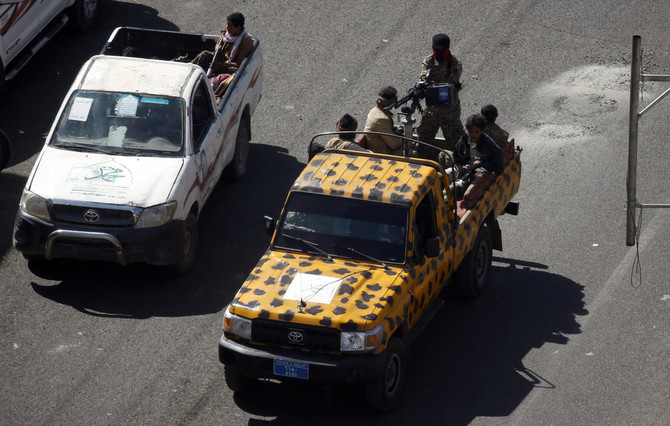
SANAA, Yemen: Yemenis in the war-torn country’s capital crowded into basements overnight as Saudi-led fighter jets pounded the positions of Houthi terrorists, who are now fighting forces loyal to a former president for control of the city.
Suze van Meegen, Sanaa-based protection and advocacy adviser for the Norwegian Refugee Council, said Monday that the violence left aid workers trapped inside their homes and was “completely paralyzing humanitarian operations.”
“No one is safe in Sana’a at the moment. I can hear heavy shelling outside now and know it is too imprecise and too pervasive to guarantee that any of us are safe,” she said.
Fighting erupted between the Iranian-allied Shiite rebels and forces loyal to Ali Abdullah Saleh last week, unraveling their fragile alliance, formed in the face of the internationally-recognized government and Saudi-led coalition.
The breakdown of the alliance has led the coalition to step up its bombing of Houthi positions, in support of Saleh’s forces.
“The night was tough,” Robert Mardini, the regional director of The International Committee of the Red Cross, posted on his Twitter account. “Massive urban clashes with heavy artillery and airstrikes. Yemenis stuck in their homes, too scared to go out. Reduced access to water, health care, food and fuel.”
The Houthis and forces allied to Saleh swept into the capital, Sanaa, in 2014. The Houthis dominate the northern part of the city, while Saleh’s forces hold the southern part, with much of the current fighting concentrated around the Political District, home to ministries and foreign embassies. Civilians living in the area are largely cut off from the outside world.
The Saudi-led coalition launched an air campaign against the rebels in March 2015 and later expanded into ground operations. The stalemated war has killed more than 10,000 civilians and displaced 3 million. Even before the fighting, Yemen was the poorest country in the Arab world. It is now on the brink of famine and grappling with a cholera epidemic.


![]()
Yemenis shelter from airstrikes, battles in capital
Yemenis shelter from airstrikes, battles in capital


Latest updates


© 2026 SAUDI RESEARCH & PUBLISHING COMPANY, All Rights Reserved And subject to Terms of Use Agreement.