CAIRO: The gunmen who massacred more than 300 worshippers in an Egyptian mosque made no effort to conceal their identity — they showed up raising the black banner of Daesh, authorities and witnesses said.
The group’s militants had previously warned the North Sinai mosque associated with Sufis to end the mystical practices Daesh calls heretical, even visiting the mosque in person a few weeks before the attack, a Sufi sheikh said.
But almost a week after the Friday massacre, Daesh has yet to claim the attack in a sign, officials and analysts say, that their gunmen might have gone too far even by the extremists’ standards.
For all the indiscriminate carnage Daesh has perpetrated on almost every continent, never before has an attack shocked even its supporters who now insist the group is innocent.
As the scale of the attack percolated in militant social media channels, pro-Daesh users denied the group’s involvement.
Every militant group known to operate in Egypt, including the Al-Qaeda-linked Jund Al-Islam in Sinai that opposes Daesh, condemned the massacre.
Daesh supporters on social media were livid when a purported audio recording of wireless communications between a Daesh member boasting about the attack, and another noting down details, spread on pro-Al-Qaeda Telegram channels.
Daesh had targeted mosques before. The militants bombed a Manchester concert on May 22 in which they were certain to kill children who had come to watch pop star Ariana Grande perform.
At the time, British extremist Omar Hussein — who may have been killed in the takeover of the group’s erstwhile capital of Raqqa in Syria — told AFP killing “disbeliever” children rested comfortably on his conscience.
“As for the killing of little girls then it is permissible 2 kill the kuffaar as they kill us,” he wrote in response to an AFP query.
At least 27 children died in the massacre.
“Something of this scale, that killed more than ‘just Sufis’ would be hard to justify,” said analyst Amarnath Amarasingam, senior research fellow with counter terrorism group ISD Global.
“It could be that the Egyptian or Sinai context makes this kind of attack more abhorrent and makes the group less likely to earn local support,” said a western official.
After the attack, another militant who regularly defends Daesh atrocities flatly denied Daesh involvement.
“Not at all. Your analysis is wrong. You’ve been influenced by media reports,” he wrote in a message responding to an AFP query.
Daesh in Egypt, based in the north of the Sinai Peninsula bordering Israel and the Gaza Strip, has killed hundreds of security personnel in attacks, and more than a hundred Christians in church bombings and shootings over the past year.
“It does appear to be in line with a gradual shift over the last four years,” said another Western official.
Daesh went “from a violent campaign by the terrorists in Sinai that was very local... and in the beginning careful not to alienate the local population... to something that seems to be much more affected by global jihadi motivations of Daesh,” the official said.
Egyptian President Abdel Fattah El-Sisi has warned that Daesh foreign fighters will try to settle in his region as they lose ground in Iraq and Syria.
But it may have been a local initiative by the increasingly pressed militants in Sinai that was badly received by Daesh’s leadership in Iraq and Syria, a third western official said.
It is “possible that the attack was coordinated without central agreement. Hence the absence of a claim,” said the diplomat.
Another possibility is that it was an attack meant to send a message to Sufis and villagers seen as pro-government, without granting it the imprimatur of an official Daesh claim.
The western officials agreed to speak to AFP on condition of anonymity.
Hassan Hassan, a leading expert on Daesh, said the militants had called the Sufis “taghuts” in a publication, a word used in the Qur’an to describe the devil and tyrants.
“Nothing is off limits when they call them taghut,” said Hassan, a senior fellow at the TIMEP think tank and author of the book “ISIS: Inside the Army of Terror.”
Daesh fighters, however, had gone too far in the past and been punished for it, he said.
“When they killed the Al-Shaitat, they removed the (attackers) after that,” he said of a 2014 massacre of up to 700 tribesmen in Syria’s eastern Deir Ezzor region.
“Either because they wanted to distance themselves from it or they thought they went too far,” Hassan said.
Still, with Daesh’s media operation continuing to baffle observers, it remains possible but unlikely that the group may yet claim the attack.
After an attack on a military toll booth south of Cairo in June, Daesh issued a claim three weeks later — not through the usual statement on its Telegram accounts but in its weekly Nabaa newsletter.


Daesh silent on Egypt massacre decried even by supporters

Daesh silent on Egypt massacre decried even by supporters


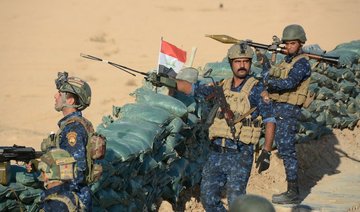

Baghdad says it will prosecute Daesh militants being moved from Syria to Iraq
- The US military started the transfer process on Friday with the first Daesh prisoners moved from Syria to Iraq
BAGHDAD: Baghdad will prosecute and try militants from the Daesh group who are being transferred from prisons and detention camps in neighboring Syria to Iraq under a US-brokered deal, Iraq said Sunday.
The announcement from Iraq’s highest judicial body came after a meeting of top security and political officials who discussed the ongoing transfer of some 9,000 IS detainees who have been held in Syria since the militant group’s collapse there in 2019.
The need to move them came after Syria’s nascent government forces last month routed Syrian Kurdish-led fighters — once top US allies in the fight against Daesh — from areas of northeastern Syria they had controlled for years and where they had been guarding camps holding Daesh prisoners.
Syrian troops seized the sprawling Al-Hol camp — housing thousands, mostly families of Daesh militants — from the Kurdish-led force, which withdrew as part of a ceasefire. Troops last Monday also took control of a prison in the northeastern town of Shaddadeh, from where some Daesh detainees had escaped during the fighting. Syrian state media later reported that many were recaptured.
Now, the clashes between the Syrian military and the Kurdish-led Syrian Democratic Forces, or SDF, sparked fears of Daesh activating its sleeper cells in those areas and of Daesh detainees escaping. The Syrian government under its initial agreement with the Kurds said it would take responsibility of the Daesh prisoners.
Baghdad has been particularly worried that escaped Daesh detainees would regroup and threaten Iraq’s security and its side of the vast Syria-Iraq border.
Once in Iraq, Daesh prisoners accused of terrorism will be investigated by security forces and tried in domestic courts, Iraq’s Supreme Judicial Council said.
The US military started the transfer process on Friday with the first Daesh prisoners moved from Syria to Iraq. On Sunday, another 125 Daesh prisoners were transferred, according to two Iraqi security officials who spoke to The Associated Press on condition of anonymity in line with regulations.
So far, 275 prisoners have made it to Iraq, a process that officials say has been slow as the US military has been transporting them by air.
Both Damascus and Washington have welcomed Baghdad’s offer to have the prisoners transferred to Iraq.
Iraq’s parliament will meet later on Sunday to discuss the ongoing developments in Syria, where its government forces are pushing to boost their presence along the border.
The fighting between the Syrian government and the SDF has mostly halted with a ceasefire that was recently extended. According to Syria’s Defense Ministry, the truce was extended to support the ongoing transfer operation by US forces.
The Daesh group was defeated in Iraq in 2017, and in Syria two years later, but Daesh sleeper cells still carry out deadly attacks in both countries. As a key US ally in the region, the SDF played a major role in defeating Daesh.
During the battles against Daesh, thousands of extremists and tens of thousands of women and children linked to them were taken and held in prisons and at the Al-Hol camp. The sprawling Al-Hol camp hosts thousands of women and children.
Last year, US troops and their partner SDF fighters detained more than 300 Daesh militants in Syria and killed over 20. An ambush in December by Daesh militants killed two US soldiers and one American civilian interpreter in Syria.


