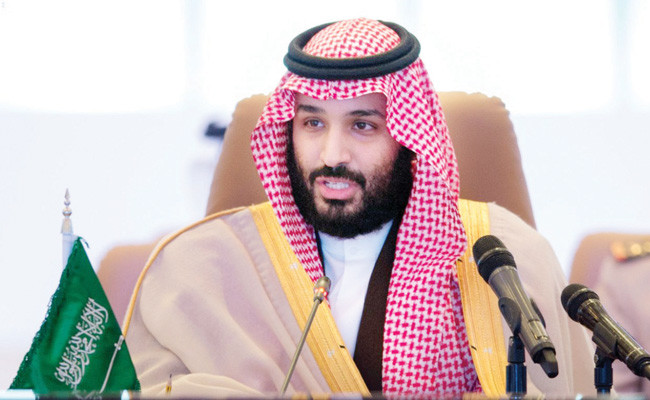
RIYADH: Crown Prince Mohammed bin Salman has vowed that extremists will no longer “tarnish our beautiful religion.”
He was speaking at the opening of the inaugural meeting of the Islamic Military Counter Terrorism Coalition (IMCTC) Ministers of Defense Council in Riyadh on Sunday.
The crown prince said Sunday’s meeting sends “a strong signal that we are going to work together and coordinate together to support each other.”
“The biggest danger of this terrorism and extremism is the tarnishing of the reputation of our beloved religion... We will not allow this to happen,” he said. “Today, we start the pursuit of terrorism and we see its defeat in many facets around the world especially in Muslim countries... We will continue to fight it until we see its defeat.”
The crown prince also offered his condolences to Egypt, which suffered an attack on Friday by militants on a mosque in northern Sinai that killed 305 people.
“This is indeed a painful event and it is a recurrent and strong reminder of the dangers of this terrorism,” he said.
Saudi Arabia announced the alliance in December 2015. The alliance consists of 41 countries and identifies as a “pan-Islamic unified front” against violent extremism.
The IMCTC encompasses an integrated approach to coordinate and unite on the four key domains of ideology, communications, counter-terrorism financing, and military, in order to fight all forms of terrorism and extremism and to effectively join other international security and peacekeeping efforts.
The coalition will develop, collect, shop and disseminate a wide range of information on counterterrorism programs and best techniques embarked on by member nations and international organizations.
Chiefs of staff from Muslim countries met in Riyadh in March 2016, and affirmed “their determination to intensify efforts in fighting terrorism through joint work according to their capabilities, based on the desire of each member country to participate in operations or programs within the IMCTC framework as per its policies and procedures, and without compromising the sovereignty of the Coalition member countries.”
The IMCTC acts in response to the threat of terrorism that has impacted Muslim and non-Muslim countries and has distorted the image of Islam.
During the meeting, IMCTC Acting Secretary General, Lt. Gen. Abdulelah Al-Saleh, outlined the coalition’s strategy, governance, activities and future plans.
In addition, eminent keynote speakers presented their perspectives on counter terrorism efforts in each of the IMCTC’s four key domains:
Dr. Mohammad Al-Issa, Secretary General of the Muslim World League, introduced the ideology domain, and the necessity of promoting a message that counters the narrative of violent extremist ideology and reaffirms Islamic principles of tolerance and compassion, through presenting the true nature of Islam and supporting ideological, psychological, and social reforms
Dr. Mohammad Al-Momani, Minister of State for Media Affairs of Jordan discussed the communications domain, and the importance of producing and disseminating factual, scholarly and engaging content to undermine and counter the appeal of violent extremism.
Dr. Ahmed Abdulkarim Alkholifey, Chairman and Governor of Saudi Arabian Monetary Authority, discussed Counter Terrorist Financing and the need to promote best practices and advance legal, regulatory, and operational frameworks in prevention, detection, and seizure operations.
General Raheel Sharif presented the military domain, which aimed to assist in the coordination of resourcing and planning of member country military CT operations; facilitate the secure sharing of military information; and encourage military CT capacity and capability building to ultimately deter aggression and violence.


![]()
Saudi crown prince vows not to allow extremists to tarnish ‘our beautiful religion’
Saudi crown prince vows not to allow extremists to tarnish ‘our beautiful religion’
Latest updates


Recommended


© 2026 SAUDI RESEARCH & PUBLISHING COMPANY, All Rights Reserved And subject to Terms of Use Agreement.