ADNOC’s distribution unit sets price range for Abu Dhabi initial public offering

At the top of the price range, the Adnoc Distribution’s initial public offering could be valued at Dh7.375 billion, assuming it sells a maximum 20 percent. (Reuters)
Updated 26 November 2017
Follow

ADNOC’s distribution unit sets price range for Abu Dhabi initial public offering

ABU DHABI: Abu Dhabi National Oil Co’s (ADNOC) unit set an indicative price range for its initial public offering (IPO) that could raise as much as $2 billion to become the biggest listing in the UAE since 2007.
ADNOC Distribution set an indicative price range of between Dh2.35 dirham (SR2.40) and Dh2.95, it said in a statement on Sunday.
ADNOC is selling a minimum of 10 percent, or 1.25 billion shares, and a maximum of 20 percent, or 2.5 billion shares, in the IPO of its unit.
At the top of the price range, the deal could be valued at Dh7.375 billion, assuming it sells a maximum 20 percent.
That would make it the biggest IPO in the UAE since 2007 when DP World raised nearly $5 billion, according to Thomson Reuters data.
The planned listing comes as Abu Dhabi is pushing its state companies to float on the bourse, hoping to lure foreign investors with privatizations after a fall in oil prices since mid-2014 depleted its coffers.
The unit’s total market value could be between $8 billion and $10 billion.
Analysts had earlier valued the total fuel distribution unit at between $11 billion and $14 billion in reports prepared by banks advising the firm on the planned listing, sources had told Reuters earlier.
The company valuation implies a 2018 dividend yield of 6 percent to 7.5 percent and a 2019 dividend yield of 4 percent to 5 percent.
ADNOC’s CEO Sultan Al-Jaber said in the statement that the IPO’s price range was compelling and it was an attractive dividend prospect. Investors are getting a unique opportunity to invest in the UAE’s number one fuel retail brand, he said.
Under his leadership, ADNOC has embarked on a major shake-up plan to privatize its services businesses, venture into oil trading and expand partnerships with strategic investors.
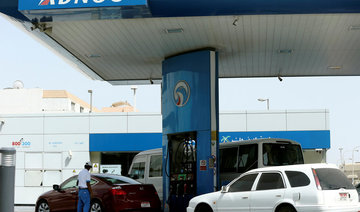
ADNOC Distribution is the leading fuel distributor in the UAE, with a market share of around 67 percent in the country by number of retail fuel service stations.
Abu Dhabi’s national oil company earlier this month unveiled details of ADNOC Distribution’s listing, as Gulf states step up plans to privatize energy assets in an era of cheap oil.
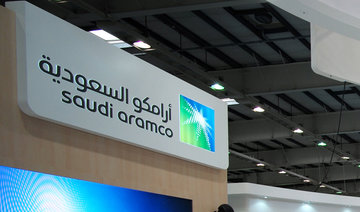
Saudi Arabia plans to list 5 percent of Aramco by the end of next year, which Saudi officials say could raise $100 billion, making it the world’s biggest IPO.
Citigroup, First Abu Dhabi Bank, HSBC and Bank of America Merrill Lynch are joint global coordinators for the ADNOC unit’s offer and bookrunners alongside EFG Hermes, Goldman Sachs and Morgan Stanley. Rothschild is the sole financial adviser.


Gulf-EU value chain integration signals shift toward long-term economic partnership: GCC secretary general

Updated 03 February 2026
Follow

Gulf-EU value chain integration signals shift toward long-term economic partnership: GCC secretary general

RIYADH: Value chains between the Gulf and Europe are poised to become deeper and more resilient as economic ties shift beyond traditional trade toward long-term industrial and investment integration, according to the secretary general of the Gulf Cooperation Council.

Speaking on the sidelines of the World Governments Summit 2026 in Dubai, Jasem Al-Budaiwi said Gulf-European economic relations are shifting from simple commodity trade toward the joint development of sustainable value chains, reflecting a more strategic and lasting partnership.

His remarks were made during a dialogue session titled “The next investment and trade race,” held with Luigi Di Maio, the EU’s special representative for external affairs.

Al-Budaiwi said relations between the GCC and the EU are among the bloc’s most established partnerships, built on decades of institutional collaboration that began with the signing of the 1988 cooperation agreement.

He noted that the deal laid a solid foundation for political and economic dialogue and opened broad avenues for collaboration in trade, investment, and energy, as well as development and education.

The secretary general added that the partnership has undergone a qualitative shift in recent years, particularly following the adoption of the joint action program for the 2022–2027 period and the convening of the Gulf–European summit in Brussels.

Subsequent ministerial meetings, he said, have focused on implementing agreed outcomes, enhancing trade and investment cooperation, improving market access, and supporting supply chains and sustainable development.

According to Al-Budaiwi, merchandise trade between the two sides has reached around $197 billion, positioning the EU as one of the GCC’s most important trading partners.

He also pointed to the continued growth of European foreign direct investment into Gulf countries, which he said reflects the depth of economic interdependence and rising confidence in the Gulf business environment.

Looking ahead, Al-Budaiwi emphasized that the economic transformation across GCC states, driven by ambitious national visions, is creating broad opportunities for expanded cooperation with Europe. 

He highlighted clean energy, green hydrogen, and digital transformation, as well as artificial intelligence, smart infrastructure, and cybersecurity, as priority areas for future partnership.

He added that the success of Gulf-European cooperation should not be measured solely by trade volumes or investment flows, but by its ability to evolve into an integrated model based on trust, risk-sharing, and the joint creation of economic value, contributing to stability and growth in the global economy.

GCC–EU plans to build shared value chains look well-timed as trade policy volatility rises.

In recent weeks, Washington’s renewed push over Greenland has been tied to tariff threats against European countries, prompting the EU to keep a €93 billion ($109.7 billion) retaliation package on standby. 

At the same time, tighter US sanctions on Iran are increasing compliance risks for energy and shipping-related finance. Meanwhile, the World Trade Organization and UNCTAD warn that higher tariffs and ongoing uncertainty could weaken trade and investment across both regions in 2026.