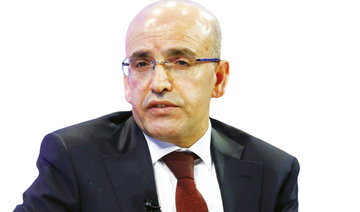
Turkey orders detention of 216 people in post-coup probe: Anadolu

US-based Turkish cleric Fethullah Gulen at his home in Saylorsburg, Pennsylvania, US July 10, 2017. (Reuters/Charles Mostoller)
Updated 22 November 2017
Follow

Turkey orders detention of 216 people in post-coup probe: Anadolu

ANKARA: Turkish authorities have issued detention warrants for 216 people, including former finance ministry personnel, suspected of having links to last year’s failed coup attempt, the state-run Anadolu news agency said on Wednesday.
It said 17 former finance ministry personnel had been detained so far and another 65 were sought over alleged links to Gulen’s network, Anadolu said.
Separately, authorities carried out operations across 40 provinces targeting “private imams” believed to be recruiting members to the network of US-based cleric Fethullah Gulen from Turkey’s armed forces.
Ankara blames Gulen for orchestrating the July 15 coup attempt last year and has repeatedly demanded the United States extradite him, so far in vain. Gulen denies involvement.
In the aftermath of the coup, more than 50,000 people have been jailed pending trial and some 150,000 have been sacked or suspended from their jobs in the military, public and private sector.
The extent of the purges has unnerved rights groups and Turkey’s Western allies, who fear President Tayyip Erdogan is using the abortive putsch as a pretext to stifle dissent.
The government, however, says the measures are necessary due to the gravity of the threats it is facing following the military coup attempt, in which 240 people were killed.


Egyptian woman faces death threats for filming alleged harasser

Updated 6 sec ago
Follow

Egyptian woman faces death threats for filming alleged harasser

  • Case revives longstanding national debate in Egypt over harassment and violence against women
  • A 2013 UN study found that 99.3 percent of Egyptian women reported experiencing harassment
CAIRO: A young Egyptian woman is facing death threats after posting a video showing the face of a man she says repeatedly harassed her, reviving debate over how victims are treated in the country.
Mariam Shawky, an actress in her twenties, filmed the man aboard a crowded Cairo bus earlier this week, accusing him of stalking and harassing her near her workplace on multiple occasions.
“This time, he followed me on the bus,” Shawky, who has been dubbed “the bus girl” by local media, said in a clip posted on TikTok.
“He kept harassing me,” added the woman, who did not respond to an AFP request for comment.
Hoping other passengers would intervene, Shawky instead found herself isolated. The video shows several men at the back of the bus staring at her coldly as she confronts her alleged harasser.
The man mocks her appearance, calls her “trash,” questions her clothing and moves toward her in what appears to be a threatening manner.
No one steps in to help. One male passenger, holding prayer beads, orders her to sit down and be quiet, while another gently restrains the man but does not defend Shawky.
Death threats
As the video spread across social media, the woman received a brief flurry of support, but it was quickly overwhelmed by a torrent of abuse.
Some high-profile public figures fueled the backlash.
Singer Hassan Shakosh suggested she had provoked the situation by wearing a piercing, saying it was “obvious what she was looking for.”
Online, the comments were more extreme. “I’ll be the first to kill you,” one user wrote. “If you were killed, no one would mourn you,” said another.
The case has revived a longstanding national debate in Egypt over harassment and violence against women.
A 2013 UN study found that 99.3 percent of Egyptian women reported experiencing harassment, with more than 80 percent saying they faced it regularly on public transport.
That same year, widespread protests against sexual violence rocked the Egyptian capital.
In 2014, a law criminalizing street harassment was passed. However, progress since then has been limited. Enforcement remains inconsistent and authorities have never released figures on the number of convictions.
Public concern spiked after previous high-profile incidents, including the 2022 killing of university student Nayera Ashraf, stabbed to death by a man whose advances she had rejected.
The perpetrator was executed, yet at the time “some asked for his release,” said prominent Egyptian feminist activist Nadeen Ashraf, whose social-media campaigning helped spark Egypt’s MeToo movement in 2020.
Denials
In the latest case, the authorities moved to act even though the bus company denied any incident had taken place in a statement later reissued by the Ministry of Transport.
The Interior Ministry said that the man seen in the video had been “identified and arrested” the day after the clip went viral.
Confronted with the footage, he denied both the harassment and ever having met the woman before, according to the ministry.
Local media reported he was later released on bail of 1,000 Egyptian pounds (around $20), before being detained again over a pre-existing loan case.
His lawyer has called for a psychiatric evaluation of Shawky, accusing her of damaging Egypt’s reputation.
These images tell “the whole world that there are harassers in Egypt and that Egyptian men encourage harassment, defend it and remain silent,” said lawyer Ali Fayez on Facebook.
Ashraf told AFP that the case revealed above all “a systemic and structural problem.”
She said such incidents were “never taken seriously” and that blame was almost always shifted onto women’s appearance.
“If the woman is veiled, they’ll say her clothes are tight. And if her hair is uncovered, they’ll look at her hair. And even if she wears a niqab, they’ll say she’s wearing makeup.”
“There will always be something.”