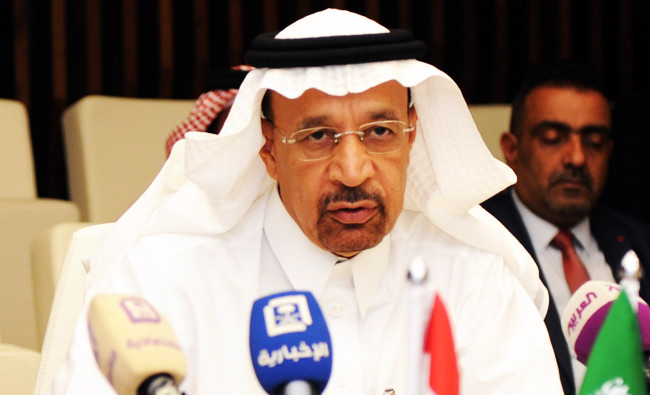
VIENNA: Saudi Energy Minister Khalid Al-Falih and his staff are busy these days. The minister and some of his aides are in continuous talks with global producers to convince them to attend the meeting of OPEC in Vienna on Nov. 30.
Saudi officials are inviting more African, Latin American and Central Asian countries to attend the meeting, sources told Arab News. The list of invitees includes producers such as Colombia, Egypt and Indonesia. “Not all those who are invited will attend but many have shown interest in attending the meeting as observers only,” a source said.
Saudi Arabia and Russia are leading global efforts to extend the current agreement to curtail production of 24 countries by 1.8 million barrels a day to rebalance the oil market and bring global inventories back to their five-year average. The agreement, which will expire in March, has helped to raise oil prices in the past few days to levels not seen since 2015.
The Saudi OPEC governor and Saudi national representative at OPEC are in communication with many countries to invite them to the meeting. They are traveling extensively to meet officials and other producers. Saudi Arabia is the president of OPEC’s ministerial conference this year.
“The Saudis are looking at ways to surprise the market at the meeting and by bringing many producers to it they are hoping to show the market that more producers are supporting the agreement,” a source said. “If some of those attending are willing to participate in the agreement then that would support oil prices.”
So far, the Saudi energy minister has brought two central Asian producers to attend the next meeting: Uzbekistan and Turkmenistan. Since October, the minister has also made trips to four countries that are part of the agreement to deliver letters from King Salman to the heads of states: Iraq, Malaysia, Algeria, and Kazakhstan.
Adding more countries to the agreement will help to reduce the burden on existing ones as the total amount of cuts will be distributed among a bigger number of producers, one of the sources said.
OPEC is expected to agree an extension of the cut as storage levels remain high despite recent drawdowns, although there are doubts about the willingness of some participants to continue to restrain output.
Many countries are showing support for extending the agreement. UAE and Iran are the latest two countries to express their support.
UAE Energy Minister Suhail Al-Mazrouei said on Nov. 20 that he sees the logic for extending the agreement and ministers are now focusing on the extension and not on increasing the amount of cuts in the agreement.
Iran’s oil minister Bijan Zanganeh said on the same day that the majority of OPEC nations favors the extension of the agreement.
Oil markets were tepid on Nov. 20 as traders were reluctant to take on big new positions before the OPEC meeting at the end of the month.
“The market expectation is for an extension through 2018, created by OPEC comments early this fall,” US bank Morgan Stanley said on Nov. 20 in a note to clients. “There is increased risk that OPEC delays the extension decision,” it said.


![]()
![]()
Saudi Arabia steps up oil diplomacy ahead of OPEC meeting
Saudi Arabia steps up oil diplomacy ahead of OPEC meeting
Latest updates


Recommended


© 2026 SAUDI RESEARCH & PUBLISHING COMPANY, All Rights Reserved And subject to Terms of Use Agreement.