Iran says ‘biased’ French policy stoking Mideast crises

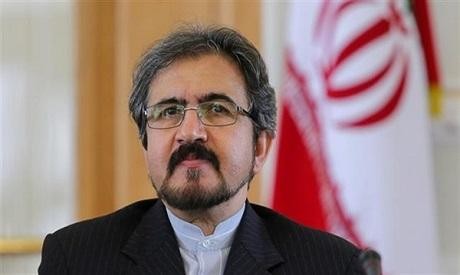
Bahram Ghassemi (Reuters)
Updated 17 November 2017
Follow

Iran says ‘biased’ French policy stoking Mideast crises

TEHRAN: Iran said on Friday that “biased” French policy was stoking crises in the Middle East after Foreign Minister Jean-Yves Le Drian accused it of “hegemonic” ambitions in the region.
“Unfortunately it seems that France has a biased and partisan approach to the crises in the region and this approach, whether intentionally or not, is even contributing to turning potential crises into real ones,” foreign ministry spokesman Bahram Ghassemi said.
Le Drian made his comments in Iran’s arch rival Saudi Arabia on Thursday during a visit aimed at resolving a crisis sparked by the shock resignation earlier this month of Lebanese Prime Minister Saad Hariri, a staunch critic of Iran.


Tunisian police arrest member of parliament who mocked president

Updated 05 February 2026
Follow

Tunisian police arrest member of parliament who mocked president

  • Ahmed Saidani mocked the president in a Facebook post, describing him as the “supreme commander of sewage and rainwater drainage”

TUNIS: Tunisian police arrested lawmaker Ahmed Saidani on Wednesday, two of his colleagues ​said, in what appeared to be part of an escalating crackdown on critics of President Kais Saied.
Saidani has recently become known for his fierce criticism of Saied. On Tuesday, he mocked the president in a Facebook post, describing him as the “supreme commander of sewage and rainwater drainage,” blasting what he said ‌was the absence ‌of any achievements by Saied.
Saidani ‌was ⁠elected ​as ‌a lawmaker at the end of 2022 in a parliamentary election with very low voter turnout, following Saied’s dissolution of the previous parliament and dismissal of the government in 2021.
Saied has since ruled by decree, moves the opposition has described as a coup.
Most opposition leaders, ⁠some journalists and critics of Saied, have been imprisoned since he ‌seized control of most powers in 2021.
Activists ‍and human rights groups ‍say Saied has cemented his one-man rule and ‍turned Tunisia into an “open-air prison” in an effort to suppress his opponents. Saied denies being a dictator, saying he is enforcing the law and seeking to “cleanse” the country.
Once a supporter ​of Saied’s policies against political opponents, Saidani has become a vocal critic in recent months, accusing ⁠the president of seeking to monopolize all decision-making while avoiding responsibility, leaving others to bear the blame for problems.
Last week, Saidani also mocked the president for “taking up the hobby of taking photos with the poor and destitute,” sarcastically adding that Saied not only has solutions for Tunisia but claims to have global approaches capable of saving humanity.
Under Tunisian law, lawmakers enjoy parliamentary immunity and cannot be arrested for carrying out their ‌duties, although detention is allowed if they are caught committing a crime.