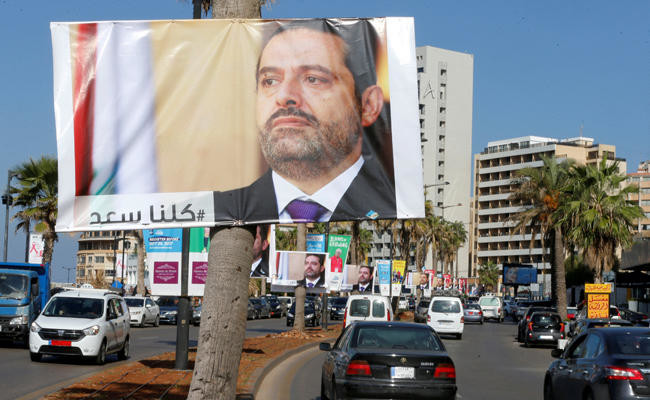
JEDDAH: Hezbollah’s domination of Lebanon at the behest of Iran is the cause of the country’s political crisis and his own resignation as prime minister, Saad Hariri said in a dramatic and emotional TV interview on Sunday night.
“I am not against Hezbollah as a political party but it should not be the cause of the destruction of Lebanon,” Hariri said.
He also said he would return to Lebanon “very soon,” and may even withdraw his resignation if Hezbollah respected Lebanon’s policy of staying out of regional conflicts.
Hariri quit on Nov. 4 in Riyadh, because of Iran’s influence in Lebanon, and said he feared for his life. In his interview with Future TV, he said the decision was his alone, and that the aim was to cause “a positive shock” that would draw Lebanon’s attention to the dangers it was facing.
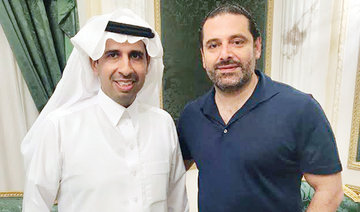
King Salman of Saudi Arabia treated him as his own son, Hariri said, and he had the greatest respect for Crown Prince Mohammed bin Salman. In the TV interview, broadcast from Riyadh, he said the stability of Lebanon was important for both the king and the crown prince. Saudi Arabia more than any other country had helped Lebanon after the 2006 war with Israel, he said.
“Lebanon is a small country and it needs to be nonaligned, and Saudi Arabia always demands the best for Lebanon and stresses the importance of distancing itself. What would happen to 400,000 Lebanese in the Gulf if we join an axis?” he said.
“Iran must stop meddling in the affairs of Arab countries and we refuse to be taken by Iran to an axis against Arab countries. I will not be drawn to building relations with the Syrian regime, which does not want me. Things have to be straightened out to keep Lebanon away from regional conflicts.”
Hariri admitted that he had lost popularity with the Lebanese people when he agreed to a political settlement for a consensus government with Hezbollah ministers, “but the others did not live up to their commitment. I can’t be the only one making concessions while the others do whatever they want.”
Hariri said he had visited the UAE last week to explain to Sheikh Mohammed bin Zayed Al-Nahyan, crown prince of Abu Dhabi, his position and the need to protect Lebanon. He described their meeting as “brotherly and positive.’’
He also denied that he had any connection with the anti-corruption investigation launched in Saudi Arabia last week.
“I wish we could fight corruption in Lebanon like Saudi Arabia is doing, but fighting corruption in Saudi Arabia is an internal affair that we have nothing to do with. I have not been subjected to any questioning in the context of the campaign in Saudi Arabia.”
Hariri said his fears of being assassinated, as his father Rafiq Hariri was, were genuine, but that he was still free to return to Lebanon. “I am free to travel tomorrow if I want to. I will be back in Lebanon in a few days.
“I don’t care about my life — what matters to me is that Lebanon stays safe.”


![]()
![]()

Hariri says Iran to blame for Lebanon crisis, promises to return to his country 'very soon'
Hariri says Iran to blame for Lebanon crisis, promises to return to his country 'very soon'


Latest updates




© 2026 SAUDI RESEARCH & PUBLISHING COMPANY, All Rights Reserved And subject to Terms of Use Agreement.