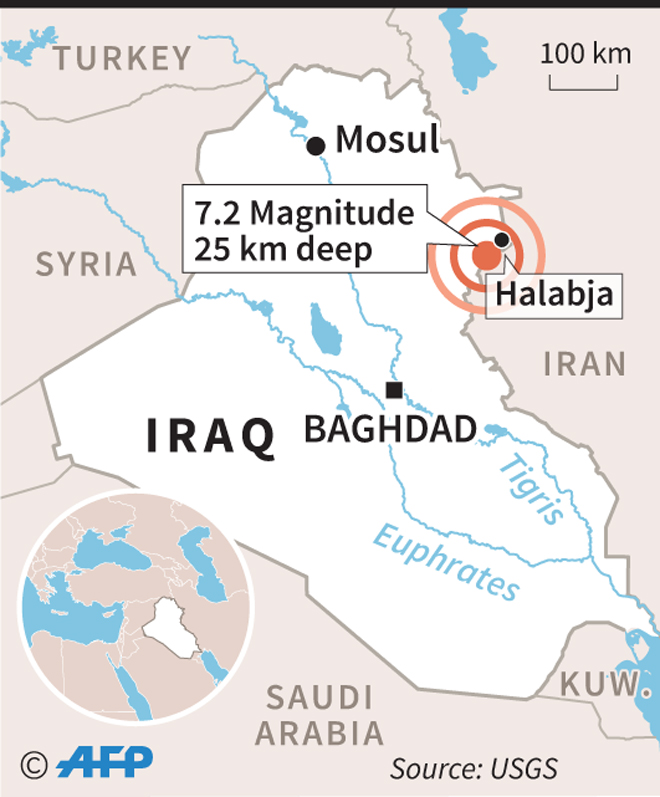

BAGHDAD/ANKARA: At least 332 people were killed in Iran and Iraq when a magnitude 7.3 earthquake jolted the region on Sunday, state media in the two countries said, and rescuers were searching for dozens trapped under rubble in the mountainous area.
State television said more than 328 people were killed in Iran and at least 2,500 were injured. Local officials said the death toll would rise as search and rescue teams reached remote areas of Iran.
The earthquake was felt in several western provinces of Iran but the hardest hit province was Kermanshah, which announced three days of mourning. More than 236 of the victims were in Sarpol-e Zahab county in Kermanshah province, about 15 km (10 miles) from the Iraq border.
Iranian state television said the quake had caused heavy damage in some villages where houses were made of earthen bricks. Rescuers were laboring to find survivors trapped under collapsed buildings.
The quake also triggered landslides that hindered rescue efforts, officials told state television. At least 14 provinces in Iran had been affected, Iranian media reported.
Surveillance video from a coffee shop in #Baghdad shows the #earthquake effect and people in panic rushing out of the shop. pic.twitter.com/vzYkTfCDwx
— MediaNewsCenter (@MediaNewsCenter) November 12, 2017
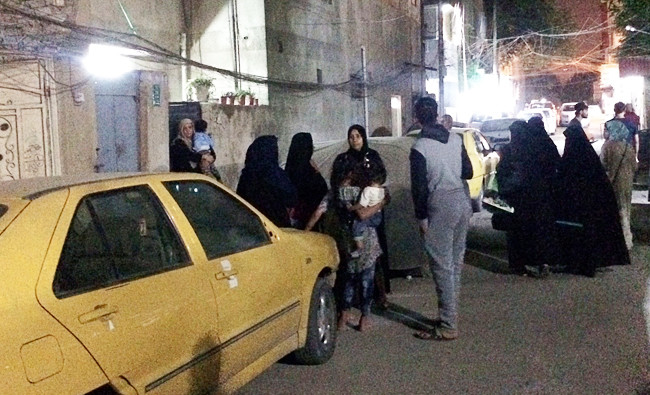
Electricity was cut off in several Iranian and Iraqi cities, and fears of aftershocks sent thousands of people in both countries out onto the streets and parks in cold weather.
The Iranian seismological center registered around 118 aftershocks and said more were expected. The head of Iranian Red Crescent said more than 70,000 people were in need of emergency shelter.
Hojjat Gharibian was one of hundreds of homeless Iranian survivors, who was huddled against the cold with his family in Qasr-e Shirin.
“My two children were sleeping when the house started to collapse because of the quake. I took them and ran to the street. We spent hours in the street until aid workers moved us into a school building,” Gharibian told Reuters by telephone.
Iran’s police, the elite Revolutionary Guards and its affiliated Basij militia forces were dispatched to the quake-hit areas overnight, state TV reported.
Iranian Interior Minister Abdolreza Rahmani Fazli said some roads were blocked and authorities were worried about casualties in remote villages. An Iranian oil official said pipelines and refineries in the area remained intact.
Iran sits astride major fault lines and is prone to frequent tremors. A magnitude 6.6 quake on Dec. 26, 2003, devastated the historic city of Bam, 1,000 km southeast of Tehran, killing about 31,000 people.
HOSPITAL SEVERELY DAMAGED
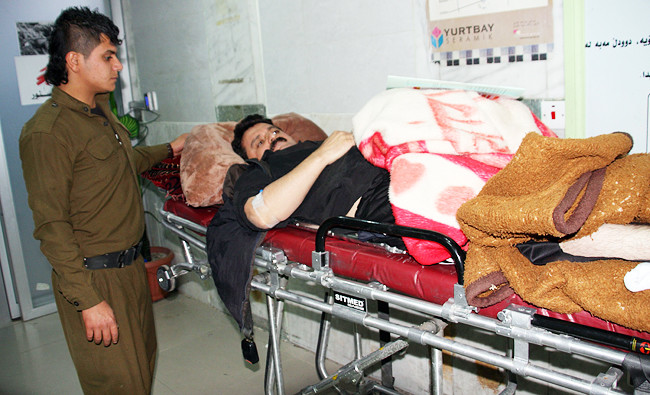
On the Iraqi side, the most extensive damage was in the town of Darbandikhan, 75 km east of the city of Sulaimaniyah in the semi-autonomous Kurdistan Region.
More than 30 people were injured in the town, according to Kurdish Health Minister Rekawt Hama Rasheed.
“The situation there is very critical,” Rasheed told Reuters.
The district’s main hospital was severely damaged and had no power, Rasheed said, so the injured were taken to Sulaimaniyah for treatment. Homes and buildings had extensive structural damage, he said.
In Halabja, local officials said a 12-year-old boy died of an electric shock from a falling electric cable.
Iraq’s meteorology center advised people to stay away from buildings and not to use elevators in case of aftershocks.
TURKEY
Residents of Turkey’s southeastern city of Diyarbakir also reported feeling a strong tremor, but there were no immediate reports of damage or casualties there.
Turkish Red Crescent Chairman Kerem Kinik told broadcaster NTV that Red Crescent teams in Irbil were preparing to go to the site of the earthquake and that Turkey’s national disaster management agency, AFAD, and National Medical Rescue Teams (UMKE) were also preparing to head into Iraq.
AFAD’s chairman said the organization was waiting for a reply to its offer for help.
In a tweet, Kinik said the Turkish Red Crescent was gathering 3,000 tents and heaters, 10,000 beds and blankets and moving them toward the Iraqi border.
“We are coordinating with Iranian and Iraqi Red Crescent groups. We are also getting prepared to make deliveries from our northern Iraq Irbil depot,” he said.
Israeli media said the quake was felt in many parts of Israel as well.
BREAKING: Powerful #earthquake strikes the Iraq-Iran border. It was felt as far as Israel. This is footage from an Israeli household pic.twitter.com/fa6Z7lEcqt
— STOP TERROR (@S_T_O_P_TERROR) November 12, 2017