LONDON: House prices in Britain are no longer rising and in London they are falling at the fastest pace since 2009, the Royal Institution of Chartered Surveyors (RICS) said on Thursday, citing political worries and last week’s interest rate hike.
RICS’s benchmark house price index for Britain as a whole fell more sharply than expected to +1 in October, a level consistent with flat price growth, down from +6 in September.
Economists taking part in a Reuters poll had expected a gentler fall to +4.
RICS chief economist Simon Rubinsohn said a lack of homes on the market, political uncertainty as Britain tries to negotiate its exit from the European Union and last week’s first interest rate hike by the Bank of England since 2007 were all taking their toll on the housing market.
First-time buyers are increasingly focusing on new-build homes which are supported by government incentives, he added.
“A stagnant second-hand market is bad news for the wider economy, not just in terms of spending but also because it restricts mobility,” Rubinsohn said.
The survey of a housing market that has been cooling since the June 2016 Brexit vote weighed on the share prices of British construction firms, which were mostly down 2-4 percent on the day.
Housebuilder Redrow said ongoing political and economic uncertainty had caused a slowdown in sales in recent weeks.
“The latest RICS survey shows that housing market demand was weakening rapidly even before the (Bank of England) raised interest rates last week,” said Samuel Tombs, economist at Pantheon Macroeconomics.
Other measures of house prices have shown a slight pickup in recent months, but RICS painted a gloomier picture, saying most regions were starting to see a drop in sales, following the trend in London.
The RICS survey is a good guide to other measures of construction industry activity.
The fall in sales mirrored a recent slide in demand from buyers and suggested sales would fall over the next 12 months.
RICS’ gauge of price expectations for the next three months fell in October to -11 from -8. With the exception of a sharp dip in June 2016 — the month of the Brexit vote — this was the weakest reading since mid-2012.
While London and the southeast of England were seeing house price falls, prices were still rising in North West England, Wales, Scotland and Northern Ireland, RICS said.
The high price of property means many people in Britain are unable to afford a home of their own, putting pressure on the finance minister Philip Hammond to encourage more homebuilding when he announces a budget plan on Nov. 22.
RICS called on Hammond to lift a cap on borrowing by councils to fund homebuilding.


![]()
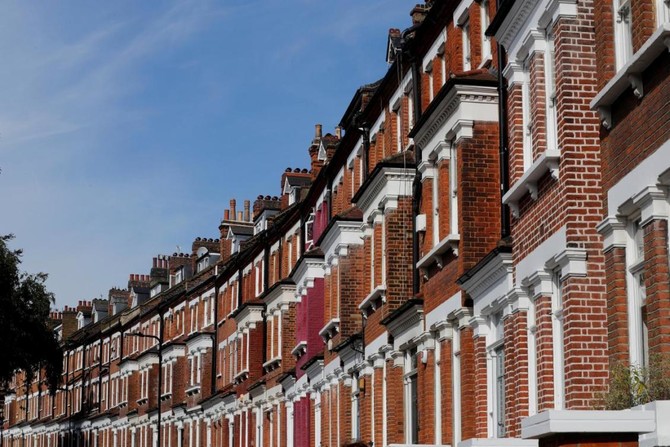
UK house price growth peters out, London weakest since 2009
UK house price growth peters out, London weakest since 2009
Latest updates


© 2026 SAUDI RESEARCH & PUBLISHING COMPANY, All Rights Reserved And subject to Terms of Use Agreement.