JUBA, South Sudan: In war-torn South Sudan, 1.25 million people are facing starvation, double the number from the same time last year, according to a report by the UN and the government released on Monday.
This country could once again plunge into famine in 2018, warn humanitarians and the government.
“The widespread and extreme food consumption gaps ... should make us all extremely concerned about the worst case scenario of famine in many locations across South Sudan in 2018,” said Katie Rickard, country coordinator for REACH, a humanitarian research initiative that provided data for the report.
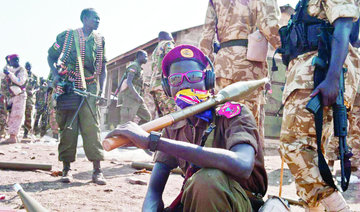
Humanitarians blame the worsening situation on South Sudan’s continuing conflict, which is nearing its fifth year and has killed more than 50,000 people.
In February, the world’s youngest nation declared famine in two counties in Unity State, the world’s first formal famine declaration since Somalia in 2011.
In South Sudan’s two counties, 100,000 people were on the brink of starvation but thanks to early detection and a rapid response catastrophe was avoided, said the World Food Program.
However, the latest food and security analysis update by the UN and South Sudan’s National Bureau of Statistics is grim.
As of September, 6 million people — 56 percent of the population — were experiencing severe hunger with 25,000 South Sudanese in humanitarian catastrophe in Ayod and Greater Baggari counties.
South Sudan’s widening war has made food production impossible and delivery of aid dangerous and difficult. Both Ayod and Baggari are rebel-held areas and locals say the situation in the two counties is dire.
“We ran out because of the hunger,” said a resident of Baggari who recently fled with his family to the nearby town of Wau because they didn’t have any food. He spoke on condition of anonymity for his safety.
The 52-year-old father of four told AP by phone that people are “dying of hunger” and in the last year and a half he only saw humanitarians enter Baggari town three times.
“If the government doesn’t approve of people coming in to help what can we do? We have nothing, we can just pray,” he said.
The government says there’s no policy of “discrimination” and it is committed to helping “all South Sudanese,” said Isaiah Chol Aruai, chairman of the National Bureau of Statistics.
Rights groups are calling on all parties of the conflict to provide immediate and unfettered access to humanitarian agencies.
“Both government and opposition forces have used food as a weapon of war, ranging from restrictions to civilian access to food, actively preventing food from reaching certain areas, systematically looting food and markets and homes and even targeting civilians carrying small amounts of food across front lines,” said Alicia Luedke, South Sudan researcher for Amnesty International.
On her first visit to the country in October, US ambassador to the UN, Nikki Haley raised concerns about humanitarian access during a meeting with South Sudan’s president, Salva Kiir, according to a statement by his office.
Kiir told her that together with the UN, they have been able to establish “mechanisms to improve access,” but acknowledged that more needs to be done.
As South Sudan enters the dry season, locals and aid workers are expecting the situation to get worse.
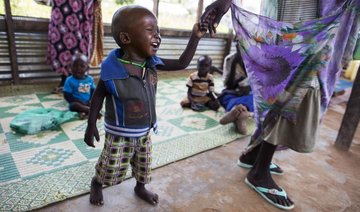
Communities are becoming more desperate to feed their families and people have started using “extreme coping strategies” says a report by REACH, including going into sparsely inhabited forests, swamps and grassland and finding “increasingly unhealthy wild plants” while they search for food.
“2018 will be critical,” said Serge Tissot from the UN’s Food and Agricultural Organization.
He said the only way to avoid further deterioration in the short term is “peace.”
The current food crisis is a result of the country’s “man-made conflict,” said UN representative in South Sudan, David Shearer.
“It’s about people who have fled their homes because of the conflict and therefore left their livelihoods behind,” said Shearer.
This is especially true in the Equatoria regions, once known as the breadbasket of South Sudan, yet today has the largest number of people who have fled their homes due to the conflict.
“South Sudan had ideal rainfall in most places this year,” said Shearer.
“It’s not about climate, it’s actually about war.”


![]()

1.25 million face starvation in war-torn South Sudan
1.25 million face starvation in war-torn South Sudan

Latest updates


Recommended


© 2026 SAUDI RESEARCH & PUBLISHING COMPANY, All Rights Reserved And subject to Terms of Use Agreement.