BAGHDAD: Thousands of Iraqis were detained or abducted in the northern ethnically mixed city of Kirkuk by the Kurdish security services when they controlled the city, Iraqi local officials said on Sunday.
Officials told Arab News that thousands of people in Kirkuk had begun arriving in police stations to report the “abduction” or “detention” of their sons by the Kurdish security services without being given legal justifications.
“More than 7,000 people, all of them Arabs or Turkmen, were either detained or abducted in Kirkuk by Assayish (a Kurdish security service) during the years following 2003,” Rakan Saeed, the acting governor of Kirkuk, said in a televised interview last week. “All these cases and violations are registered in the local government records,” he said.
Kirkuk is at the core of the dispute between Baghdad and Kurdistan as both sides lay claim to it. According to the Iraqi constitution, Kirkuk is a disputed area to be governed by a local council consisting equally of representatives belonging to Arab Sunnis and Shiites, Turkmen and Christians. But Kurds who have claimed that they are the majority in the city took advantage of the weakness of the federal government to ignore all the political agreements and control the city, local officials said. Gaining control over the oil-rich city of Kirkuk is vital for Kurds as it represents the backbone of the economics of their planned state of Kurds.
“Kurds have multiple security services operating in Kirkuk, but the detention and abduction were mainly carried out by Assayish,” Sheikh Hatem Al-Taei, the head of the Arab Council in Kirkuk, told Arab News.
“All these detentions were not based on legal arrests, and the targeted people were mainly the Arab Sunnis,” Al-Taei said. “Whoever talked or complained was either assassinated or disappeared.”
Kirkuk’s governor said the Assayish (security services) of both the two Kurdish parties, the Democratic Party of Kurdistan and the Patriotic Union of Kurdistan, were involved in these detentions and abductions, and the detainees were transferred to Irbil and Sulaimaniya.
Assayish is a Kurdish word meaning “the stability.” It is the service in charge of the internal security in the Kurdish region and identical with the Peshmerga forces, which represent the army in Iraqi Kurdistan.
“We had no official statistics or exact numbers, because people just started formally reporting about these cases,” Najat Hussien, a Turkman member of the local council of Kirkuk, told Arab News.
Kirkuk’s local officials said that these detentions and abductions were not limited to the Arabs but included Turkmen and Christians in Kirkuk and the surrounding towns.
“Most of these operations were targeting the Arabic majority areas inside Kirkuk and the southwestern parts of the city,” Taei said. “It was clear for us that they aim to make a demographic changes, in the city,” Al-Taei, added.


![]()
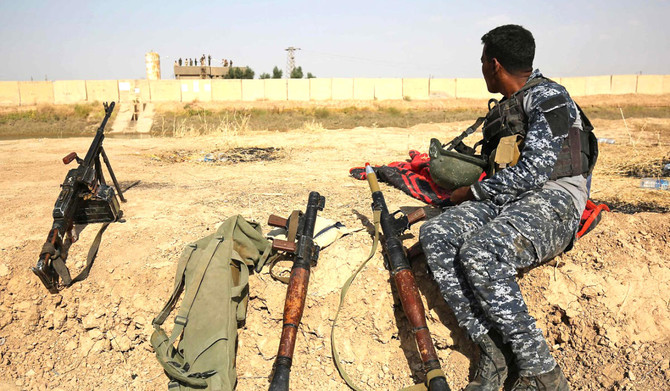
Thousands of Iraqis detained in Kirkuk by Kurds during their rule
Thousands of Iraqis detained in Kirkuk by Kurds during their rule

Latest updates


© 2026 SAUDI RESEARCH & PUBLISHING COMPANY, All Rights Reserved And subject to Terms of Use Agreement.