Iran ‘arming Houthis to attack Saudi Arabia, UAE’

Coalition spokesman Col. Turki Al-Maliki gives press briefing in Riyadh on Sunday, Nov 5, 2017. (SPA)
Updated 06 November 2017
Follow

Iran ‘arming Houthis to attack Saudi Arabia, UAE’

RIYADH: Iran is supplying Houthi militia with arms to attack Saudi Arabia and the UAE, Col. Turki Al-Maliki, spokesman for the Saudi-led coalition in Yemen, said on Sunday.

Al-Maliki also said the coalition would pay a financial reward for information about 40 Houthis wanted for terrorist crimes.

Coalition forces have enough evidence to prove the full complicity of the Tehran regime in the Yemen conflict, Al-Maliki said.

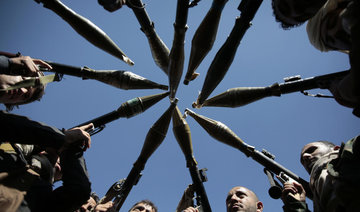
At a presentation in Riyadh, he displayed missiles, weapons and military equipment supplied by Iran and seized by coalition forces. He said ballistic missiles used by the Houthis were not from the Yemeni Army arsenal, and came from Iran.

Iran also supplied the Houthis with drones, he said. Dismantled missiles and other arms were smuggled through Al-Hodeidah port in Yemen and assembled inside the country. The Houthis also threatened maritime navigation by using booby-trapped boats, he said.

Al-Maliki said the coalition had stepped up operations after Saturday night’s ballistic missile attack on Riyadh, but would not confirm air strikes on military targets in the capital, Sanaa, and elsewhere in Yemen after they attack.

Saudi defense forces intercepted and shot down the Houthi missile over King Khaled International Airport. Some debris landed in an uninhabited area but there were no casualties and the airport continued operating as normal.

Al-Maliki said the Houthis had launched the missile indiscriminately to target civilians in populated areas, which was a provocative act. Coalition forces would do whatever was possible to deter the threat from militants in Yemen, he said.

The Houthis have launched 78 missiles at Saudi Arabia, including one in July aimed at Makkah, since the coalition began fighting to restore the legitimate government in Yemen in March 2015.

The Houthis were the first outlawed terrorist group to have ballistic capabilities, which was a challenge to deal with, Al-Maliki said. “Terrorists and militant groups cannot possess such powers, especially ballistic and surface-to-surface missiles.”

In addition, he said, the Houthis had planted about 50,000 land mines along the Saudi border, which were found and neutralized by coalition experts.

He also called on the international community, especially the UN, to assess violations of UN Security Council Resolution 2216. The resolution, approved in April 2015, calls for an end to violence and demands that the Houthis withdraw from all areas seized during the conflict, relinquish arms seized from military and security institutions, and cease all actions falling exclusively within the authority of the legitimate government of Yemen.
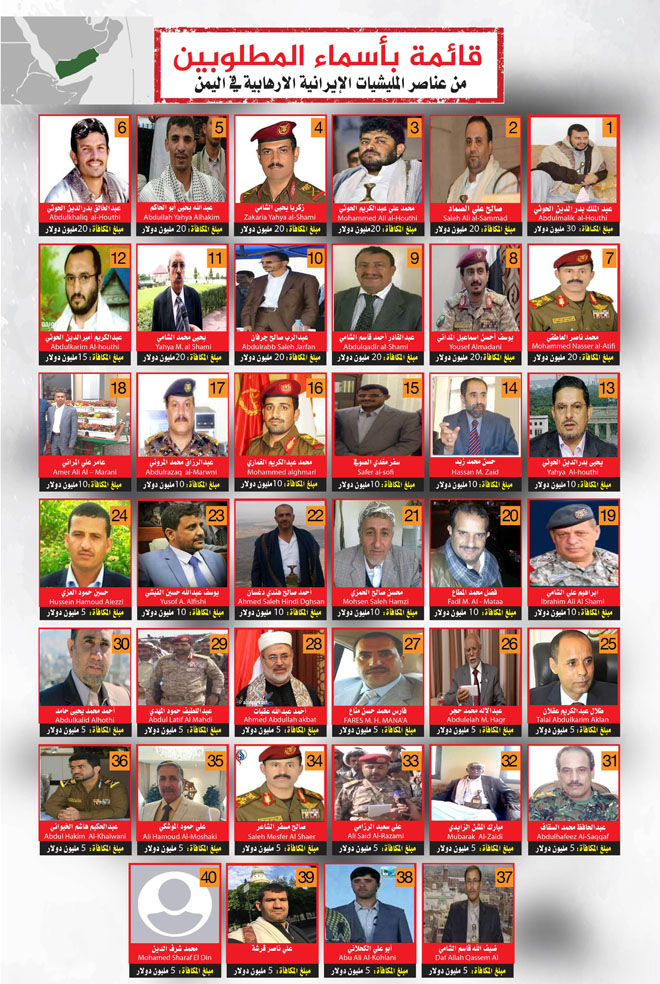


The 40 wanted terrorists from Yemen


Economic growth and resilience at heart of 2nd AlUla Emerging Market Economies Conference

Updated 03 February 2026
Follow

Economic growth and resilience at heart of 2nd AlUla Emerging Market Economies Conference

  • Event on Feb. 8 and 9 will bring together ministers, governors of central banks, policymakers, economic experts and international financial institutions
  • Emerging-market economies a ‘pivotal element’ in global economic system due to effect they have on growth and stability, says Saudi Finance Minister Mohammed Al-Jadaan

RIYADH: The second annual AlUla Conference for Emerging Market Economies, which Saudi Arabia will host next week, offers a platform to exchange views on global developments and discuss policies and reforms that support inclusive growth and strengthen economic resilience, the Kingdom’s finance minister said.

The event on Feb. 8 and 9 will bring together finance ministers, governors of central banks and policymakers, alongside economic experts and representatives of international financial institutions.

Organized by the Saudi Ministry of Finance in partnership with the International Monetary Fund, it takes place as emerging-market economies face mounting challenges amid rapid global economic change.

Finance Minister Mohammed Al-Jadaan said the decision to host the conference reflects Saudi Arabia’s ongoing commitment to efforts that support global financial and economic stability, and highlights the growing influence of emerging economies on worldwide growth.

Emerging-market economies represent a “pivotal element” in the global economic system due to the direct impact they have on economic growth and stability, he added.

“The AlUla Conference for Emerging Market Economies provides a unique platform for exchanging views on global economic developments, and discussing policies and reforms that will support inclusive growth and enhance economic resilience, in light of broader international cooperation that contributes to confronting common challenges,” Al-Jadaan said.

Kristalina Georgieva, managing director of the IMF, said the event would help emerging economies deal with growing uncertainty driven by technological change, demographic shifts and geopolitical tensions.

“The AlUla conference provides a vital platform for emerging economies to discuss how they can navigate the risks and embrace the opportunities ahead,” she said.

“In these times of sweeping transformations in the global economy, policymakers face a more challenging and uncertain environment. Countries should work together to strengthen resilience through sound macroeconomic and financial policies.”