ISLAMABAD: A year since new laws came into force aimed at stemming the flow of “honor killings,” scores of young women in deeply conservative Pakistan are still being murdered by relatives for bringing shame on their family.
The shocking murder of Pakistani social media star Qandeel Baloch by her brother last July turned the spotlight on an epidemic of so-called honor killings and sparked a fresh push to close loopholes allowing the killers to walk free.
Long-awaited legislation was finally passed three months later in a move cautiously hailed by women’s rights activists.
But, more than a year on, lawyers and activists say honor killings are still occurring at an alarming pace.
At least 280 such murders were recorded by the independent Human Rights Commission of Pakistan from October 2016 to June of this year — a figure believed to be underestimated and incomplete.
“There has been no change,” Benazir Jatoi, a lawyer who works for the independent Aurat Foundation, a women’s rights watchdog, told AFP.
“In fact, the Peshawar High Court twice acquitted a man of honor crimes after this law was passed,” she added.
The new legislation mandates life imprisonment for honor killings, but whether a murder can be defined as a crime of honor is left to the judge’s discretion.
That means the culprits can simply claim another motive and still be pardoned, said Dr. Farzana Bari, a widely-respected activist and head of the Gender Studies Department at Islamabad’s Quaid-i-Azam University.
They can do so under Pakistan’s Qisas (blood money) and Diyat (retribution) law, which allows them to seek forgiveness from a victim’s relatives — a particularly convenient means of escape in honor cases.
Bari called for a study on the murders of women over the past year to ascertain the scale of the problem.
The convoluted courts system also often sees police encouraging parties to enter blood money compromises, circumventing the beleaguered judicial system altogether.
“Forgiveness and compromise negates justice,” Jatoi said.
Asma Jahangir, one of Pakistan’s most acclaimed human rights lawyers, agreed, telling AFP: “The law will be implemented once the courts function.”
The roots of “honor” killings lie in tribal social norms which remain prevalent across South Asia and dictate the behavior of women in particular.
Women have been shot, stabbed, stoned, set alight and strangled for bringing “shame” on their families for everything from refusing marriage proposals to wedding the “wrong” man and helping friends elope.
Men can be victims too, but the violence is overwhelmingly aimed at women.
The double standard is glaring. Generally Pakistanis will accept a man who has committed rape, a senior police official who has overseen honor killing investigations told AFP.
But “if a woman is even suspected of an affair it is considered a shame for the family and not forgiven,” the official, who asked to remain anonymous as he was not authorized to speak to media, told AFP.
“People even sympathize (with) and praise the men who murder their women for so-called honor,” he said.
Even when the state does take steps to implement the law — as with the murder of Qandeel Baloch — the wheels of justice often get stuck in the mud.
Baloch achieved notoriety in Pakistan with her social media antics, tame by Western standards but considered provocative in a misogynistic country where women have fought for their rights for decades.
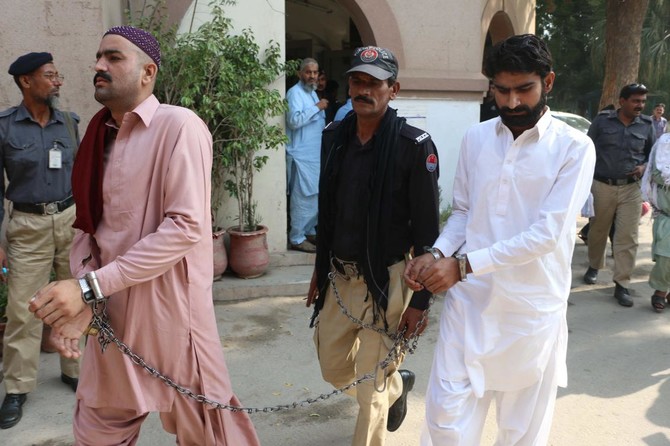
Her brother Waseem told reporters that “of course” he had strangled his sister, finding her behavior “intolerable.”
At first, Baloch’s heartbroken parents vowed they would give Waseem no absolution.
But well over a year later, the trial is still grinding its way through the courts.
This length of time is not unheard of for Pakistani murder cases, but it has been long enough — as often happens — for Baloch’s father to change his mind.
“I want my son to return home,” Mohammad Azeem told AFP near the central city of Multan recently, dismissing Waseem’s proud statements. “My son is innocent.”
Had international revulsion over the killing not seen the Pakistani state take the unprecedented step of declaring itself an heir alongside Baloch’s parents, their forgiveness could have already seen Waseem walk free.
For Jatoi, the issue goes far beyond the courts — from the elites, where the political leadership fails to understand the issue, to the rural masses, where illiteracy and poverty help perpetuate it.
Rights activists have called for change for years, and Pakistan’s young, urbanized population often take to social media for campaigns such as last year’s #NoMoreKillingGirls.
But Jatoi said Pakistan as a society has been unable to move past the meaning of “honor.”
“Only when we widely condemn the act will we stop seeing proud murderers... telling of how they killed a woman because she breached an outdated, arbitrary, and patriarchal ‘honor’ code of which no one knows the rules.”


![]()
Men still killing women for ‘honor’ in Pakistan, despite new law
Men still killing women for ‘honor’ in Pakistan, despite new law


Latest updates


© 2026 SAUDI RESEARCH & PUBLISHING COMPANY, All Rights Reserved And subject to Terms of Use Agreement.