DUBAI: Emirates and flydubai could use the same terminal at Dubai International Airport, the world’s busiest for international travelers, after expanding their commercial relationship earlier this year, the head of the airport operator said.
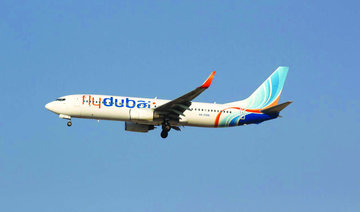
Emirates, the Middle East’s largest airline, exclusively uses Terminal 3 with the exception of some Qantas flights which will end next year. Budget airline flydubai shares Terminal 2, on the other side of the airport, with other carriers.
Proposals to improve connections for passengers between the two airlines are under consideration, including whether it’s feasible for them to operate out of Terminal 3.
“We need to make a strategic decision about how the traffic distribution will work,” Dubai Airports Chief Executive Paul Griffiths told Reuters on Thursday in an interview in Dubai. “Then we need to move quickly into a design and construction phase to build whatever facilities are necessary for that, or adapt existing facilities around the new business model.”
Emirates and flydubai agreed in July to coordinate on network planning, schedules and frequent flyer programs, and said they would align airport systems and operations, but did not say how that would happen.
“What we are trying to do is see if we can get some sort of operating model established with them that will mean the infrastructure is shared on a more operational basis” Griffiths said.
A flydubai spokeswoman confirmed talks on how to improve passenger connectivity were underway. Emirates did not respond to a request for comment.
Emirates, flydubai, and Dubai Airports, are owned by the government of Dubai.
“We’ve got a series of proposals which hopefully before the end of the month will be evaluated and agreed,” Griffiths said.
Emirates and flydubai are managed independently despite the shared ownership and, as of July, operated a fleet of 317 aircraft to 216 destinations between them.
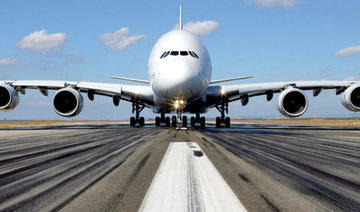
The airlines operate different aircraft. Emirates only flies widebody Airbus A380s and Boeing 777s, while flydubai has an exclusive fleet of narrowbody Boeing 737s.
The combined fleet will expand to 380 aircraft flying to 240 destinations by 2022, the airlines said in July.
Moving flydubai’s operations to Terminal 1, located alongside Terminal 3, is also being looked at, and the final solution could be a hybrid of the proposals under consideration, Griffiths said.
Terminal 1 is used by foreign airlines, including British Airways, Lufthansa, and Singapore Airlines.


Emirates and flydubai could operate from single terminal at Dubai airport

Emirates and flydubai could operate from single terminal at Dubai airport


PIF-backed AviLease achieves revenue of $664m and 19% growth in 2025
RIYADH: Saudi Arabia’s Public Investment Fund-backed AviLease achieved exceptional performance and sustainable business growth during 2025, supported by the strategic expansion of its global platform.
According to its financial results for 2025, AviLease recorded total revenues of $664 million, an annual increase of 19 percent, driven by disciplined growth in its asset portfolio and strong performance in aircraft remarketing amid sustained global demand for modern, fuel-efficient aircraft, the Saudi Press Agency reported.
Profit before tax doubled compared to the previous year, reaching $122 million. The year witnessed an expansion in AviLease’s portfolio, reaching 202 owned and managed aircraft, leased to over 50 airline companies in more than 30 countries.
The total value of the company’s assets stabilized at $9.3 billion. AviLease maintained a 100 percent fleet utilization rate, reflecting the resilience of its business model, the efficiency of its asset management, and the strength of its strategic relationships with airlines around the world.
AviLease concluded purchase agreements for aircraft from Airbus, including the A320neo family and A350F, and Boeing 737 aircraft, aiming to enhance its future asset portfolio with modern, fuel-efficient aircraft. This step will contribute to supporting future growth and meeting increasing customer demand for the latest aircraft, aligning with the Kingdom’s ambitions to become a leading global aviation hub.
AviLease strengthened its prestigious credit standing by obtaining a strong Baa2 credit ratings from Moody’s and BBB from Fitch, reflecting its financial solidity, managerial discipline, and efficiency in managing leverage. The company also successfully issued senior unsecured bonds worth $850 million last November under Regulation 144A/RegS. This issuance contributed to diversifying its funding sources and enhancing its financial flexibility.
Commenting on the results, AviLease CEO Edward O’Byrne said: “This exceptional performance reflects the quality of the company’s investment portfolio, the strength of its partnerships with airlines, and its strategic focus on responsibly deploying capital into highly sought-after, efficient, modern aircraft assets.”
He added: “As aviation markets continue to grow, AviLease is strategically positioned to continue its expansion plans and deliver sustainable long-term value for shareholders, contributing to the Kingdom’s ambitions.”
Throughout 2025, AviLease continued to play a pivotal role in the Kingdom’s growing aviation sector and contributed directly to the launch and scaling of the new national carrier, Riyadh Air, by completing a sale and leaseback transaction for a Boeing 787-9 aircraft, which thereby became the first aircraft to join the airline’s fleet.
AviLease also established a strategic partnership with Hassana Investment Co. This partnership aims to provide an opportunity for local and international investors to enter the aircraft financing asset class and benefit from AviLease’s technical expertise and operational capabilities to support partnership growth and enhance performance.
Hassana Investment Co. has agreed to acquire an initial portfolio of 10 modern aircraft from AviLease.


